THE ADVENTURE COLLECTIVE® · Independent discovery and booking for outdoor travel

Stand on a stable board and paddle across the blue to El Arco, pause among barking sea lions, stroll Lovers Beach and snorkel Pelican Rock on a 2½-hour guided trip. Small groups and local guides make this a concise, wildlife-forward way to experience Cabo’s tip.
Stand on a stable board and paddle across the blue to El Arco, pause among barking sea lions, stroll Lovers Beach and snorkel Pelican Rock on a 2½-hour guided trip. Small groups and local guides make this a concise, wildlife-forward way to experience Cabo’s tip.
A low, briny wind carries the smell of kelp as the group steps off the sand at Playa Empacadora. Paddleboards line up like flat, patient horses; the guides clip on leashes, hand out life vests and point the way. The water is a glassy highway at first, then a quick flirtation with swell as the shore drops away and the granite shoulders of Land's End come into view. The Arch—El Arco—sits where the Sea of Cortez meets the Pacific, a sculpted gateway that draws the boarders forward and the sea lions bellowing on the rocks.
Verified experiences and guided adventures in the surrounding area.
Operated by True Baja · Cabo San Lucas, Baja California Sur
A low, briny wind carries the smell of kelp as the group steps off the sand at Playa Empacadora. Paddleboards line up like flat, patient horses; the guides clip on leashes, hand out life vests and point the way. The water is a glassy highway at first, then a quick flirtation with swell as the shore drops away and the granite shoulders of Land's End come into view. The Arch—El Arco—sits where the Sea of Cortez meets the Pacific, a sculpted gateway that draws the boarders forward and the sea lions bellowing on the rocks.
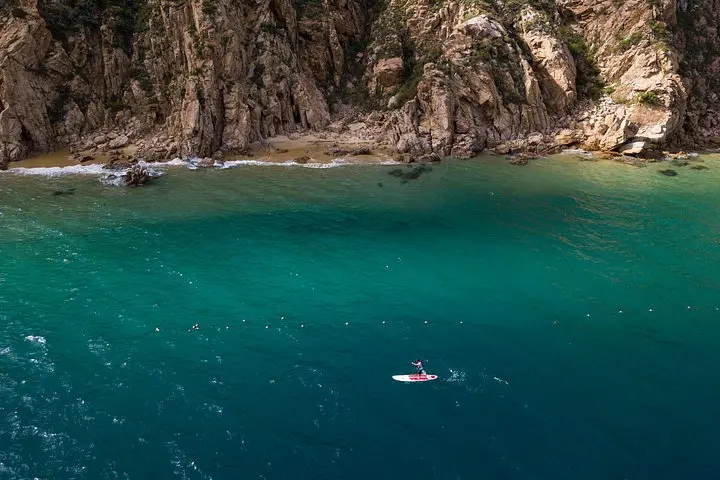
This morning route follows a simple coastline narrative: a steady paddle to the Arch, a pause to watch the colony and photograph the opening, a short landing at Lovers Beach to stretch and snack, then a final excursion to Pelican Rock for clear-water snorkeling among coral outcrops. The full loop typically clocks in at about 2–3 hours and covers roughly 3–4 miles of paddling depending on conditions—accessible but influenced by tide and wind.
Geology here is blunt and ancient: granite monoliths heaved up by tectonic forces and then sanded by waves into arches, stacks and narrow beaches. Human history layers over that rock—ships, fisheries and now tourism have all used this natural doorway. Guides on these paddle trips often weave local context into the outing: where pirates once slipped into coves, how seasonal currents influence fish migrations, and how the Arch’s silhouette has long marked the tip of the Baja peninsula.
Wildlife encounters are part of the rhythm. Sea lions will bark and flop near the rocks; pelicans and frigatebirds wheel overhead; in high season you might see manta rays or even the slow roll of a whale farther offshore. Guides carry snorkel gear and point out reef fish and fragile corals at Pelican Rock, a small reef that benefits from careful visitation.
Practicalities matter: meet at Playa Empacadora (also listed as Corsario) where the operator stages pickup vans and boards. Tours run about 150 minutes with small groups—maximum four per guide—which keeps the experience intimate and safety-focused. Wear reef-safe sunscreen, a hat that clips on, and a swimsuit under lightweight layers. Note the provider’s limits: max weight per board ~100 kg (240 lbs). Cancellation is allowed up to 24 hours prior; trips may be canceled for bad weather.
For first-timers the paddle is steady but expect wind on the return leg. Take the guide’s short lessons on stance and bracing, hydrate before launch, and keep a light dry bag for phone and keys. With simple preparation, this combo of paddle, beach and reef delivers a concise, well-rounded introduction to Cabo’s coastal wildness.
The one-way paddle is generally about 1–2 miles depending on your exact launch; total distance for the trip (including return and detours) is typically 3–4 miles.
Yes—outfits use stable BIC boards and guides give a quick lesson; people with basic balance and mobility generally do fine.
Yes—snorkel masks, fins and life vests are included for the Pelican Rock stop.
Trips are canceled for unsafe conditions; the operator issues a full refund if canceled at least 24 hours prior due to weather.
Sea lions at the Arch are common, plus pelicans and reef fish at Pelican Rock; seasonal whale sightings occur offshore but aren’t guaranteed.
Yes—pickup is offered from many Cabo hotels (confirm at booking); otherwise meet at Playa Empacadora.
True Baja operates guided outdoor trips and adventures with an emphasis on safety, stewardship, and memorable experiences.
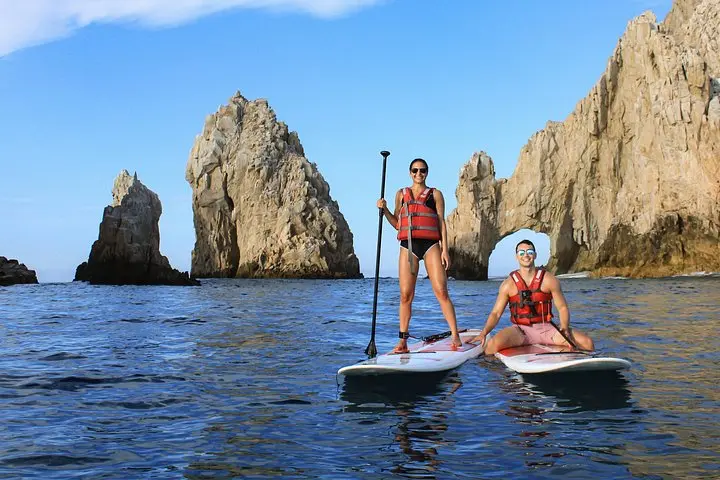
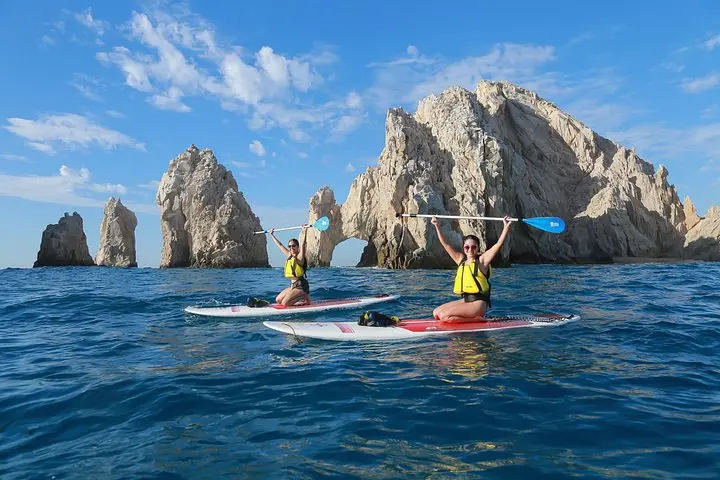
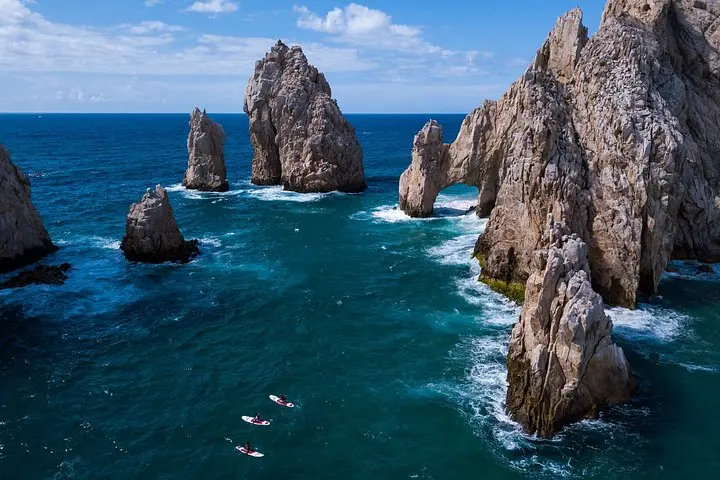
A low, briny wind carries the smell of kelp as the group steps off the sand at Playa Empacadora. Paddleboards line up like flat, patient horses; the guides clip on leashes, hand out life vests and point the way. The water is a glassy highway at first, then a quick flirtation with swell as the shore drops away and the granite shoulders of Land's End come into view. The Arch—El Arco—sits where the Sea of Cortez meets the Pacific, a sculpted gateway that draws the boarders forward and the sea lions bellowing on the rocks.
A low, briny wind carries the smell of kelp as the group steps off the sand at Playa Empacadora. Paddleboards line up like flat, patient horses; the guides clip on leashes, hand out life vests and point the way. The water is a glassy highway at first, then a quick flirtation with swell as the shore drops away and the granite shoulders of Land's End come into view. The Arch—El Arco—sits where the Sea of Cortez meets the Pacific, a sculpted gateway that draws the boarders forward and the sea lions bellowing on the rocks.
This morning route follows a simple coastline narrative: a steady paddle to the Arch, a pause to watch the colony and photograph the opening, a short landing at Lovers Beach to stretch and snack, then a final excursion to Pelican Rock for clear-water snorkeling among coral outcrops. The full loop typically clocks in at about 2–3 hours and covers roughly 3–4 miles of paddling depending on conditions—accessible but influenced by tide and wind.
Geology here is blunt and ancient: granite monoliths heaved up by tectonic forces and then sanded by waves into arches, stacks and narrow beaches. Human history layers over that rock—ships, fisheries and now tourism have all used this natural doorway. Guides on these paddle trips often weave local context into the outing: where pirates once slipped into coves, how seasonal currents influence fish migrations, and how the Arch’s silhouette has long marked the tip of the Baja peninsula.
Wildlife encounters are part of the rhythm. Sea lions will bark and flop near the rocks; pelicans and frigatebirds wheel overhead; in high season you might see manta rays or even the slow roll of a whale farther offshore. Guides carry snorkel gear and point out reef fish and fragile corals at Pelican Rock, a small reef that benefits from careful visitation.
Practicalities matter: meet at Playa Empacadora (also listed as Corsario) where the operator stages pickup vans and boards. Tours run about 150 minutes with small groups—maximum four per guide—which keeps the experience intimate and safety-focused. Wear reef-safe sunscreen, a hat that clips on, and a swimsuit under lightweight layers. Note the provider’s limits: max weight per board ~100 kg (240 lbs). Cancellation is allowed up to 24 hours prior; trips may be canceled for bad weather.
For first-timers the paddle is steady but expect wind on the return leg. Take the guide’s short lessons on stance and bracing, hydrate before launch, and keep a light dry bag for phone and keys. With simple preparation, this combo of paddle, beach and reef delivers a concise, well-rounded introduction to Cabo’s coastal wildness.