THE ADVENTURE COLLECTIVE® · Independent discovery and booking for outdoor travel

Paddle from Stewart Beach to Cole Island on a guided 3‑hour tour that combines sheltered coastal kayaking with close-up views of 19th‑century fortifications and local marine life. Perfect for paddlers seeking a short, historically rich excursion near Victoria.
Paddle from Stewart Beach to Cole Island on a guided 3‑hour tour that combines sheltered coastal kayaking with close-up views of 19th‑century fortifications and local marine life. Perfect for paddlers seeking a short, historically rich excursion near Victoria.
The trip begins at Stewart Beach with the harbor opening ahead: salt-scented air, a scatter of fishing boats, and the low silhouette of Fort Rodd Hill and Fisgard Lighthouse framing a sheltered channel. Guides brief the group, adjust PFDs, and push off into Esquimalt Harbour where tides and wind set the day’s rhythm.
Verified experiences and guided adventures in the surrounding area.
The trip begins at Stewart Beach with the harbor opening ahead: salt-scented air, a scatter of fishing boats, and the low silhouette of Fort Rodd Hill and Fisgard Lighthouse framing a sheltered channel. Guides brief the group, adjust PFDs, and push off into Esquimalt Harbour where tides and wind set the day’s rhythm.
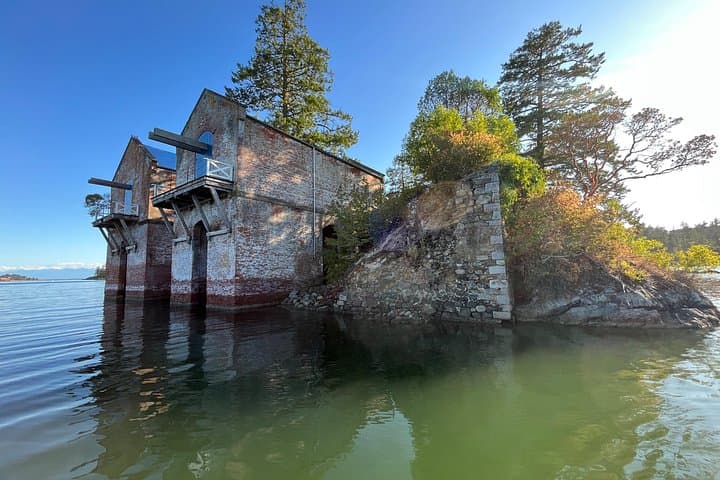
Cole Island sits just inside the harbour mouth — a compact spit of Garry oak and Douglas-fir that guards a cluster of 19th‑century military emplacements. The island’s gun batteries and brickwork point to Victoria’s coastal-defense era; glacial action long before carved the basalt and sedimentary bedrock that shape these low cliffs and tidal shelves. Local culture still orbits the water: boatyards, naval history, and birdwatchers converge here in season.
Expect calm to moderate paddling over roughly 2–3 nautical miles round-trip in protected waters, with short shore explorations on packed-sand beaches and rocky ledges. Guides typically narrate the island’s role in regional defense and identify intertidal life as you land. Wildlife — seals and bald eagles among them — often watches from a distance.
Practicalities matter: plan for changing coastal weather, check tide times, and dress in layers with a windproof shell. Footwear should handle slippery rocks during brief landings. Bring water, sun protection, and a small dry bag for essentials. The three-hour outing rewards steady paddling and close-up history in a setting where the harbour seems to test your resolve and the island quietly holds its stories.
Yes — guided groups accommodate beginners, though participants should be comfortable with basic paddling and following guide instructions.
The tour is about 2–3 nautical miles round-trip and lasts roughly three hours including shore time on Cole Island.
Policies vary by operator, but children capable of sitting in a kayak and following safety instructions are often allowed; check age limits with the provider.
Guides monitor conditions and may alter the route, delay launch, or cancel for safety; verify the provider’s cancellation terms when booking.
The trip begins at Stewart Beach with the harbor opening ahead: salt-scented air, a scatter of fishing boats, and the low silhouette of Fort Rodd Hill and Fisgard Lighthouse framing a sheltered channel. Guides brief the group, adjust PFDs, and push off into Esquimalt Harbour where tides and wind set the day’s rhythm.
The trip begins at Stewart Beach with the harbor opening ahead: salt-scented air, a scatter of fishing boats, and the low silhouette of Fort Rodd Hill and Fisgard Lighthouse framing a sheltered channel. Guides brief the group, adjust PFDs, and push off into Esquimalt Harbour where tides and wind set the day’s rhythm.
Cole Island sits just inside the harbour mouth — a compact spit of Garry oak and Douglas-fir that guards a cluster of 19th‑century military emplacements. The island’s gun batteries and brickwork point to Victoria’s coastal-defense era; glacial action long before carved the basalt and sedimentary bedrock that shape these low cliffs and tidal shelves. Local culture still orbits the water: boatyards, naval history, and birdwatchers converge here in season.
Expect calm to moderate paddling over roughly 2–3 nautical miles round-trip in protected waters, with short shore explorations on packed-sand beaches and rocky ledges. Guides typically narrate the island’s role in regional defense and identify intertidal life as you land. Wildlife — seals and bald eagles among them — often watches from a distance.
Practicalities matter: plan for changing coastal weather, check tide times, and dress in layers with a windproof shell. Footwear should handle slippery rocks during brief landings. Bring water, sun protection, and a small dry bag for essentials. The three-hour outing rewards steady paddling and close-up history in a setting where the harbour seems to test your resolve and the island quietly holds its stories.