THE ADVENTURE COLLECTIVE® · Independent discovery and booking for outdoor travel

Padel classes at Miami Reserve introduce players to a fast, tactical doubles sport built around short rallies and wall play. Ideal for social players and athletes looking for a high-energy, low-impact workout, classes emphasize positioning, coordination and strategy.
Padel classes at Miami Reserve introduce players to a fast, tactical doubles sport built around short rallies and wall play. Ideal for social players and athletes looking for a high-energy, low-impact workout, classes emphasize positioning, coordination and strategy.
The first serve cracks against the glass and the ball ricochets off the back wall—sudden, bright, and immediate. At Miami Reserve, the compact court channels the energy of doubles play: quick volleys, angled bank shots and constant movement. Players trade short sprints with the rhythm of the ball, the walls turning defense into opportunity.
Verified experiences and guided adventures in the surrounding area.
The first serve cracks against the glass and the ball ricochets off the back wall—sudden, bright, and immediate. At Miami Reserve, the compact court channels the energy of doubles play: quick volleys, angled bank shots and constant movement. Players trade short sprints with the rhythm of the ball, the walls turning defense into opportunity.
Padel arrived from Spain and Argentina and has been spreading across U.S. cities for its social, tactical gameplay. In Miami, the sport fits the city's outdoor culture—light-filled courts, year-round play and a social doubles scene. The court itself sits on a hard, low-bounce surface bounded by glass and mesh, creating predictable rebounds but fast exchanges that demand quick footwork rather than raw power.
Expect coaching focused on positioning, wall use and coordinated movement with a partner; beginner drills emphasize serve-and-volley and wall rebounds, while intermediate sessions add strategy for lobs and aggressive return placement. Local players value quick decision-making and communication over brute force.
Practical guidance: classes are typically 60 minutes—arrive 15 minutes early to warm up and demo equipment. Wear non-marking court shoes with lateral support, bring plenty of water and sunscreen, and plan for short, intense intervals rather than long steady-state exertion. Miami heat and afternoon showers shape scheduling—mornings and early evenings are best in summer.
Padel is approachable for most active people: little technical background is required, but agility, coordination and willingness to learn doubles tactics make the experience more rewarding.
No—beginners are welcome; instructors start with basic grip, serve technique and simple wall drills to build confidence.
Many facilities offer rental paddles for first-timers, but bringing your own is recommended once you decide to continue.
Classes are commonly small group sessions of 4–8 players to ensure court time and personalized feedback.
Wear non-marking court shoes, breathable athletic clothing, sunscreen, and bring water—consider a lightweight jacket in summer for sudden rain.
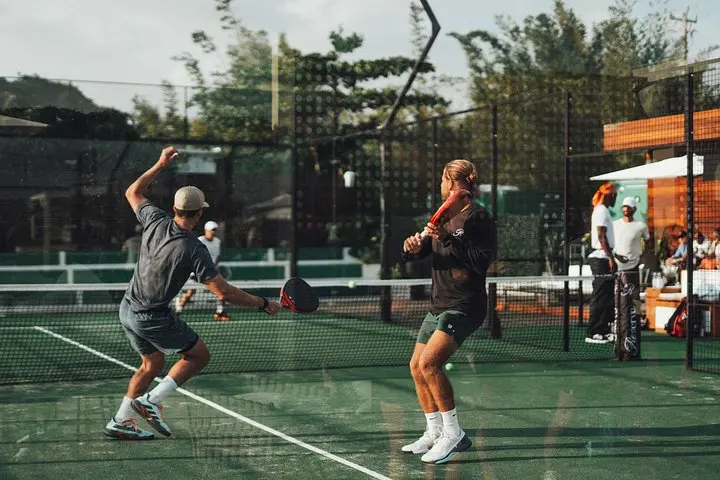
The first serve cracks against the glass and the ball ricochets off the back wall—sudden, bright, and immediate. At Miami Reserve, the compact court channels the energy of doubles play: quick volleys, angled bank shots and constant movement. Players trade short sprints with the rhythm of the ball, the walls turning defense into opportunity.
The first serve cracks against the glass and the ball ricochets off the back wall—sudden, bright, and immediate. At Miami Reserve, the compact court channels the energy of doubles play: quick volleys, angled bank shots and constant movement. Players trade short sprints with the rhythm of the ball, the walls turning defense into opportunity.
Padel arrived from Spain and Argentina and has been spreading across U.S. cities for its social, tactical gameplay. In Miami, the sport fits the city's outdoor culture—light-filled courts, year-round play and a social doubles scene. The court itself sits on a hard, low-bounce surface bounded by glass and mesh, creating predictable rebounds but fast exchanges that demand quick footwork rather than raw power.
Expect coaching focused on positioning, wall use and coordinated movement with a partner; beginner drills emphasize serve-and-volley and wall rebounds, while intermediate sessions add strategy for lobs and aggressive return placement. Local players value quick decision-making and communication over brute force.
Practical guidance: classes are typically 60 minutes—arrive 15 minutes early to warm up and demo equipment. Wear non-marking court shoes with lateral support, bring plenty of water and sunscreen, and plan for short, intense intervals rather than long steady-state exertion. Miami heat and afternoon showers shape scheduling—mornings and early evenings are best in summer.
Padel is approachable for most active people: little technical background is required, but agility, coordination and willingness to learn doubles tactics make the experience more rewarding.