THE ADVENTURE COLLECTIVE® · Independent discovery and booking for outdoor travel

Train in small groups off Tenerife’s volcanic shorelines where lava-formed reefs and abundant fish await. This PADI Open Water course combines classroom sessions, confined-water practice and open-water dives across local dive sites.
Train in small groups off Tenerife’s volcanic shorelines where lava-formed reefs and abundant fish await. This PADI Open Water course combines classroom sessions, confined-water practice and open-water dives across local dive sites.
A sharp Atlantic breeze meets the early-morning quay as students board a small dive boat off southern Tenerife. The instructor checks tanks and masks while the island’s volcanic cliffs shrink astern; below, dark lava ribs and pinnacles rise from blue depths and fish weave through the rock like threads. The sea in these parts tests and rewards — a current can nudge you along a ridge while a sudden cloudless patch of visibility reveals a parade of parrotfish and octopus among the crevices.
Verified experiences and guided adventures in the surrounding area.
Operated by Dive Centre Ocean Trek Tenerife · Playa de las Américas, Tenerife
A sharp Atlantic breeze meets the early-morning quay as students board a small dive boat off southern Tenerife. The instructor checks tanks and masks while the island’s volcanic cliffs shrink astern; below, dark lava ribs and pinnacles rise from blue depths and fish weave through the rock like threads. The sea in these parts tests and rewards — a current can nudge you along a ridge while a sudden cloudless patch of visibility reveals a parade of parrotfish and octopus among the crevices.
Tenerife’s coastline is born of basalt flows and marine erosion: underwater lava shelves, caves and columns give the dives an architectural quality unique to the Canaries. The island’s seafaring culture and centuries of Atlantic crossings mean dive operations are accustomed to small-group training and a practical, safety-first approach.
The PADI Open Water course here combines classroom theory, confined-water skill sessions and multiple open-water dives across several local sites. Expect three days of instruction (roughly 72 hours total scheduling), with equipment provided, PADI fees included and optional pickup within ~20 km of the dive center. A medical screening is required; guests should avoid flying 24 hours after diving.
Practically: be comfortable swimming, sleep well before water days, hydrate, and keep sun protection handy between sessions. The instructors keep groups small so progression is steady — skills are repeated until proficiency. For travelers, plan buffer time around possible sea conditions and bring a lightweight personal mask if you prefer a custom fit. This course turns nervous surface swimmers into certified divers able to explore Tenerife’s volcanic reefs worldwide.
No prior scuba experience is required; the course starts with theory and confined-water training before progressing to open-water dives.
Minimum age is 10 years; younger students may have additional restrictions and require parental consent.
The course is structured over approximately three days (72 hours of scheduled time) including classroom, confined-water, and open-water dives.
Do not fly for at least 24 hours after your last dive; longer is recommended if you completed multiple days of dives.
Dive Centre Ocean Trek Tenerife operates guided outdoor trips and adventures with an emphasis on safety, stewardship, and memorable experiences.
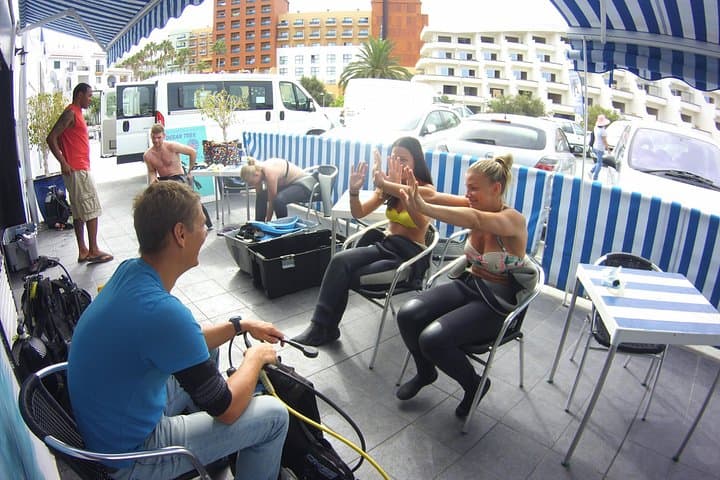
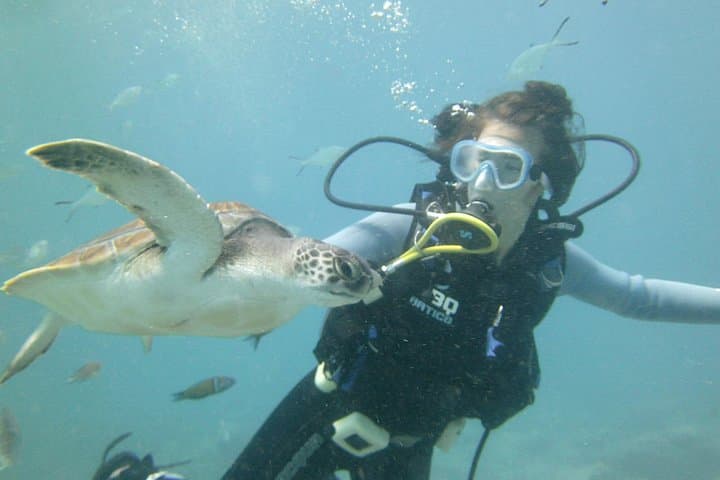
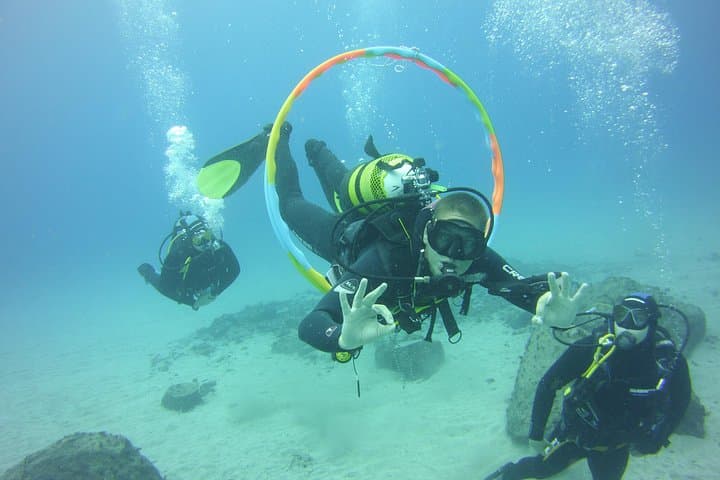
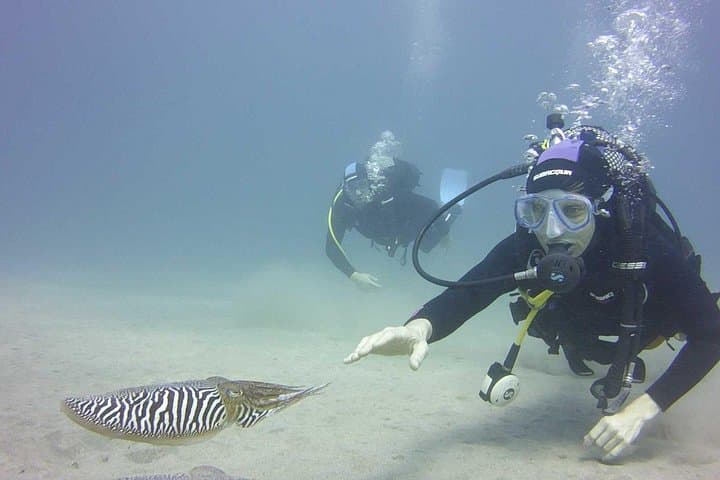
A sharp Atlantic breeze meets the early-morning quay as students board a small dive boat off southern Tenerife. The instructor checks tanks and masks while the island’s volcanic cliffs shrink astern; below, dark lava ribs and pinnacles rise from blue depths and fish weave through the rock like threads. The sea in these parts tests and rewards — a current can nudge you along a ridge while a sudden cloudless patch of visibility reveals a parade of parrotfish and octopus among the crevices.
A sharp Atlantic breeze meets the early-morning quay as students board a small dive boat off southern Tenerife. The instructor checks tanks and masks while the island’s volcanic cliffs shrink astern; below, dark lava ribs and pinnacles rise from blue depths and fish weave through the rock like threads. The sea in these parts tests and rewards — a current can nudge you along a ridge while a sudden cloudless patch of visibility reveals a parade of parrotfish and octopus among the crevices.
Tenerife’s coastline is born of basalt flows and marine erosion: underwater lava shelves, caves and columns give the dives an architectural quality unique to the Canaries. The island’s seafaring culture and centuries of Atlantic crossings mean dive operations are accustomed to small-group training and a practical, safety-first approach.
The PADI Open Water course here combines classroom theory, confined-water skill sessions and multiple open-water dives across several local sites. Expect three days of instruction (roughly 72 hours total scheduling), with equipment provided, PADI fees included and optional pickup within ~20 km of the dive center. A medical screening is required; guests should avoid flying 24 hours after diving.
Practically: be comfortable swimming, sleep well before water days, hydrate, and keep sun protection handy between sessions. The instructors keep groups small so progression is steady — skills are repeated until proficiency. For travelers, plan buffer time around possible sea conditions and bring a lightweight personal mask if you prefer a custom fit. This course turns nervous surface swimmers into certified divers able to explore Tenerife’s volcanic reefs worldwide.