THE ADVENTURE COLLECTIVE® · Independent discovery and booking for outdoor travel

Walk among three monumental Doric temples and Roman streets with an archaeologist guiding interpretation and context. This private two-hour tour includes skip-the-line entry and expert commentary tailored to your interests.
Walk among three monumental Doric temples and Roman streets with an archaeologist guiding interpretation and context. This private two-hour tour includes skip-the-line entry and expert commentary tailored to your interests.
You step off the modern road into a wide scrub plain where stone columns rise like questions asked long ago. Wind moves across low grass and the three great Doric temples — their fluted shafts and heavy architraves — hold the light like living geometry. The guide, an archaeologist, directs your gaze: a metope here, a repaired cornice there, the worn grooves of ancient processional routes.
Verified experiences and guided adventures in the surrounding area.
Operated by Stridescape · Capaccio-Paestum, Campania
You step off the modern road into a wide scrub plain where stone columns rise like questions asked long ago. Wind moves across low grass and the three great Doric temples — their fluted shafts and heavy architraves — hold the light like living geometry. The guide, an archaeologist, directs your gaze: a metope here, a repaired cornice there, the worn grooves of ancient processional routes.
Paestum began as a Greek colony (Poseidonia) around the 6th century BCE and later adopted Italic and Roman life; its temples, forums, and tombs record those changes in stone. Geologically the site sits on the Sele river plain with alluvial soils that preserved temple platforms and necropoleis; culturally it’s part of the Cilento region and the broader Campania story of Hellenic influence in Italy. Local insights: the best light for photos is late afternoon, fresco fragments in the small museum explain burial practices, and villages nearby still practice traditional mozzarella making.
Practically, this private, two-hour tour with skip-the-line entrance focuses on architecture, iconography, and social context: expect close readings of temple plans and guided stops at the basilica, macellum, and the Greek agora. Wear sturdy shoes — surfaces are uneven — and bring water and sun protection. Tours are adaptable for slower paces and family groups but avoid climbing on monuments. If you want deeper study, ask the archaeologist about excavation history and conservation efforts before you leave.
The private guided tour runs approximately two hours and includes park admission.
Some paths are flat and accessible, but many areas have uneven stone; check in advance for specific accessibility arrangements.
Yes—this booking includes entrance to the Archaeological Park and private entry minimizes waiting, though peak times can still be busy.
Yes—the archaeologist guide can tailor content for children, specialists, or slow walkers; indicate preferences when booking.
Stridescape operates guided outdoor trips and adventures with an emphasis on safety, stewardship, and memorable experiences.
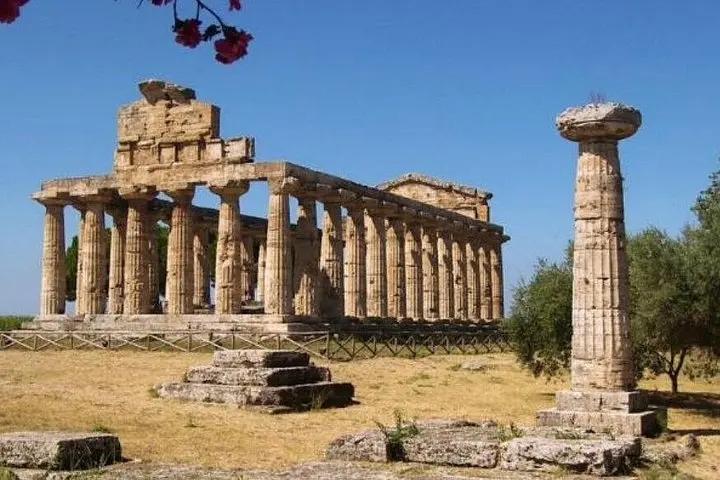
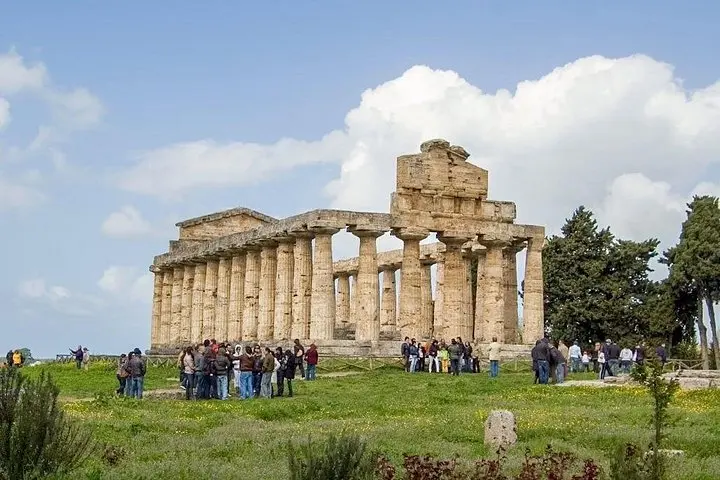
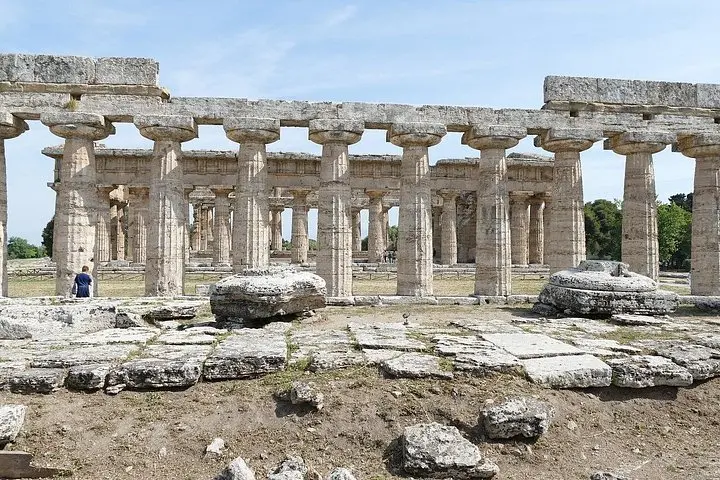
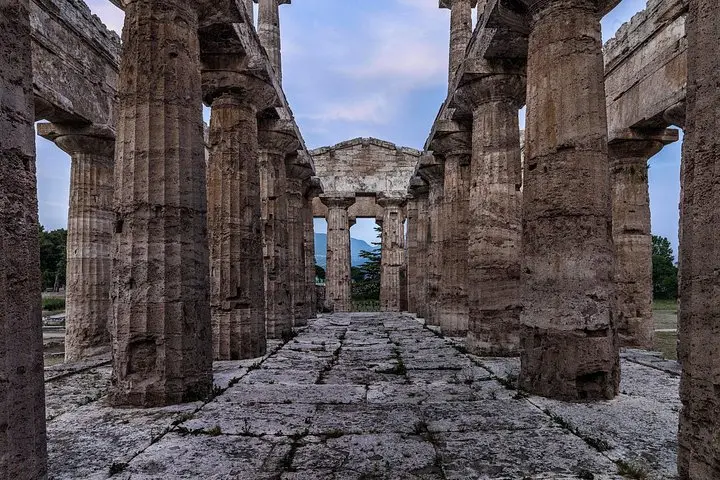
You step off the modern road into a wide scrub plain where stone columns rise like questions asked long ago. Wind moves across low grass and the three great Doric temples — their fluted shafts and heavy architraves — hold the light like living geometry. The guide, an archaeologist, directs your gaze: a metope here, a repaired cornice there, the worn grooves of ancient processional routes.
You step off the modern road into a wide scrub plain where stone columns rise like questions asked long ago. Wind moves across low grass and the three great Doric temples — their fluted shafts and heavy architraves — hold the light like living geometry. The guide, an archaeologist, directs your gaze: a metope here, a repaired cornice there, the worn grooves of ancient processional routes.
Paestum began as a Greek colony (Poseidonia) around the 6th century BCE and later adopted Italic and Roman life; its temples, forums, and tombs record those changes in stone. Geologically the site sits on the Sele river plain with alluvial soils that preserved temple platforms and necropoleis; culturally it’s part of the Cilento region and the broader Campania story of Hellenic influence in Italy. Local insights: the best light for photos is late afternoon, fresco fragments in the small museum explain burial practices, and villages nearby still practice traditional mozzarella making.
Practically, this private, two-hour tour with skip-the-line entrance focuses on architecture, iconography, and social context: expect close readings of temple plans and guided stops at the basilica, macellum, and the Greek agora. Wear sturdy shoes — surfaces are uneven — and bring water and sun protection. Tours are adaptable for slower paces and family groups but avoid climbing on monuments. If you want deeper study, ask the archaeologist about excavation history and conservation efforts before you leave.