THE ADVENTURE COLLECTIVE® · Independent discovery and booking for outdoor travel

A full-day pairing of Campania’s living food culture and ancient ruins: visit a working buffalo farm to see mozzarella made, then explore the extraordinary Doric temples of Paestum with a specialist guide. Practical for travelers based in Salerno, this tour blends tasting, history, and easy walking.
A full-day pairing of Campania’s living food culture and ancient ruins: visit a working buffalo farm to see mozzarella made, then explore the extraordinary Doric temples of Paestum with a specialist guide. Practical for travelers based in Salerno, this tour blends tasting, history, and easy walking.
You step off the air-conditioned van into a wide, low plain where a Mediterranean breeze pushes salt and grassland scents across your face.
The farm sits a short drive from the Tyrrhenian coast; buffalo low in the pasture, and beyond them the Doric columns of Paestum rise like anchors from an older world.
Verified experiences and guided adventures in the surrounding area.
Operated by Salerno Incoming Tour and Stay · Paestum, Campania
You step off the air-conditioned van into a wide, low plain where a Mediterranean breeze pushes salt and grassland scents across your face.
The farm sits a short drive from the Tyrrhenian coast; buffalo low in the pasture, and beyond them the Doric columns of Paestum rise like anchors from an older world.
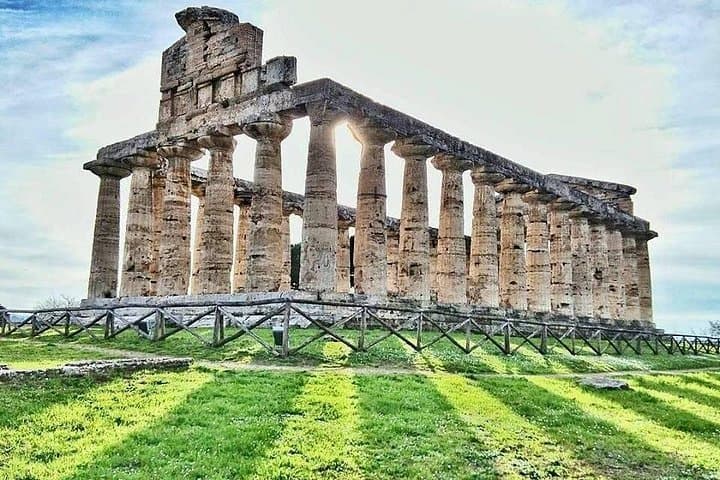
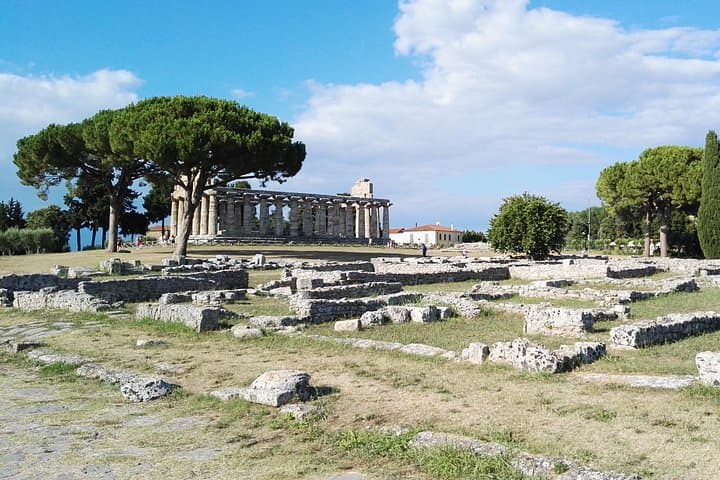
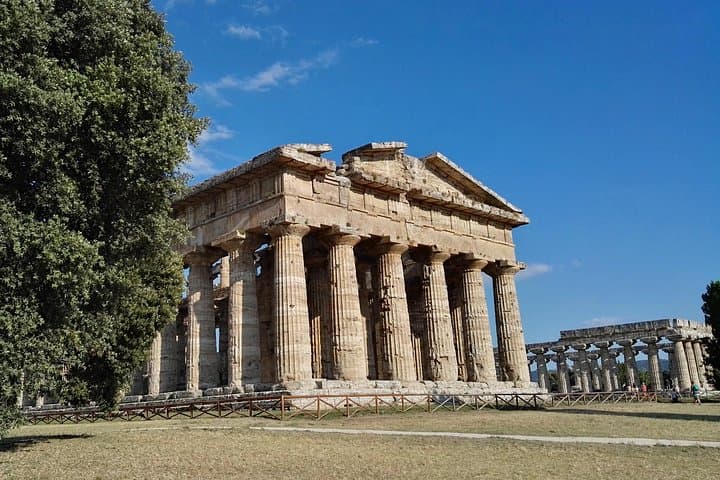
Paestum—founded as Poseidonia by Greek settlers in the 7th century B.C.—keeps its temples remarkably whole: broad Doric columns, heavy entablatures, and a grid of city walls and towers that mark an ancient civic order.
The plain is alluvial—silt deposited from nearby rivers—making the land fertile for pastures and the water-rich environment perfect for buffalo dairy.
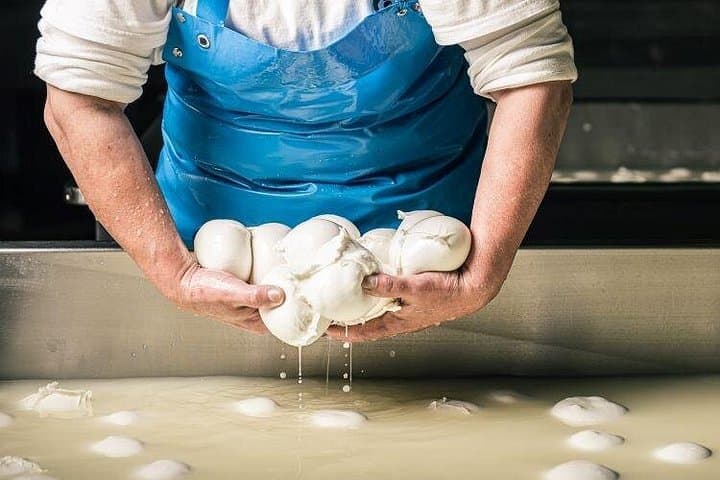
The tour pairs two complementary histories: the living agricultural practice of Campania’s mozzarella di bufala and the archaeological legacy of Magna Graecia. At the cheese factory you watch curd become mozzarella, learn about milk temperature and stretching technique, and finish with a tasting of fresh, still-warm cheese.
Then a specialist guide walks the temple area—Temple of Hera, Athena, Neptune—explaining construction methods, funerary finds (including the Tomb of the Diver in the museum), and how Roman and Greek layers overlap.
Practical edge: wear sturdy, closed shoes for the farm and uneven archaeological pavements, bring sun protection and a reusable water bottle, and plan for about six to seven hours including transfers. The experience is low-impact physically but rich in sensory detail—salt, warm curd, stone — and best timed for cooler morning starts or late afternoons to avoid the midday heat.
Yes; the visit to the cheese factory ends with a tasting of fresh mozzarella and selected dairy products.
Transfers are provided from Salerno; exact pickup points are confirmed at booking and should be reconfirmed before departure.
Parts of the Paestum museum are accessible, but the temple area has uneven ancient stone and grass that can be difficult for wheelchairs—contact the operator for specific accessibility arrangements.
The tour includes guided commentary; check your booking to confirm whether museum entry is covered—some shared departures list guide service with admission handled separately.
Salerno Incoming Tour and Stay operates guided outdoor trips and adventures with an emphasis on safety, stewardship, and memorable experiences.
You step off the air-conditioned van into a wide, low plain where a Mediterranean breeze pushes salt and grassland scents across your face.
The farm sits a short drive from the Tyrrhenian coast; buffalo low in the pasture, and beyond them the Doric columns of Paestum rise like anchors from an older world.
Paestum—founded as Poseidonia by Greek settlers in the 7th century B.C.—keeps its temples remarkably whole: broad Doric columns, heavy entablatures, and a grid of city walls and towers that mark an ancient civic order.
The plain is alluvial—silt deposited from nearby rivers—making the land fertile for pastures and the water-rich environment perfect for buffalo dairy.
The tour pairs two complementary histories: the living agricultural practice of Campania’s mozzarella di bufala and the archaeological legacy of Magna Graecia. At the cheese factory you watch curd become mozzarella, learn about milk temperature and stretching technique, and finish with a tasting of fresh, still-warm cheese.
Then a specialist guide walks the temple area—Temple of Hera, Athena, Neptune—explaining construction methods, funerary finds (including the Tomb of the Diver in the museum), and how Roman and Greek layers overlap.
Practical edge: wear sturdy, closed shoes for the farm and uneven archaeological pavements, bring sun protection and a reusable water bottle, and plan for about six to seven hours including transfers. The experience is low-impact physically but rich in sensory detail—salt, warm curd, stone — and best timed for cooler morning starts or late afternoons to avoid the midday heat.