THE ADVENTURE COLLECTIVE® · Independent discovery and booking for outdoor travel

Canoes thread a narrow gorge, guides read currents like a map, and three tiers of plunging water finish the story at Pagsanjan. This full‑day tour from Manila pairs the classic 'shooting the rapids' canoe trip with a supervised swim and included lunch.
Canoes thread a narrow gorge, guides read currents like a map, and three tiers of plunging water finish the story at Pagsanjan. This full‑day tour from Manila pairs the classic 'shooting the rapids' canoe trip with a supervised swim and included lunch.
The canoe slips forward with an easy creak and then the river takes over. Green walls close in, sunlight narrows to a ribbon, and the boatman’s paddle carves patterns in water that wants to run. By the time you hear the rumble—first a tremor, then an insistence—the three-tiered drop of Pagsanjan (locally called Magdapio Falls) reveals itself through spray, and the idea of standing under that sheet of water feels equal parts primal and possible.
Verified experiences and guided adventures in the surrounding area.
Operated by Travel Time Philippines · Cavinti, Laguna
The canoe slips forward with an easy creak and then the river takes over. Green walls close in, sunlight narrows to a ribbon, and the boatman’s paddle carves patterns in water that wants to run. By the time you hear the rumble—first a tremor, then an insistence—the three-tiered drop of Pagsanjan (locally called Magdapio Falls) reveals itself through spray, and the idea of standing under that sheet of water feels equal parts primal and possible.
This is the classic 'shooting the rapids' route: a dugout canoe pushed and steered for kilometers through a gorge cut into Laguna’s uplands by the Balanac–Pagsanjan river system. The attraction has drawn visitors since the Spanish colonial era when travelers made pilgrimages to see the falls’ dramatic curtains and plunge pools. Geologically, the falls trace water moving across volcanic-age flows and friable riverine deposits, slicing steep gorges and creating the pools that feed each successive drop.
Culturally, the trip is as much about the boatmen—often multigenerational families with techniques passed down through the barangays—as it is about the waterfall. Expect calls and jokes, steady hands on long bamboo poles, and the practiced choreography of ferrying visitors through fast current and narrow channels. An alternate access point from Cavinti opens the trip to a short trek and viewpoints above the falls if you’d rather combine a hike with the swim.
Practically: plan for a full day. This tour runs roughly 5–8 hours from Manila including pickup, a 1–1.5 hour drive to the launch site, and 45–60 minutes on the water each way. Wear quick-dry clothing and secure footwear—flip-flops will let go where a rock is slick. Bring a towel and a change of clothes; there’s a supervised swim beneath the lower tier but currents can be strong near the plunge pool rim. Your guide will brief you on safety and buoyancy devices are typically provided, but if you’re uncomfortable with strong currents, choose the Cavinti viewpoint route instead.
Food and logistics are straightforward: the tour includes bottled water and lunch, and operates with small groups (max 15). It’s family-friendly but not recommended for travelers with serious spinal or cardiovascular conditions or for pregnant visitors; the boat ride and water exposure demand basic mobility and comfort in moving water.
Timing matters. Visit early to avoid midday crowds and catch softer light on the canyon walls. Bring a waterproof case for your camera, tip the boat crew for smooth, confident navigation, and leave no trace—local guides rely on the river’s health for their livelihood. When the spray settles and you climb back into the van, you’ll have more than a postcard: you’ll have a day shaped by motion—paddles, water, and the deliberate skill of guides who still read the river like a map.
Expect about 45–60 minutes each way on the river from the main Pagsanjan launch point; timing varies with water level.
Yes—supervised swimming beneath the lower tier is part of most tours, but strong currents mean you must follow crew directions and wear provided floatation if required.
Families with children commonly take the trip; operators limit group size and assess safety—verify age restrictions when booking.
Trips may be canceled for heavy rain or unsafe river conditions; the tour offers refunds if canceled at least 24 hours in advance per the supplier policy.
Lunch and bottled water are included in this tour, but bring snacks if you have specific dietary needs and confirm dietary requirements when booking.
Yes—this tour includes air‑conditioned vehicle pickup from Manila hotels or arranged points; expect about a 1–1.5 hour transfer each way depending on traffic.
Travel Time Philippines operates guided outdoor trips and adventures with an emphasis on safety, stewardship, and memorable experiences.
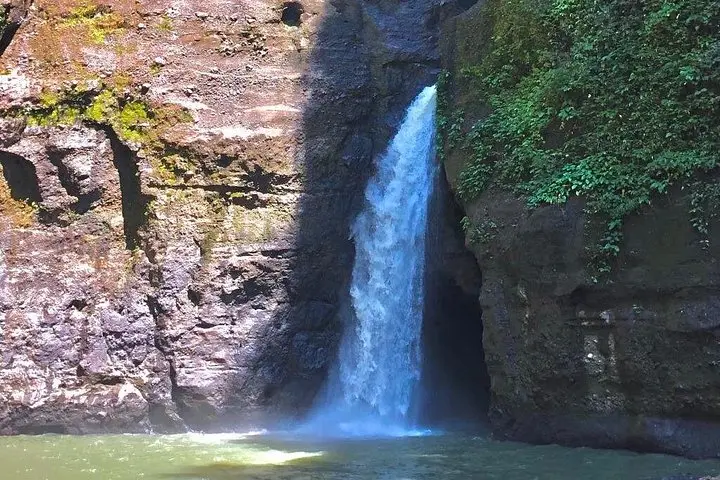
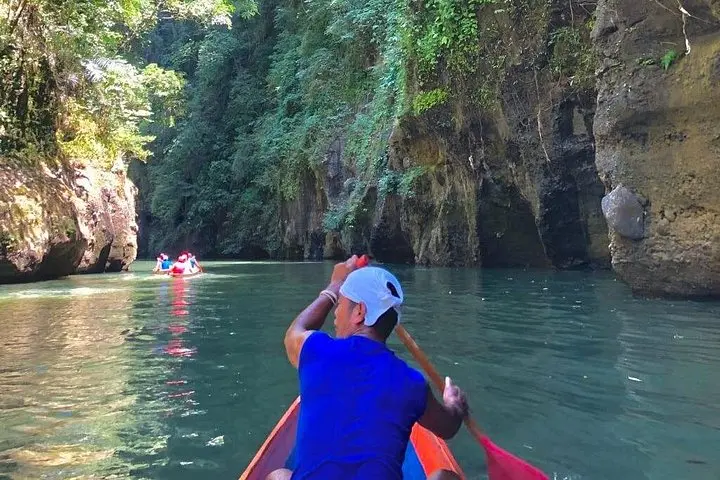
The canoe slips forward with an easy creak and then the river takes over. Green walls close in, sunlight narrows to a ribbon, and the boatman’s paddle carves patterns in water that wants to run. By the time you hear the rumble—first a tremor, then an insistence—the three-tiered drop of Pagsanjan (locally called Magdapio Falls) reveals itself through spray, and the idea of standing under that sheet of water feels equal parts primal and possible.
The canoe slips forward with an easy creak and then the river takes over. Green walls close in, sunlight narrows to a ribbon, and the boatman’s paddle carves patterns in water that wants to run. By the time you hear the rumble—first a tremor, then an insistence—the three-tiered drop of Pagsanjan (locally called Magdapio Falls) reveals itself through spray, and the idea of standing under that sheet of water feels equal parts primal and possible.
This is the classic 'shooting the rapids' route: a dugout canoe pushed and steered for kilometers through a gorge cut into Laguna’s uplands by the Balanac–Pagsanjan river system. The attraction has drawn visitors since the Spanish colonial era when travelers made pilgrimages to see the falls’ dramatic curtains and plunge pools. Geologically, the falls trace water moving across volcanic-age flows and friable riverine deposits, slicing steep gorges and creating the pools that feed each successive drop.
Culturally, the trip is as much about the boatmen—often multigenerational families with techniques passed down through the barangays—as it is about the waterfall. Expect calls and jokes, steady hands on long bamboo poles, and the practiced choreography of ferrying visitors through fast current and narrow channels. An alternate access point from Cavinti opens the trip to a short trek and viewpoints above the falls if you’d rather combine a hike with the swim.
Practically: plan for a full day. This tour runs roughly 5–8 hours from Manila including pickup, a 1–1.5 hour drive to the launch site, and 45–60 minutes on the water each way. Wear quick-dry clothing and secure footwear—flip-flops will let go where a rock is slick. Bring a towel and a change of clothes; there’s a supervised swim beneath the lower tier but currents can be strong near the plunge pool rim. Your guide will brief you on safety and buoyancy devices are typically provided, but if you’re uncomfortable with strong currents, choose the Cavinti viewpoint route instead.
Food and logistics are straightforward: the tour includes bottled water and lunch, and operates with small groups (max 15). It’s family-friendly but not recommended for travelers with serious spinal or cardiovascular conditions or for pregnant visitors; the boat ride and water exposure demand basic mobility and comfort in moving water.
Timing matters. Visit early to avoid midday crowds and catch softer light on the canyon walls. Bring a waterproof case for your camera, tip the boat crew for smooth, confident navigation, and leave no trace—local guides rely on the river’s health for their livelihood. When the spray settles and you climb back into the van, you’ll have more than a postcard: you’ll have a day shaped by motion—paddles, water, and the deliberate skill of guides who still read the river like a map.