THE ADVENTURE COLLECTIVE® · Independent discovery and booking for outdoor travel

Travel from Villahermosa into Chiapas jungle to walk among Palenque’s carved temples, climb the Temple of the Inscriptions and, optionally, swim beneath the travertine tiers of Agua Azul. This full-day tour pairs Maya history with dramatic geology.
Travel from Villahermosa into Chiapas jungle to walk among Palenque’s carved temples, climb the Temple of the Inscriptions and, optionally, swim beneath the travertine tiers of Agua Azul. This full-day tour pairs Maya history with dramatic geology.
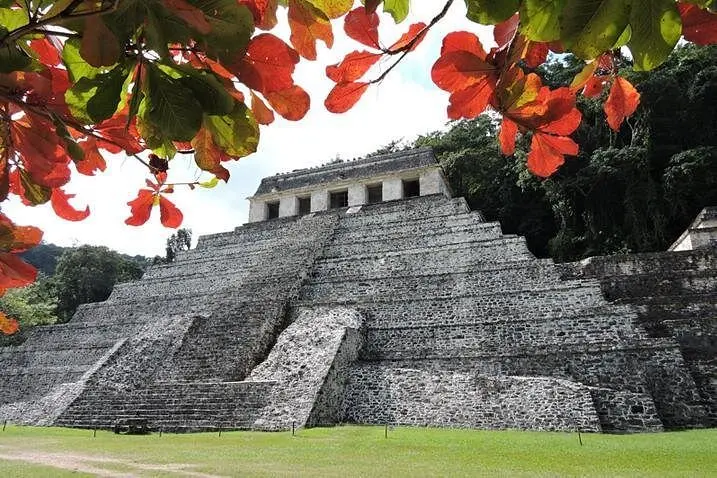
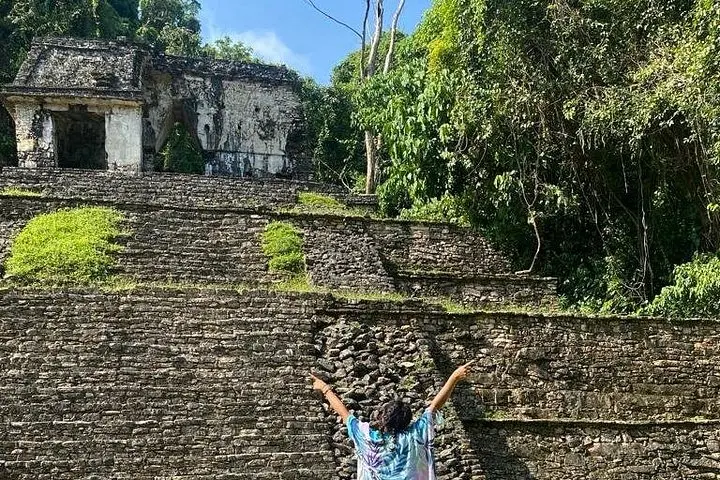
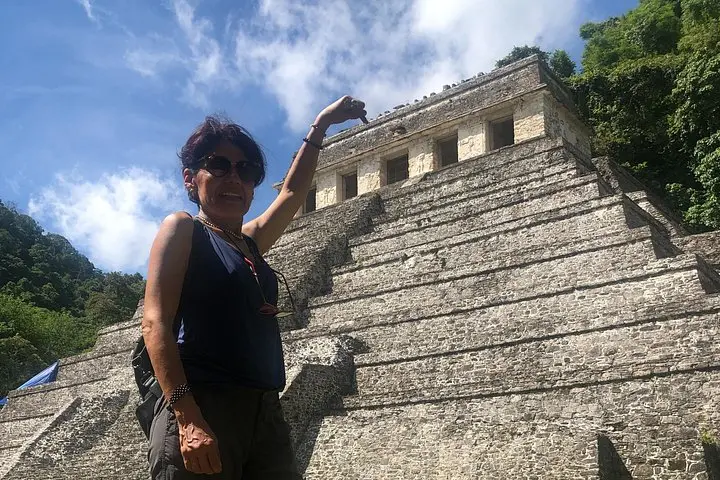
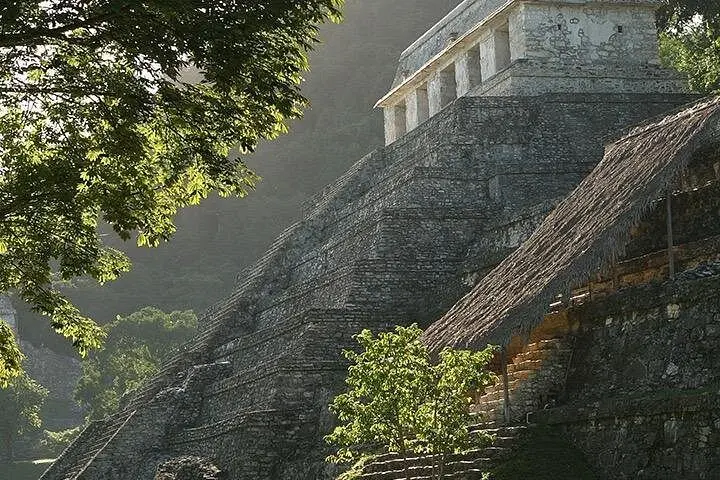
Dawn light slices through humid lowland jungle as the road from Villahermosa winds toward Palenque. Trees press close; calls of howler monkeys punctuate the air. When the first limestone steps appear, sheer-faced temples rise from the green—temples that once mapped a Maya world of kings, astronomy and ritual.
Verified experiences and guided adventures in the surrounding area.
Operated by Encuentro T · Palenque, Chiapas
Dawn light slices through humid lowland jungle as the road from Villahermosa winds toward Palenque. Trees press close; calls of howler monkeys punctuate the air. When the first limestone steps appear, sheer-faced temples rise from the green—temples that once mapped a Maya world of kings, astronomy and ritual.
Palenque was a major Classic-period Maya center (6th–8th centuries CE). Its best-known structures—the Temple of the Inscriptions, the Temple of the Foliated Cross and the palace—show refined limestone masonry and carved reliefs. Geologically, the region is karst country: rainwater dissolves limestone into caves, sinkholes and the travertine shelves that feed nearby cascades like Agua Azul. The modern town and the site reflect Chiapas’s mixed heritage: Lacandon and Ch’ol Maya traditions alongside Spanish-era names (Palenque derives from a Ch’ol word otulún, meaning a fenced or fortified place).
On a shared day tour you’ll spend several hours exploring plazas and climbing narrow stairways, with a local guide adding context to glyphs and royal tombs. If you choose the Agua Azul option, expect multiple short swims in clear, turquoise pools beneath 4–6 meter falls when conditions allow—currents and weather dictate access.
Practical edge: start early to beat heat and afternoon storms, wear closed-toe shoes for uneven stone and jungle trails, and carry insect repellent, sun protection and water. Transfers run from Villahermosa in air-conditioned vehicles; total outing is roughly 8–9 hours. Respect site rules, stay on marked paths and plan for humidity and insects—this is jungle archaeology, not a paved museum stroll.
Yes—entrance to the Palenque Archaeological Site is included in the tour price as listed.
Swimming is allowed when guides confirm safe conditions; heavy rains can make currents hazardous and access may be restricted.
The tour is advertised as suitable for all fitness levels, but accessing some temples requires climbing steep, uneven steps—assist children and those with mobility limits accordingly.
Transfers vary with traffic and pickup point; the full tour is about 8–9 hours round-trip from Villahermosa, so expect several hours of driving total.
Encuentro T operates guided outdoor trips and adventures with an emphasis on safety, stewardship, and memorable experiences.
Dawn light slices through humid lowland jungle as the road from Villahermosa winds toward Palenque. Trees press close; calls of howler monkeys punctuate the air. When the first limestone steps appear, sheer-faced temples rise from the green—temples that once mapped a Maya world of kings, astronomy and ritual.
Dawn light slices through humid lowland jungle as the road from Villahermosa winds toward Palenque. Trees press close; calls of howler monkeys punctuate the air. When the first limestone steps appear, sheer-faced temples rise from the green—temples that once mapped a Maya world of kings, astronomy and ritual.
Palenque was a major Classic-period Maya center (6th–8th centuries CE). Its best-known structures—the Temple of the Inscriptions, the Temple of the Foliated Cross and the palace—show refined limestone masonry and carved reliefs. Geologically, the region is karst country: rainwater dissolves limestone into caves, sinkholes and the travertine shelves that feed nearby cascades like Agua Azul. The modern town and the site reflect Chiapas’s mixed heritage: Lacandon and Ch’ol Maya traditions alongside Spanish-era names (Palenque derives from a Ch’ol word otulún, meaning a fenced or fortified place).
On a shared day tour you’ll spend several hours exploring plazas and climbing narrow stairways, with a local guide adding context to glyphs and royal tombs. If you choose the Agua Azul option, expect multiple short swims in clear, turquoise pools beneath 4–6 meter falls when conditions allow—currents and weather dictate access.
Practical edge: start early to beat heat and afternoon storms, wear closed-toe shoes for uneven stone and jungle trails, and carry insect repellent, sun protection and water. Transfers run from Villahermosa in air-conditioned vehicles; total outing is roughly 8–9 hours. Respect site rules, stay on marked paths and plan for humidity and insects—this is jungle archaeology, not a paved museum stroll.