THE ADVENTURE COLLECTIVE® · Independent discovery and booking for outdoor travel

Climb to the sharp, multicolored slopes of Pallay Punchu and finish the day with a soak in Occobamba’s medicinal hot springs. This full‑day trek from Cusco blends dramatic geology, highland culture and practical, guide‑led logistics.
Climb to the sharp, multicolored slopes of Pallay Punchu and finish the day with a soak in Occobamba’s medicinal hot springs. This full‑day trek from Cusco blends dramatic geology, highland culture and practical, guide‑led logistics.
A thin Andean light slices across stone as travelers climb toward Pallay Punchu, the sharp‑peaked “hill of colors” east of Cusco. The trail rises through puna grass and winds beside ribbed red and yellow strata that seem to flare when the sun breaks a cloud—colors born of clay, quartz and iron‑rich sands. Breath shortens with altitude; the valley spreads below and Langui’s lake glitters like a muted mirror.
Verified experiences and guided adventures in the surrounding area.
Operated by Peru4Fun Servicios Turísticos EIRL · Cusco, Cusco
A thin Andean light slices across stone as travelers climb toward Pallay Punchu, the sharp‑peaked “hill of colors” east of Cusco. The trail rises through puna grass and winds beside ribbed red and yellow strata that seem to flare when the sun breaks a cloud—colors born of clay, quartz and iron‑rich sands. Breath shortens with altitude; the valley spreads below and Langui’s lake glitters like a muted mirror.
The Cordillera around Cusco is layered with human history: Quechua communities have regarded nearby summits as apus—sacred mountains—while colonial maps first named these high plateaus for their useful pastures and fisheries. Geologically, Pallay Punchu’s banding is a visible record of sediment, uplift and erosion; cultural patterns—terraces and alpaca herds—thread the landscape.
The route includes steep sections, rocky ridgelines and highland wetlands before a restorative soak in the medicinal waters at Occobamba. Expect clear, cold air in the morning and strong sun by midday; animals and birds are adapted to the open, wind‑swept ecosystem.
Practically: this is a long, full‑day outing best attempted after 1–2 days of acclimatization in Cusco. Layer for wind and sun, bring at least 2 liters of water, and pack a small first‑aid kit for blisters and altitude headaches. Local guides handle logistics and admission; private transport shortens the travel time so you can focus on the walk. Time your visit for the dry season (May–September) for firmer trails and clearer skies, and be prepared for muddy, slushy conditions during the austral summer rains.
Pallay Punchu sits around 4,300–4,800 m (estimate varies by route); acclimatize in Cusco, ascend slowly, hydrate and notify your guide if you feel severe symptoms.
The itinerary includes access to Occobamba hot springs; pools are natural and generally safe but avoid long immersion if you have cardiovascular issues and follow local hygiene rules.
Drive time varies with your pickup point and road conditions—plan for roughly 2–3 hours each way with a private vehicle on this itinerary.
This trip is not recommended for pregnant travelers or people with significant spinal or heart conditions; children may attend but assess their stamina for long days at altitude.
Peru4Fun Servicios Turísticos EIRL operates guided outdoor trips and adventures with an emphasis on safety, stewardship, and memorable experiences.
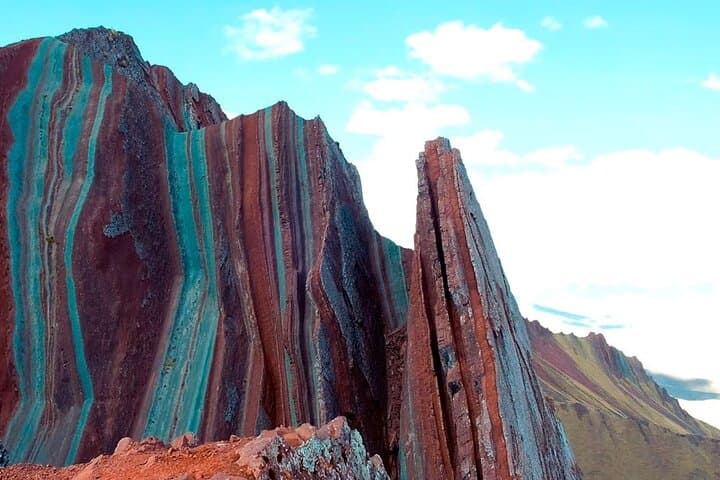
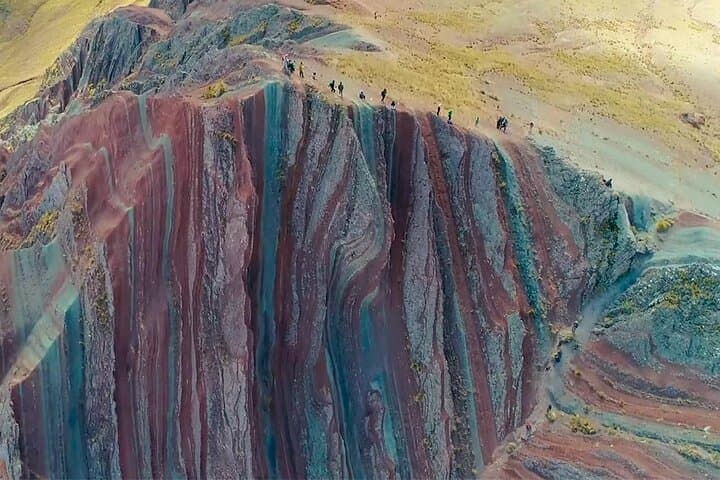
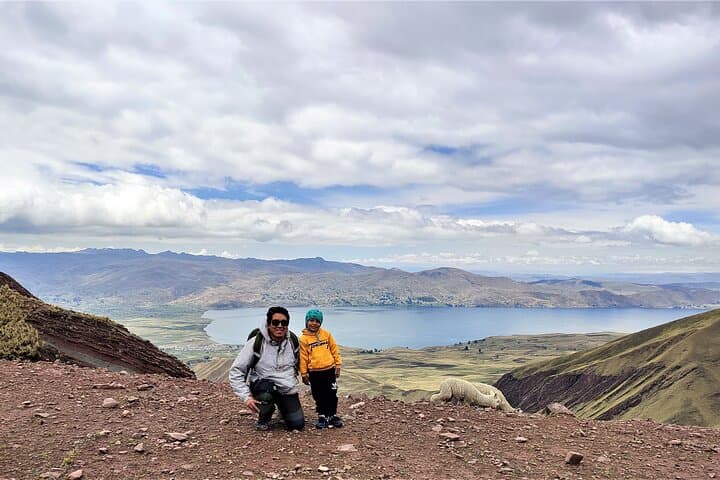
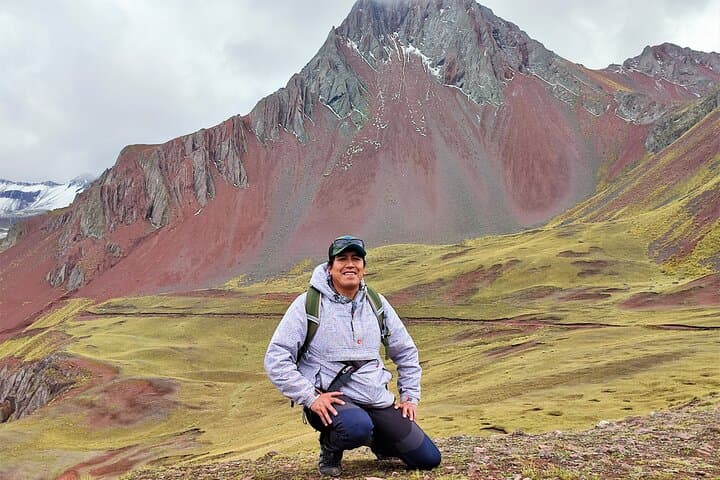
A thin Andean light slices across stone as travelers climb toward Pallay Punchu, the sharp‑peaked “hill of colors” east of Cusco. The trail rises through puna grass and winds beside ribbed red and yellow strata that seem to flare when the sun breaks a cloud—colors born of clay, quartz and iron‑rich sands. Breath shortens with altitude; the valley spreads below and Langui’s lake glitters like a muted mirror.
A thin Andean light slices across stone as travelers climb toward Pallay Punchu, the sharp‑peaked “hill of colors” east of Cusco. The trail rises through puna grass and winds beside ribbed red and yellow strata that seem to flare when the sun breaks a cloud—colors born of clay, quartz and iron‑rich sands. Breath shortens with altitude; the valley spreads below and Langui’s lake glitters like a muted mirror.
The Cordillera around Cusco is layered with human history: Quechua communities have regarded nearby summits as apus—sacred mountains—while colonial maps first named these high plateaus for their useful pastures and fisheries. Geologically, Pallay Punchu’s banding is a visible record of sediment, uplift and erosion; cultural patterns—terraces and alpaca herds—thread the landscape.
The route includes steep sections, rocky ridgelines and highland wetlands before a restorative soak in the medicinal waters at Occobamba. Expect clear, cold air in the morning and strong sun by midday; animals and birds are adapted to the open, wind‑swept ecosystem.
Practically: this is a long, full‑day outing best attempted after 1–2 days of acclimatization in Cusco. Layer for wind and sun, bring at least 2 liters of water, and pack a small first‑aid kit for blisters and altitude headaches. Local guides handle logistics and admission; private transport shortens the travel time so you can focus on the walk. Time your visit for the dry season (May–September) for firmer trails and clearer skies, and be prepared for muddy, slushy conditions during the austral summer rains.