THE ADVENTURE COLLECTIVE® · Independent discovery and booking for outdoor travel

Trade the medina’s bustle for the Palmeraie’s shaded tracks: a two-hour camel caravan through Marrakech’s palm oasis, ending with mint tea at a Berber home. Practical, scenic, and family-friendly — ideal for first-time riders.
Trade the medina’s bustle for the Palmeraie’s shaded tracks: a two-hour camel caravan through Marrakech’s palm oasis, ending with mint tea at a Berber home. Practical, scenic, and family-friendly — ideal for first-time riders.
Sunlight slices through rows of tall, arched palm trunks as a caravan of camels steps onto sandy tracks north of Marrakech. The Palmeraie opens like a green room behind the city — an irrigated palm oasis where riders sit high above the scrub, the city’s minarets a distant silhouette. For two hours you move slowly through this human-made grove, pausing at a small Berber home for mint tea and a glimpse of everyday hospitality.
Verified experiences and guided adventures in the surrounding area.
Operated by Transkech · Marrakech, Marrakesh-Safi
Sunlight slices through rows of tall, arched palm trunks as a caravan of camels steps onto sandy tracks north of Marrakech. The Palmeraie opens like a green room behind the city — an irrigated palm oasis where riders sit high above the scrub, the city’s minarets a distant silhouette. For two hours you move slowly through this human-made grove, pausing at a small Berber home for mint tea and a glimpse of everyday hospitality.
The Palmeraie has been shaped by centuries of irrigation and oasis agriculture; its palms were planted and managed to shelter water and soil in an otherwise dry landscape. Geologically the site sits on alluvial soils fed by historic irrigation channels, making it a patchwork of palms, palms' shade-grown gardens, and sandy pistes. Culturally, camel caravans recall trans-Saharan trade and local pastoral traditions; meeting a Berber family provides a living thread to those customs.
Expect flat, sandy terrain with short stretches of loose gravel and shaded sections under palm fronds. The pace is easy but steady; camels sway and rise, so core stability helps. Practical tips: wear closed-toe shoes, bring sunscreen and layered clothing for cooler mornings, carry a reusable water bottle though bottled water is typically supplied, and bring a small tip for guides. Morning or late-afternoon departures avoid peak heat and offer stronger light for photos.
This is a low-impact, accessible way to step outside Marrakech’s medina, trade the bustle for wide skies, and leave with a quieter sense of place — and, most likely, a strong cup of mint tea still warm in your hands.
Yes; tours typically welcome children but require adult accompaniment and may provide infant seating. Confirm age limits with the operator before booking.
Many operators include hotel or riad pick-up and drop-off by air-conditioned 4x4 or minivan—check your booking details for confirmation.
Yes, but always ask permission first and be respectful; a small tip or offering is appreciated when photographing inside homes.
Sit straight, hold handrails if provided, and dismount slowly; travelers with serious spinal issues are advised to skip camel riding.
Transkech operates guided outdoor trips and adventures with an emphasis on safety, stewardship, and memorable experiences.
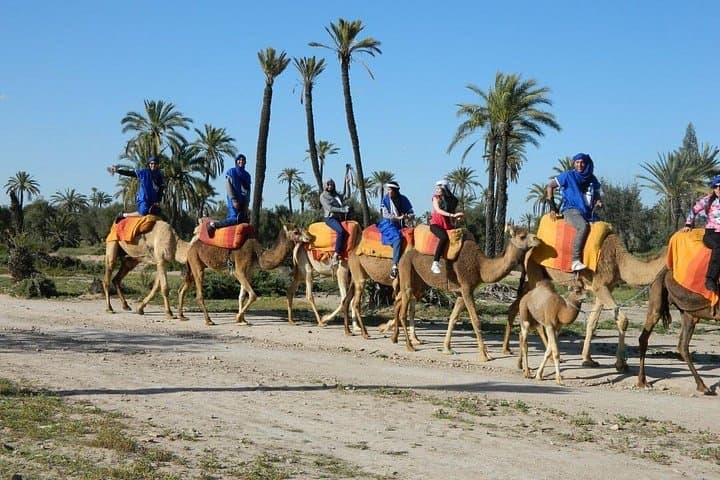
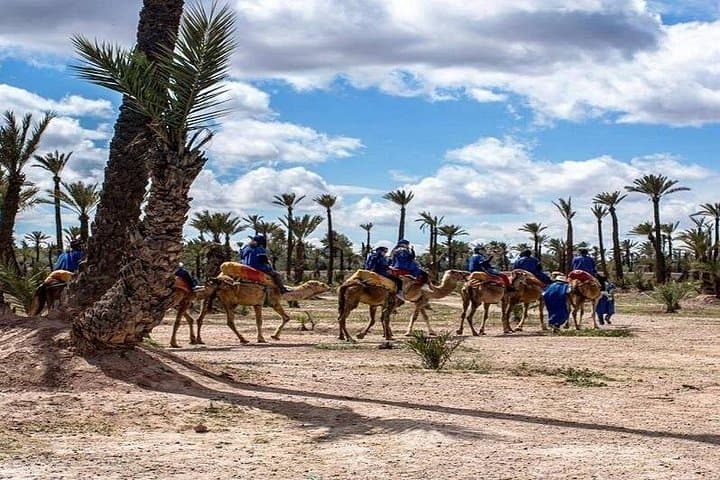
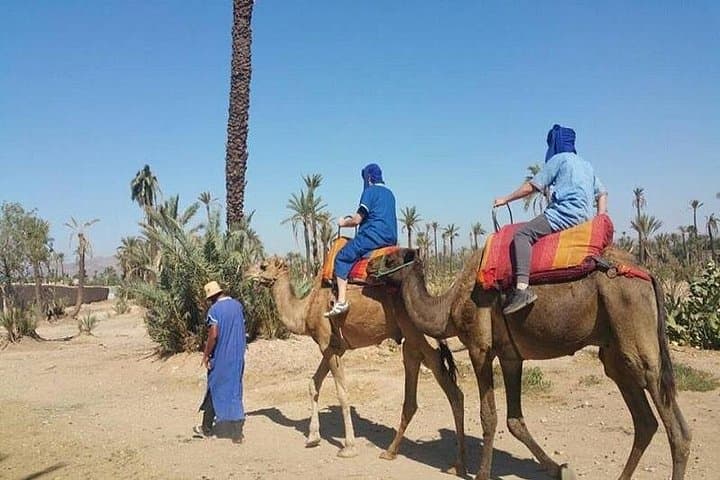
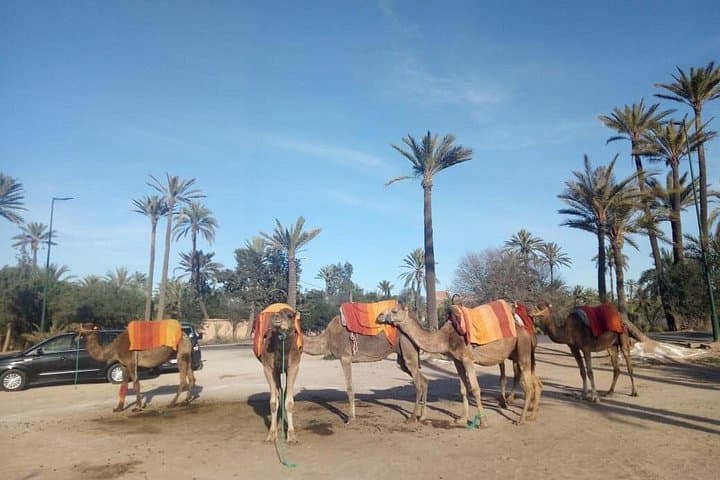
Sunlight slices through rows of tall, arched palm trunks as a caravan of camels steps onto sandy tracks north of Marrakech. The Palmeraie opens like a green room behind the city — an irrigated palm oasis where riders sit high above the scrub, the city’s minarets a distant silhouette. For two hours you move slowly through this human-made grove, pausing at a small Berber home for mint tea and a glimpse of everyday hospitality.
Sunlight slices through rows of tall, arched palm trunks as a caravan of camels steps onto sandy tracks north of Marrakech. The Palmeraie opens like a green room behind the city — an irrigated palm oasis where riders sit high above the scrub, the city’s minarets a distant silhouette. For two hours you move slowly through this human-made grove, pausing at a small Berber home for mint tea and a glimpse of everyday hospitality.
The Palmeraie has been shaped by centuries of irrigation and oasis agriculture; its palms were planted and managed to shelter water and soil in an otherwise dry landscape. Geologically the site sits on alluvial soils fed by historic irrigation channels, making it a patchwork of palms, palms' shade-grown gardens, and sandy pistes. Culturally, camel caravans recall trans-Saharan trade and local pastoral traditions; meeting a Berber family provides a living thread to those customs.
Expect flat, sandy terrain with short stretches of loose gravel and shaded sections under palm fronds. The pace is easy but steady; camels sway and rise, so core stability helps. Practical tips: wear closed-toe shoes, bring sunscreen and layered clothing for cooler mornings, carry a reusable water bottle though bottled water is typically supplied, and bring a small tip for guides. Morning or late-afternoon departures avoid peak heat and offer stronger light for photos.
This is a low-impact, accessible way to step outside Marrakech’s medina, trade the bustle for wide skies, and leave with a quieter sense of place — and, most likely, a strong cup of mint tea still warm in your hands.