THE ADVENTURE COLLECTIVE® · Independent discovery and booking for outdoor travel

Drive the legendary Pamir Highway on a seven-day journey from Dushanbe to Osh, crossing high passes, visiting Wakhan Valley and sleeping in guesthouses and a yurt camp. Expect remote roads, high-altitude scenery and deep cultural encounters.
Drive the legendary Pamir Highway on a seven-day journey from Dushanbe to Osh, crossing high passes, visiting Wakhan Valley and sleeping in guesthouses and a yurt camp. Expect remote roads, high-altitude scenery and deep cultural encounters.
You wake in Dushanbe before dawn, the city still cool, and watch the road peel away east into river canyons where the Panj dares you with its white water and the mountains push the highway skyward.
Verified experiences and guided adventures in the surrounding area.
Operated by Kyrgyz Guest · Dushanbe, Dushanbe
You wake in Dushanbe before dawn, the city still cool, and watch the road peel away east into river canyons where the Panj dares you with its white water and the mountains push the highway skyward.
Over seven days the M41—the Pamir Highway—unspools through deep gorges, high plateaus and salt-flat plains. Geology here is in plain sight: uplifted granite and metamorphic ridges meet glacial cirques and broad, windswept plateaus. The route follows trade routes used for centuries; Soviet-era roadbuilding turned these mule tracks into a high-elevation artery that connects cultures as much as countries.
Expect small Pamiri villages, flat-roofed houses, prayer flags at passes and markets where horse tack shares shelf space with dried apricots. Nights alternate between simple guesthouses and a yurt camp on Tulpar-Kul—an immersive contrast of brick and felt under a clear, cold sky.
Practical edge: altitude is the defining factor—Taldyk Pass and Kyzyl-Art exceed 3,600 m, so plan paced ascents and hydrate. Roads vary from paved ribbon to high-altitude gravel; a Toyota Land Cruiser or similar is standard. GBAO permit is required for Tajik sections; bring passports and photocopies. Pack layered insulation, sun protection and solid boots for short walks at altitude.
Daily driving ranges from a few hours to long scenic stretches—expect remote services, basic cell coverage and rewarding viewpoints where the Pamirs open like a map. This is travel for those who want raw mountain landscapes, cultural encounters and the steady, high-country rhythm of a road that still feels like an expedition.
Yes—travel in Gorno-Badakhshan requires a GBAO permit; organizers typically obtain this for you, but carry printed copies of all documents.
Roads vary from paved to rough gravel; expect long sections of washboard and occasional river fords—a 4x4 is standard and recommended.
Altitude effects are common above 3,000 m; ascend slowly, hydrate, avoid alcohol, and discuss medications like acetazolamide with your doctor if you have prior issues.
Accommodation alternates between local guesthouses (basic but comfortable) and a traditional yurt camp near Tulpar-Kul; expect simple facilities and communal meals.
Kyrgyz Guest operates guided outdoor trips and adventures with an emphasis on safety, stewardship, and memorable experiences.
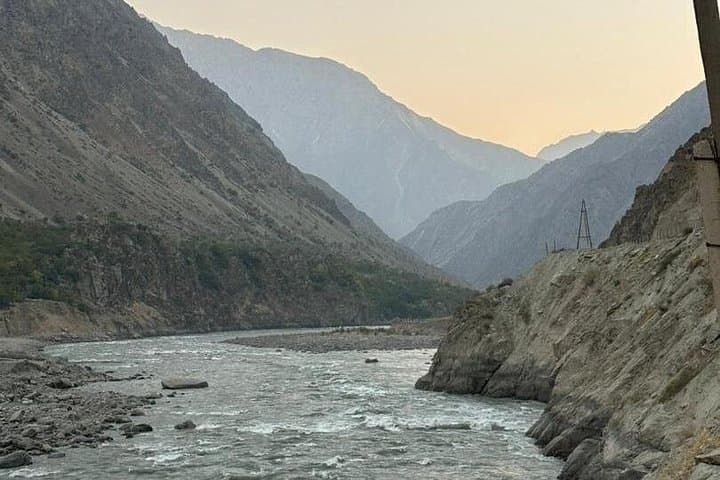


You wake in Dushanbe before dawn, the city still cool, and watch the road peel away east into river canyons where the Panj dares you with its white water and the mountains push the highway skyward.
You wake in Dushanbe before dawn, the city still cool, and watch the road peel away east into river canyons where the Panj dares you with its white water and the mountains push the highway skyward.
Over seven days the M41—the Pamir Highway—unspools through deep gorges, high plateaus and salt-flat plains. Geology here is in plain sight: uplifted granite and metamorphic ridges meet glacial cirques and broad, windswept plateaus. The route follows trade routes used for centuries; Soviet-era roadbuilding turned these mule tracks into a high-elevation artery that connects cultures as much as countries.
Expect small Pamiri villages, flat-roofed houses, prayer flags at passes and markets where horse tack shares shelf space with dried apricots. Nights alternate between simple guesthouses and a yurt camp on Tulpar-Kul—an immersive contrast of brick and felt under a clear, cold sky.
Practical edge: altitude is the defining factor—Taldyk Pass and Kyzyl-Art exceed 3,600 m, so plan paced ascents and hydrate. Roads vary from paved ribbon to high-altitude gravel; a Toyota Land Cruiser or similar is standard. GBAO permit is required for Tajik sections; bring passports and photocopies. Pack layered insulation, sun protection and solid boots for short walks at altitude.
Daily driving ranges from a few hours to long scenic stretches—expect remote services, basic cell coverage and rewarding viewpoints where the Pamirs open like a map. This is travel for those who want raw mountain landscapes, cultural encounters and the steady, high-country rhythm of a road that still feels like an expedition.