THE ADVENTURE COLLECTIVE® · Independent discovery and booking for outdoor travel

Visit Pamukkale’s bright travertine terraces and the ancient city of Hierapolis on a private day tour from Izmir. Plan for a long but rewarding day — thermal pools, a Roman theater with wide views, and an optional swim in the Cleopatra Pool.
Visit Pamukkale’s bright travertine terraces and the ancient city of Hierapolis on a private day tour from Izmir. Plan for a long but rewarding day — thermal pools, a Roman theater with wide views, and an optional swim in the Cleopatra Pool.
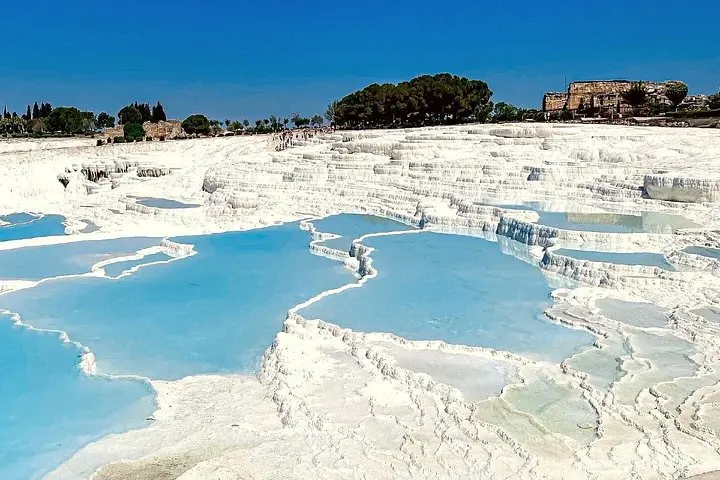
You step out of the van onto bright white terraces that catch the sun like a pale sea. Warm mineral water laps the edges of natural steps carved over millennia, and the air smells faintly metallic and hot — the landscape itself seems to push you forward, daring you to follow the flow.
Verified experiences and guided adventures in the surrounding area.
Operated by Guide of Ephesus · Pamukkale, Denizli Province
You step out of the van onto bright white terraces that catch the sun like a pale sea. Warm mineral water laps the edges of natural steps carved over millennia, and the air smells faintly metallic and hot — the landscape itself seems to push you forward, daring you to follow the flow.
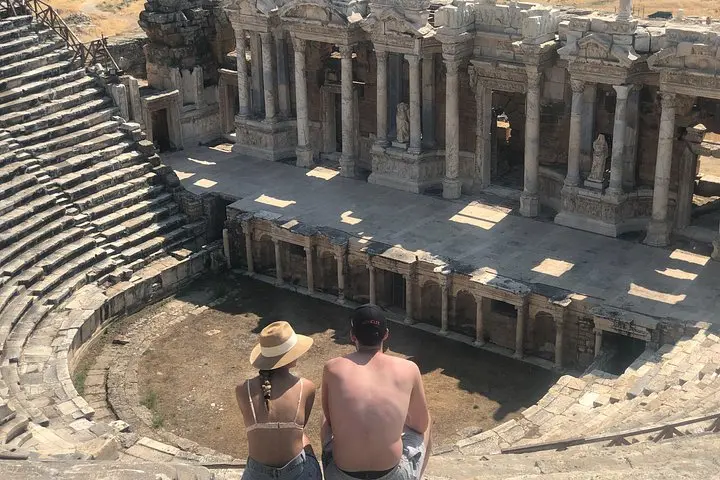
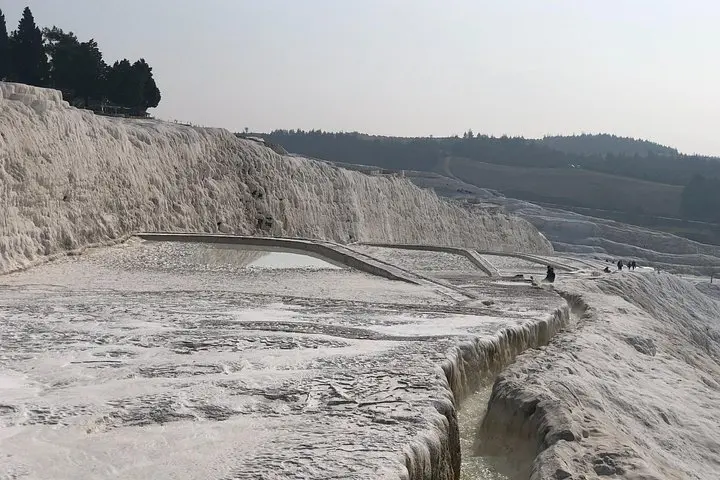
Pamukkale’s travertines are the visible skin of an active thermal system: calcium-rich springs deposit travertine as they cool, building terraces and pools that have drawn people since antiquity. Above the white slopes sits Hierapolis, a Greco-Roman spa city founded in the 2nd century BC where a monumental theater, necropolis and thermal baths tell a civic story of healing and empire.
Local culture still orbits the springs: small cafés serve rural Anatolian lunches nearby, and Karahayıt’s iron‑red waters sit a short drive away for a different thermal flavor. Geologically, the area is part of the Denizli graben; the springs are fed by deep circulation along fault systems.
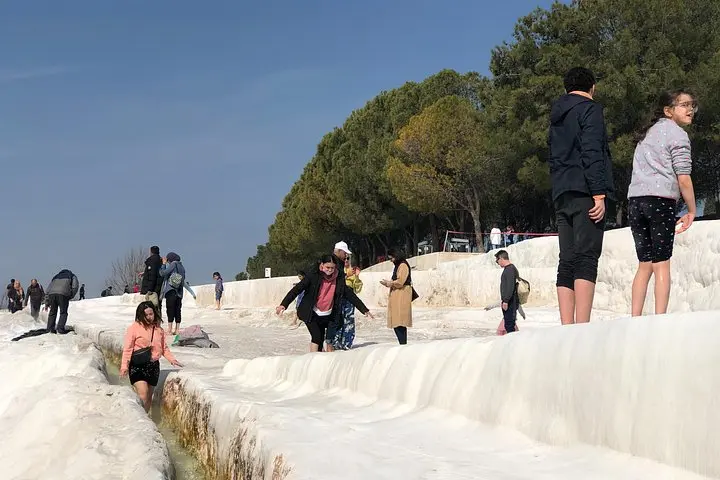
Practical guidance: the tour is a long day (about 10–11 hours from Izmir or the cruise port, roughly a 3‑hour drive each way), so plan for early departures to avoid heat and crowds. Wear non‑marking, slip‑resistant shoes (walking on wet travertine is regulated), bring sun protection, refillable water, and swimwear if you intend to pay the small fee to swim in the Cleopatra Pool among submerged columns. Respect ropes and signage — the terraces are fragile, and staying on designated paths preserves them for future visitors.
Entrance fees and the Cleopatra Pool swim fee are typically paid on site; the operator will arrange tickets to skip lines but check your booking for specifics.
The operator coordinates return timing for cruise guests and monitors docking schedules, but permits a margin for traffic; communicate your ship’s times at booking to optimize the itinerary.
Parts of Hierapolis and the main terraces have uneven terrain and steps; some areas offer stroller access but full wheelchair access is limited—contact the operator in advance for accommodations.
Swimming on the natural travertine terraces is prohibited to protect the formations; swimming is allowed only in the designated Cleopatra Pool for a fee.
Guide of Ephesus operates guided outdoor trips and adventures with an emphasis on safety, stewardship, and memorable experiences.
You step out of the van onto bright white terraces that catch the sun like a pale sea. Warm mineral water laps the edges of natural steps carved over millennia, and the air smells faintly metallic and hot — the landscape itself seems to push you forward, daring you to follow the flow.
You step out of the van onto bright white terraces that catch the sun like a pale sea. Warm mineral water laps the edges of natural steps carved over millennia, and the air smells faintly metallic and hot — the landscape itself seems to push you forward, daring you to follow the flow.
Pamukkale’s travertines are the visible skin of an active thermal system: calcium-rich springs deposit travertine as they cool, building terraces and pools that have drawn people since antiquity. Above the white slopes sits Hierapolis, a Greco-Roman spa city founded in the 2nd century BC where a monumental theater, necropolis and thermal baths tell a civic story of healing and empire.
Local culture still orbits the springs: small cafés serve rural Anatolian lunches nearby, and Karahayıt’s iron‑red waters sit a short drive away for a different thermal flavor. Geologically, the area is part of the Denizli graben; the springs are fed by deep circulation along fault systems.
Practical guidance: the tour is a long day (about 10–11 hours from Izmir or the cruise port, roughly a 3‑hour drive each way), so plan for early departures to avoid heat and crowds. Wear non‑marking, slip‑resistant shoes (walking on wet travertine is regulated), bring sun protection, refillable water, and swimwear if you intend to pay the small fee to swim in the Cleopatra Pool among submerged columns. Respect ropes and signage — the terraces are fragile, and staying on designated paths preserves them for future visitors.