THE ADVENTURE COLLECTIVE® · Independent discovery and booking for outdoor travel

A full-day from Marmaris to Pamukkale and Hierapolis delivers stark white travertine terraces, Roman ruins and thermal waters. Expect a long drive, guided exploration of the terraces and archaeological highlights, plus practical tips for timing and footwear.
A full-day from Marmaris to Pamukkale and Hierapolis delivers stark white travertine terraces, Roman ruins and thermal waters. Expect a long drive, guided exploration of the terraces and archaeological highlights, plus practical tips for timing and footwear.
You step off the coach into a pale landscape where hot water has been sculpting stone for millennia: terraces of chalky white, steaming in the morning air, their shallow pools reflecting a hard Anatolian light. The travertines of Pamukkale crackle underfoot, the mineral-rich water daring you to trace the same channels that fed Roman baths once packed with emperors and pilgrims.
Verified experiences and guided adventures in the surrounding area.
Operated by Tourmania · Pamukkale, Denizli Province
You step off the coach into a pale landscape where hot water has been sculpting stone for millennia: terraces of chalky white, steaming in the morning air, their shallow pools reflecting a hard Anatolian light. The travertines of Pamukkale crackle underfoot, the mineral-rich water daring you to trace the same channels that fed Roman baths once packed with emperors and pilgrims.
This is both geology and history in plain view. The terraces formed as calcium-rich springs cooled and deposited travertine; above them sits Hierapolis, a Hellenistic city later expanded by Rome, whose theatre, necropolis and thermal complex map daily life around healing waters. Local culture still ties to textiles — a quick stop at a nearby workshop will show living crafts that long supplied regional markets.
Practically speaking: the day is long. Expect a round-trip journey from Marmaris of roughly 210 km and several hours on the road, but also a guided itinerary that includes breakfast, lunch, site visits and hotel pickup and drop-off. Cleopatra’s Pool is currently closed for renovation, so swimming there isn’t available; you can still walk the terraces (follow the staff’s guidance) and explore Hierapolis’s ruins. Footing is uneven and often wet; comfortable, grippy shoes and sun protection matter more than speed. Visit early or late in the day to dodge heat and crowds.
This tour suits travelers who want a concentrated encounter with Turkey’s thermal landscapes and ancient urban life: a pragmatic, sensory day where geology pushes history into the present.
Entrance fees are typically not listed among the tour inclusions—bring cash for site tickets unless the operator states otherwise at booking.
Cleopatra’s Pool is temporarily closed for renovations on this tour; alternative thermal areas may be limited and are subject to site rules.
The distance is about 210 km; expect roughly 3–4 hours each way depending on traffic, making this a long but doable full-day excursion.
Much of the travertine and archaeological areas are uneven and include steps; mobility-impaired travelers should check accessibility with the operator before booking.
Tourmania operates guided outdoor trips and adventures with an emphasis on safety, stewardship, and memorable experiences.
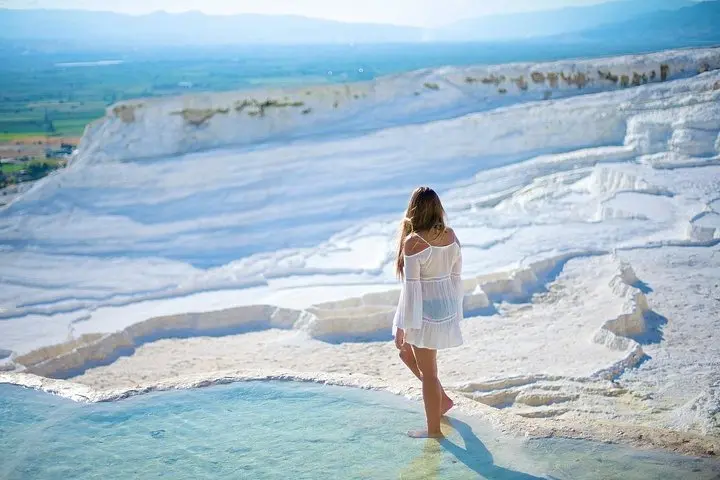
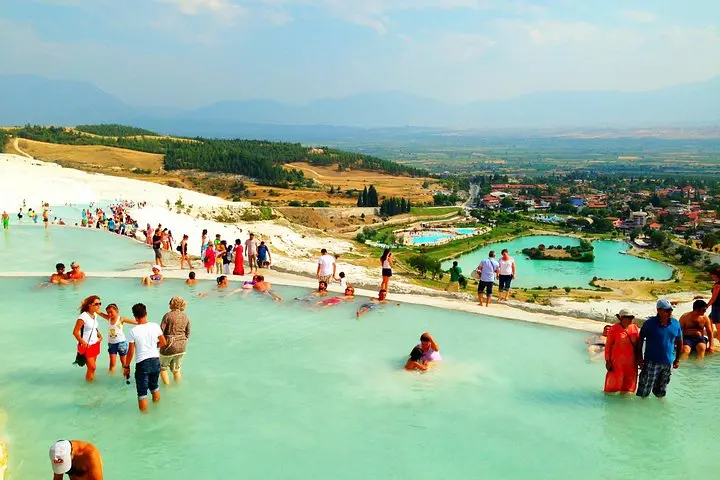
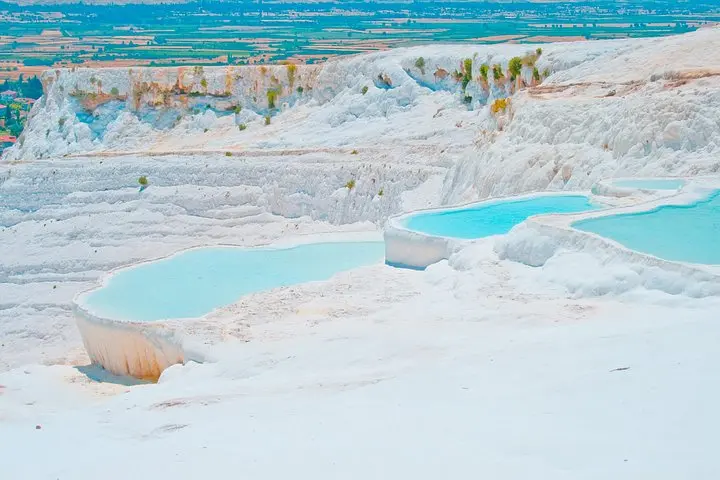
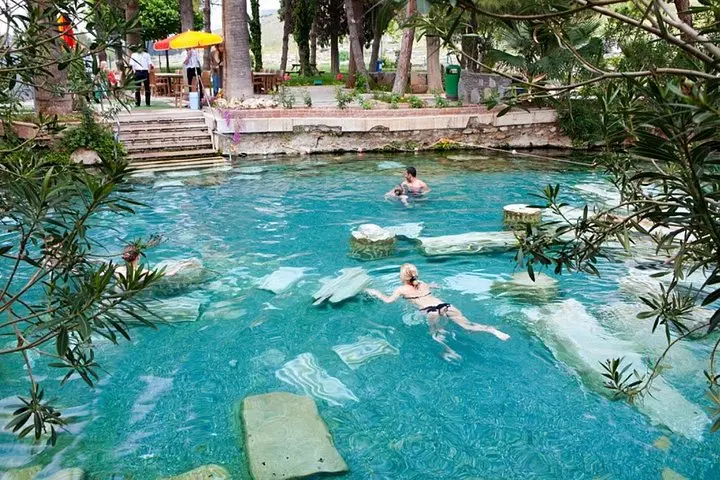
You step off the coach into a pale landscape where hot water has been sculpting stone for millennia: terraces of chalky white, steaming in the morning air, their shallow pools reflecting a hard Anatolian light. The travertines of Pamukkale crackle underfoot, the mineral-rich water daring you to trace the same channels that fed Roman baths once packed with emperors and pilgrims.
You step off the coach into a pale landscape where hot water has been sculpting stone for millennia: terraces of chalky white, steaming in the morning air, their shallow pools reflecting a hard Anatolian light. The travertines of Pamukkale crackle underfoot, the mineral-rich water daring you to trace the same channels that fed Roman baths once packed with emperors and pilgrims.
This is both geology and history in plain view. The terraces formed as calcium-rich springs cooled and deposited travertine; above them sits Hierapolis, a Hellenistic city later expanded by Rome, whose theatre, necropolis and thermal complex map daily life around healing waters. Local culture still ties to textiles — a quick stop at a nearby workshop will show living crafts that long supplied regional markets.
Practically speaking: the day is long. Expect a round-trip journey from Marmaris of roughly 210 km and several hours on the road, but also a guided itinerary that includes breakfast, lunch, site visits and hotel pickup and drop-off. Cleopatra’s Pool is currently closed for renovation, so swimming there isn’t available; you can still walk the terraces (follow the staff’s guidance) and explore Hierapolis’s ruins. Footing is uneven and often wet; comfortable, grippy shoes and sun protection matter more than speed. Visit early or late in the day to dodge heat and crowds.
This tour suits travelers who want a concentrated encounter with Turkey’s thermal landscapes and ancient urban life: a pragmatic, sensory day where geology pushes history into the present.