THE ADVENTURE COLLECTIVE® · Independent discovery and booking for outdoor travel

Visit Pamukkale’s white travertine terraces and the ancient ruins of Hierapolis on a guided day tour from Denizli Airport. Swim in Cleopatra’s Pool, explore Roman streets, and learn how thermal waters sculpted this UNESCO landscape.
Visit Pamukkale’s white travertine terraces and the ancient ruins of Hierapolis on a guided day tour from Denizli Airport. Swim in Cleopatra’s Pool, explore Roman streets, and learn how thermal waters sculpted this UNESCO landscape.
You step off the air-conditioned vehicle and the world turns white — terraces of glistening calcium carbonate stretch ahead, cool water folding over steps of stone. The first breath is mineral-scented and sharp; the cliffs of Pamukkale seem to hold the heat of millennia in their ridges while the red springs of nearby Karahayıt steam like a quiet promise.
Verified experiences and guided adventures in the surrounding area.
Operated by Moonstar Tour · Pamukkale, Denizli
You step off the air-conditioned vehicle and the world turns white — terraces of glistening calcium carbonate stretch ahead, cool water folding over steps of stone. The first breath is mineral-scented and sharp; the cliffs of Pamukkale seem to hold the heat of millennia in their ridges while the red springs of nearby Karahayıt steam like a quiet promise.
This landscape is both geological ledger and human history. Pamukkale’s travertine terraces formed as hot, calcium-rich waters deposited minerals over thousands of years; above them sits Hierapolis, a Greco-Roman spa city founded in the Hellenistic period and later rebuilt by Romans. Walk among its necropolis and colonnaded streets and you’ll pass baths, a basilica and the submerged columns of Cleopatra’s Pool — once a luxury destination for emperors.
Local culture still orbits those waters: small restaurants serve hearty Anatolian lunches, and village life in Pamukkale and Denizli preserves textile and farming traditions. Conservation is visible — boardwalks and restricted flows protect delicate terraces, so visitors must follow specific routes.
Practically, expect a full day (about 7 hours) with roughly 1–2 km of on-site walking over uneven, often wet calcified surfaces and stone steps; elevation sits around 300–350 m. Bring swimwear for the thermal pool, sun protection, and be prepared to walk barefoot on the travertines where required. The site is accessible by a 40–50 minute drive from Denizli/Çardak airport, and guided tours typically include entrance fees, lunch, and transport. Time your visit for morning or late afternoon light to avoid the midday crowd and best appreciate the textures and colors of this unique place.
Yes — this tour’s price includes entrance fees to both Pamukkale and Hierapolis, as noted in the itinerary.
Yes — the guide gives free time to swim in Cleopatra’s Pool; bring swimwear and expect a separate admission to the antique pool to be included by many operators.
The drive is approximately 40–50 minutes (about 60–70 km depending on routing) and the tour includes airport pickup and drop-off when scheduled from Çardak/Denizli airport.
Yes, but access routes and restricted water flows can change seasonally for conservation; follow on-site rules and the guide’s instructions.
Moonstar Tour operates guided outdoor trips and adventures with an emphasis on safety, stewardship, and memorable experiences.
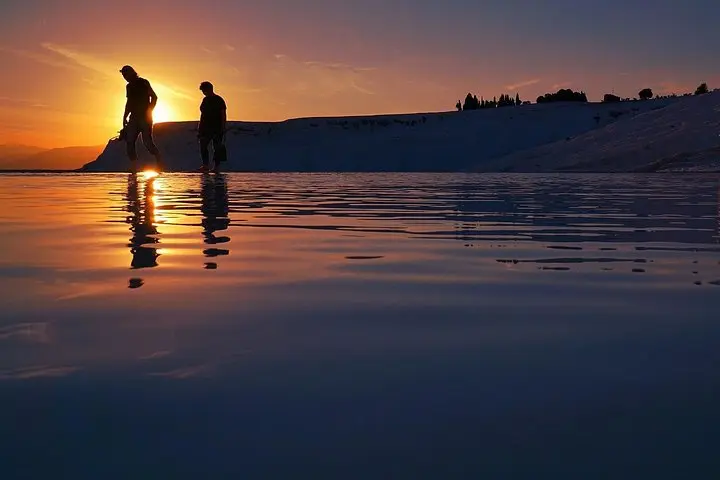
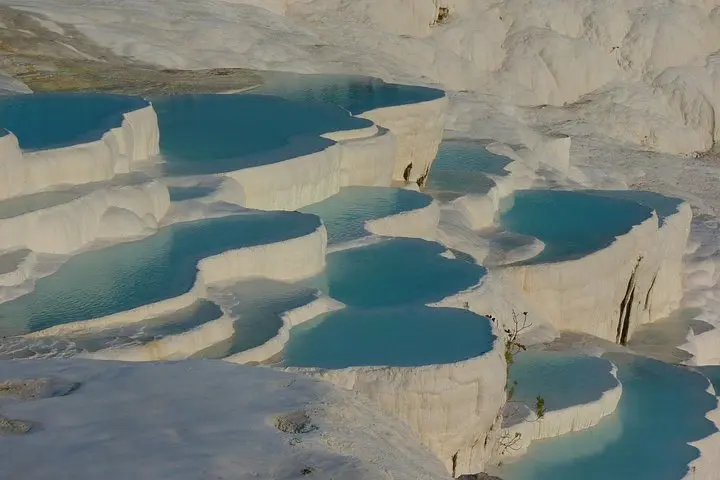
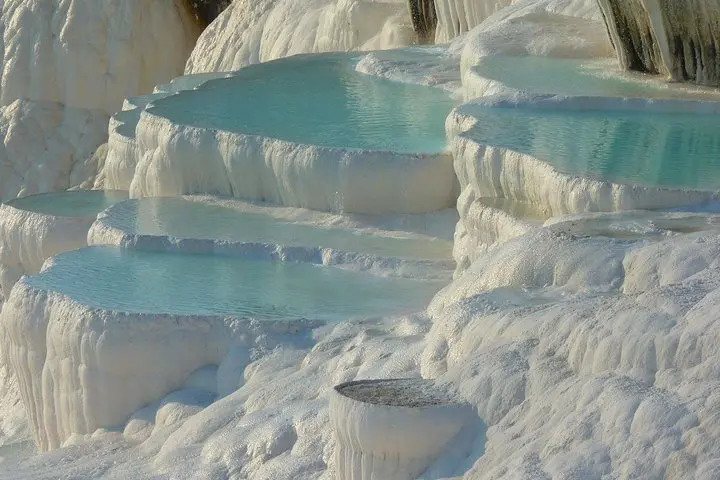
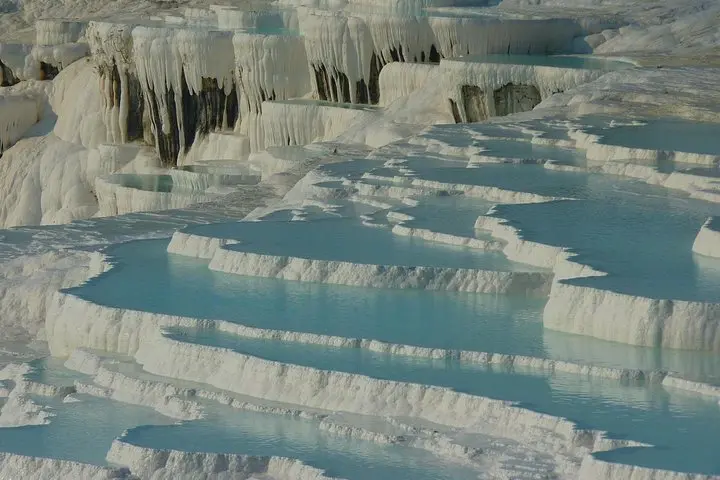
You step off the air-conditioned vehicle and the world turns white — terraces of glistening calcium carbonate stretch ahead, cool water folding over steps of stone. The first breath is mineral-scented and sharp; the cliffs of Pamukkale seem to hold the heat of millennia in their ridges while the red springs of nearby Karahayıt steam like a quiet promise.
You step off the air-conditioned vehicle and the world turns white — terraces of glistening calcium carbonate stretch ahead, cool water folding over steps of stone. The first breath is mineral-scented and sharp; the cliffs of Pamukkale seem to hold the heat of millennia in their ridges while the red springs of nearby Karahayıt steam like a quiet promise.
This landscape is both geological ledger and human history. Pamukkale’s travertine terraces formed as hot, calcium-rich waters deposited minerals over thousands of years; above them sits Hierapolis, a Greco-Roman spa city founded in the Hellenistic period and later rebuilt by Romans. Walk among its necropolis and colonnaded streets and you’ll pass baths, a basilica and the submerged columns of Cleopatra’s Pool — once a luxury destination for emperors.
Local culture still orbits those waters: small restaurants serve hearty Anatolian lunches, and village life in Pamukkale and Denizli preserves textile and farming traditions. Conservation is visible — boardwalks and restricted flows protect delicate terraces, so visitors must follow specific routes.
Practically, expect a full day (about 7 hours) with roughly 1–2 km of on-site walking over uneven, often wet calcified surfaces and stone steps; elevation sits around 300–350 m. Bring swimwear for the thermal pool, sun protection, and be prepared to walk barefoot on the travertines where required. The site is accessible by a 40–50 minute drive from Denizli/Çardak airport, and guided tours typically include entrance fees, lunch, and transport. Time your visit for morning or late afternoon light to avoid the midday crowd and best appreciate the textures and colors of this unique place.