THE ADVENTURE COLLECTIVE® · Independent discovery and booking for outdoor travel

A full-day guided tour from Antalya that pairs the brilliant white travertine terraces of Pamukkale with the ancient ruins of Hierapolis. Walk the thermal terraces, explore Roman baths, and optionally swim in Cleopatra’s Pool during several hours of free time.
A full-day guided tour from Antalya that pairs the brilliant white travertine terraces of Pamukkale with the ancient ruins of Hierapolis. Walk the thermal terraces, explore Roman baths, and optionally swim in Cleopatra’s Pool during several hours of free time.
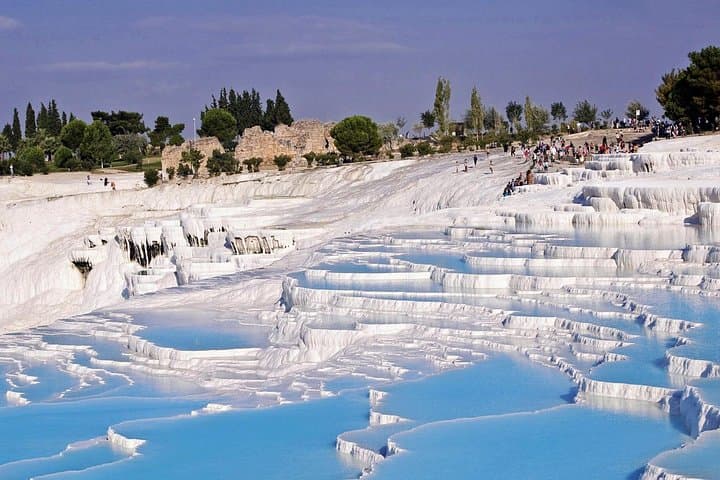
You step off the coach into bright limestone, the ground a patchwork of chalk-white pools that catch the sun like blown glass.
The air smells faintly mineral; steam rises from warm water that has been flowing here for millennia. This guided day trip from Antalya places you on the edge of Pamukkale’s travertine terraces and the archaeological remains of Hierapolis — two landscapes where geology and human history meet.
Verified experiences and guided adventures in the surrounding area.
Operated by Book From Locals · Pamukkale, Denizli Province
You step off the coach into bright limestone, the ground a patchwork of chalk-white pools that catch the sun like blown glass.
The air smells faintly mineral; steam rises from warm water that has been flowing here for millennia. This guided day trip from Antalya places you on the edge of Pamukkale’s travertine terraces and the archaeological remains of Hierapolis — two landscapes where geology and human history meet.
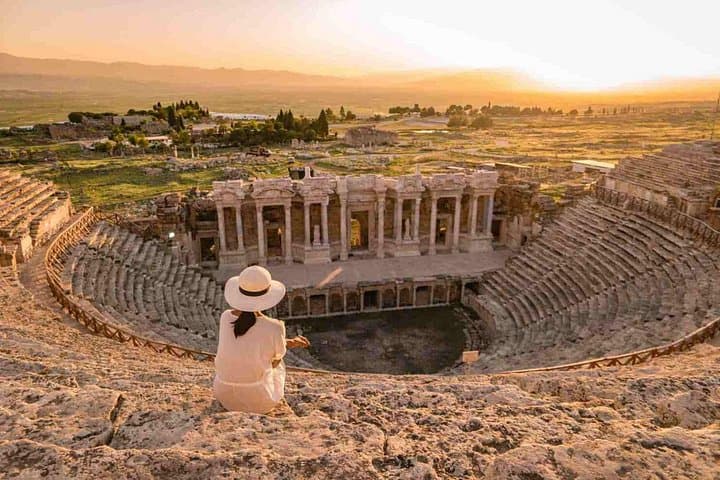
Pamukkale’s terraces formed as calcium-rich thermal water cooled and deposited travertine, building stepped pools over thousands of years. Above them, Hierapolis began as a Phrygian sanctuary and flourished under Roman rule as a spa city; its theater, necropolis, and Roman baths tell a layered story of worship, commerce, and healing. Local craft traditions, like the region’s stone carving, are still visible in small workshops nearby.
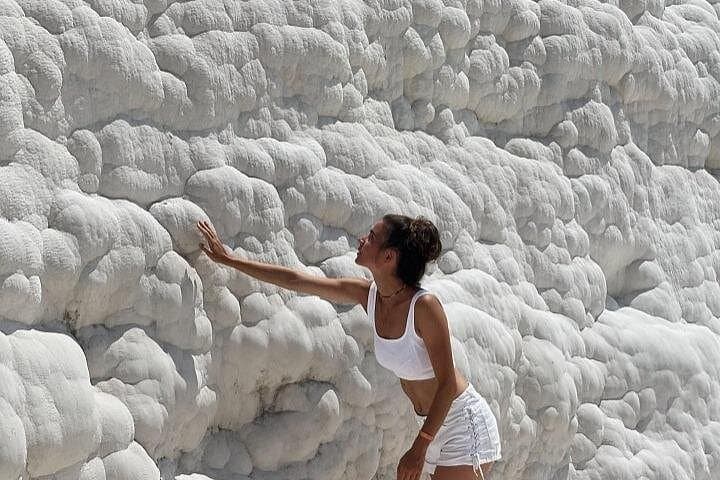
On a practical level, expect a full day: long coach rides from the Antalya/Kemer area, guided introductions, then several hours of free time to walk the terraces, visit ruins, or pay for Cleopatra’s Pool. Footwear rules are strict — bare feet on the travertine help protect the formations — and much of the route includes uneven, sun-exposed paths.
Bring sun protection, a quick-dry towel if you plan to swim, and enough water for self-guided time. Timing matters: mornings and late afternoons offer cooler light and thinner crowds. For anyone curious about how thermal geology shaped ancient urban life, this combination of warm pools and stone ruins delivers a compact, vividly tactile experience.
There is an entrance fee to the Pamukkale site; some tour options include it and others require you to pay on arrival—check your booking details.
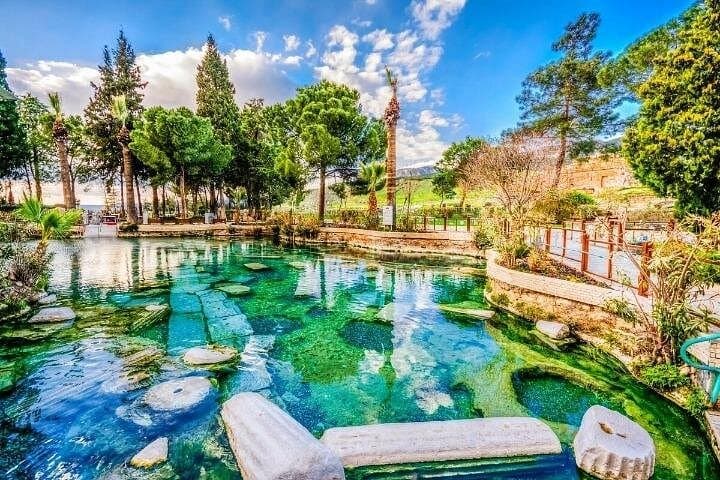
Swimming on most travertine terraces is prohibited to protect the formations, but you can pay extra to enter Cleopatra’s Pool, which allows bathing in a designated area.
The travertine terraces themselves are not wheelchair-friendly due to uneven surfaces and barefoot rules; parts of the archaeological site may be limited for visitors with mobility issues.
Expect roughly 3.5–4 hours each way by coach depending on traffic and stops, making this a long but manageable full-day excursion.
Book From Locals operates guided outdoor trips and adventures with an emphasis on safety, stewardship, and memorable experiences.
You step off the coach into bright limestone, the ground a patchwork of chalk-white pools that catch the sun like blown glass.
The air smells faintly mineral; steam rises from warm water that has been flowing here for millennia. This guided day trip from Antalya places you on the edge of Pamukkale’s travertine terraces and the archaeological remains of Hierapolis — two landscapes where geology and human history meet.
Pamukkale’s terraces formed as calcium-rich thermal water cooled and deposited travertine, building stepped pools over thousands of years. Above them, Hierapolis began as a Phrygian sanctuary and flourished under Roman rule as a spa city; its theater, necropolis, and Roman baths tell a layered story of worship, commerce, and healing. Local craft traditions, like the region’s stone carving, are still visible in small workshops nearby.
On a practical level, expect a full day: long coach rides from the Antalya/Kemer area, guided introductions, then several hours of free time to walk the terraces, visit ruins, or pay for Cleopatra’s Pool. Footwear rules are strict — bare feet on the travertine help protect the formations — and much of the route includes uneven, sun-exposed paths.
Bring sun protection, a quick-dry towel if you plan to swim, and enough water for self-guided time. Timing matters: mornings and late afternoons offer cooler light and thinner crowds. For anyone curious about how thermal geology shaped ancient urban life, this combination of warm pools and stone ruins delivers a compact, vividly tactile experience.