THE ADVENTURE COLLECTIVE® · Independent discovery and booking for outdoor travel

Spend a long day from Antalya exploring Pamukkale’s white travertines and the ancient city of Hierapolis, with optional bathing in Cleopatra’s antique thermal pool. This guided trip blends striking geology, Roman ruins, and practical tips for making the most of a 12‑hour outing.
Spend a long day from Antalya exploring Pamukkale’s white travertines and the ancient city of Hierapolis, with optional bathing in Cleopatra’s antique thermal pool. This guided trip blends striking geology, Roman ruins, and practical tips for making the most of a 12‑hour outing.
Dawn leaves Antalya behind and, hours later, the land opens into the bright white terraces of Pamukkale—calcium-rich runoff frozen into rippling shelves that catch light like sheets of blown glass. The guide leads the group along stepped pools, the hot water whispering and inviting cautious feet into its warmth while ruined columns lay half-submerged nearby, relics of the Roman spa culture that once thrived here.
Verified experiences and guided adventures in the surrounding area.
Operated by goantalyatours.com · Pamukkale, Denizli
Dawn leaves Antalya behind and, hours later, the land opens into the bright white terraces of Pamukkale—calcium-rich runoff frozen into rippling shelves that catch light like sheets of blown glass. The guide leads the group along stepped pools, the hot water whispering and inviting cautious feet into its warmth while ruined columns lay half-submerged nearby, relics of the Roman spa culture that once thrived here.
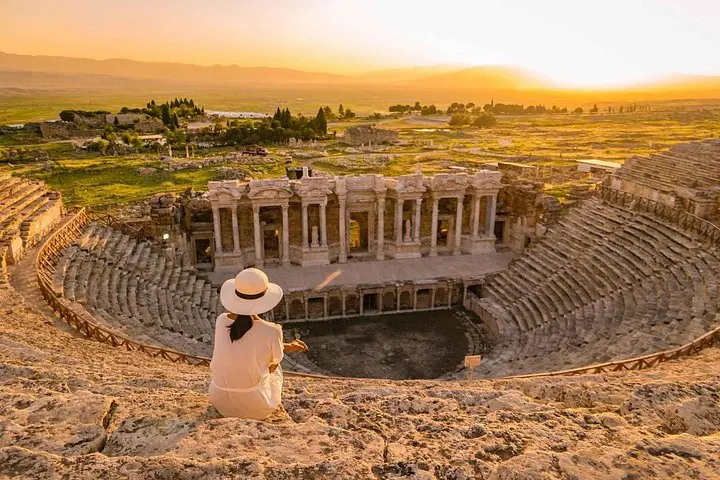
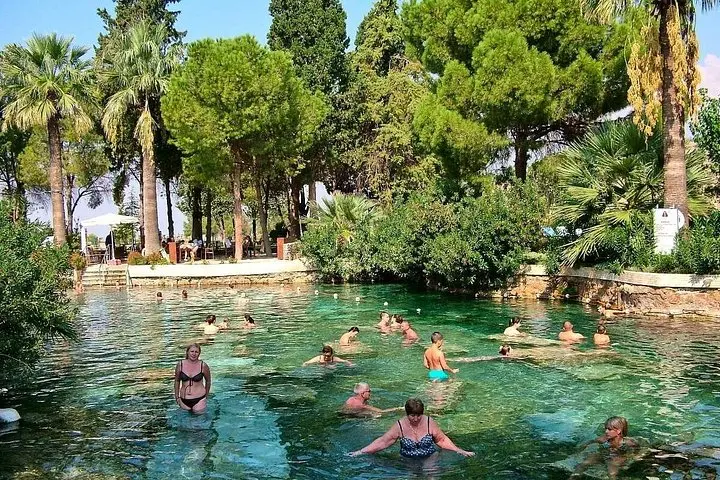
Hierapolis perches above the travertines: a Greco-Roman city founded in the Hellenistic era and expanded under Rome, its theatre, necropolis and the remains of baths tell of a place built around healing waters. Geology and history collide—the travertines formed as thermal springs cooled and deposited carbonate minerals over millennia, creating tiered terraces unlike typical karst landscapes. Locals still speak of the waters’ curative qualities; the Cleopatra (Antique) Pool is the most famous modern echo of that tradition.
Practical guidance: this is a full-day outing (about 12 hours including transport), with moderate walking on uneven stone and shallow pools. Bring shoes you can remove easily—walking barefoot on travertine is required in some areas—and pack swimwear if you plan to pay the separate fee to swim in the Antique Pool. Sun protection and a change of clothes are essential; the open terraces offer little shade.
Expect guided history and geology commentary, photo stops with sweeping valley views, and time to wander the ruins. The site is UNESCO-protected, so follow local rules: stay on designated paths, don’t use lotions in thermal pools, and respect restricted areas to help preserve this fragile landscape.
No—the tour includes time at the pool, but the entrance fee for swimming is separate and paid on-site.
The tour is approximately 12 hours round-trip from Antalya and includes air-conditioned vehicle transport and hotel pickup within the listed pickup area.
Yes—infants can ride in a stroller and must sit on an adult’s lap during transport; some pathways at the site are uneven so stroller use may be limited.
Yes—visitors must follow designated paths and often remove shoes to protect the carbonate surfaces; guides will explain local rules.
goantalyatours.com operates guided outdoor trips and adventures with an emphasis on safety, stewardship, and memorable experiences.
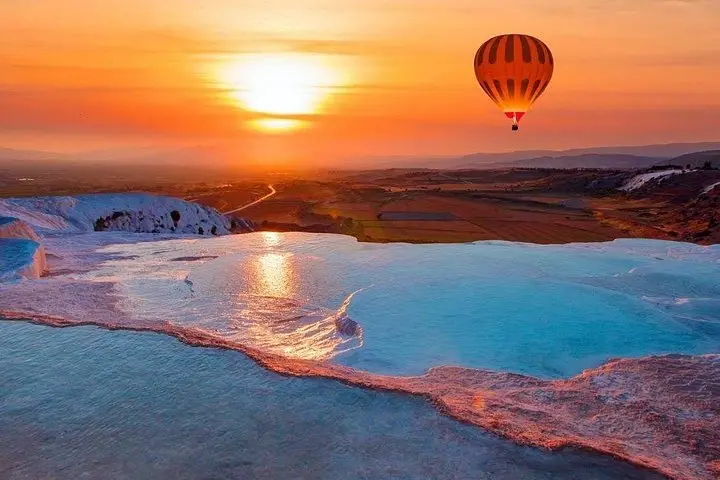
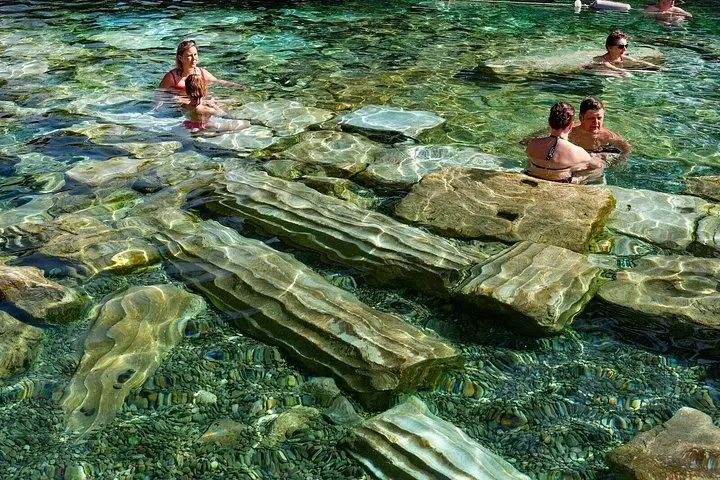
Dawn leaves Antalya behind and, hours later, the land opens into the bright white terraces of Pamukkale—calcium-rich runoff frozen into rippling shelves that catch light like sheets of blown glass. The guide leads the group along stepped pools, the hot water whispering and inviting cautious feet into its warmth while ruined columns lay half-submerged nearby, relics of the Roman spa culture that once thrived here.
Dawn leaves Antalya behind and, hours later, the land opens into the bright white terraces of Pamukkale—calcium-rich runoff frozen into rippling shelves that catch light like sheets of blown glass. The guide leads the group along stepped pools, the hot water whispering and inviting cautious feet into its warmth while ruined columns lay half-submerged nearby, relics of the Roman spa culture that once thrived here.
Hierapolis perches above the travertines: a Greco-Roman city founded in the Hellenistic era and expanded under Rome, its theatre, necropolis and the remains of baths tell of a place built around healing waters. Geology and history collide—the travertines formed as thermal springs cooled and deposited carbonate minerals over millennia, creating tiered terraces unlike typical karst landscapes. Locals still speak of the waters’ curative qualities; the Cleopatra (Antique) Pool is the most famous modern echo of that tradition.
Practical guidance: this is a full-day outing (about 12 hours including transport), with moderate walking on uneven stone and shallow pools. Bring shoes you can remove easily—walking barefoot on travertine is required in some areas—and pack swimwear if you plan to pay the separate fee to swim in the Antique Pool. Sun protection and a change of clothes are essential; the open terraces offer little shade.
Expect guided history and geology commentary, photo stops with sweeping valley views, and time to wander the ruins. The site is UNESCO-protected, so follow local rules: stay on designated paths, don’t use lotions in thermal pools, and respect restricted areas to help preserve this fragile landscape.