THE ADVENTURE COLLECTIVE® · Independent discovery and booking for outdoor travel

Walk the luminous travertine terraces of Pamukkale, explore the Roman ruins of Hierapolis and soak among submerged columns in Cleopatra’s Pool. This full‑day small‑group tour from Kusadası pairs dramatic geology with layered history — bring a swimsuit and expect a long day of walking and a multi‑hour transfer.
Walk the luminous travertine terraces of Pamukkale, explore the Roman ruins of Hierapolis and soak among submerged columns in Cleopatra’s Pool. This full‑day small‑group tour from Kusadası pairs dramatic geology with layered history — bring a swimsuit and expect a long day of walking and a multi‑hour transfer.
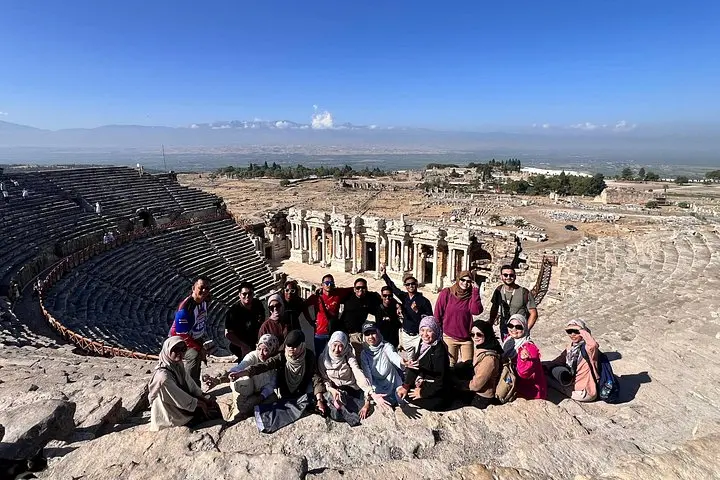
When you first step onto Pamukkale’s white slopes the world narrows to warm water underfoot and the bright desert sun above. The travertine terraces gleam like frozen waterfalls, and steam rises where thermal water still pushes calcium carbonate down the mountainside. A short walk brings you to the ruins of Hierapolis: stone colonnades, a broad Roman theatre, and the necropolis spreading out like a dusty map of ancient lives.
Verified experiences and guided adventures in the surrounding area.
Operated by Grande Travel · Pamukkale, Denizli Province
When you first step onto Pamukkale’s white slopes the world narrows to warm water underfoot and the bright desert sun above. The travertine terraces gleam like frozen waterfalls, and steam rises where thermal water still pushes calcium carbonate down the mountainside. A short walk brings you to the ruins of Hierapolis: stone colonnades, a broad Roman theatre, and the necropolis spreading out like a dusty map of ancient lives.
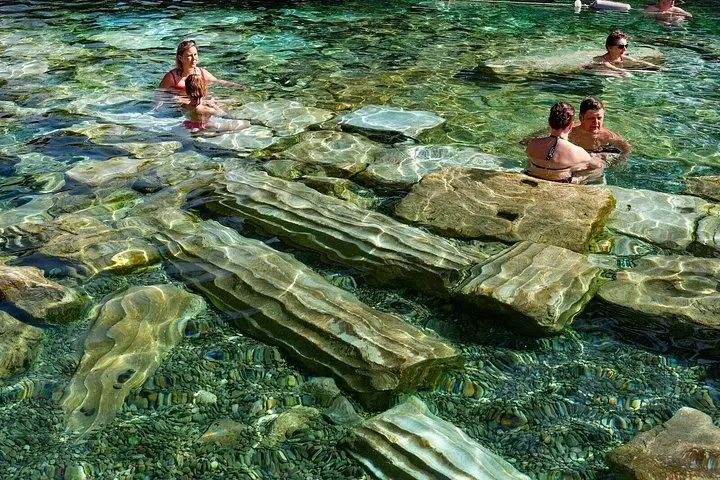
Geology here is literal — mineral-rich springs deposit travertine in delicate sheets over centuries, creating the terraces people come to touch. Hierapolis grew up around those same springs as a Roman spa and pilgrimage center; the site and terraces are a UNESCO World Heritage site. Cleopatra’s Pool lets you float among submerged columns and fallen marble, a rare chance to swim amid archaeological fragments (note: pool admission may be extra on some tours).
Practical notes: this is a full day — expect an 8–9 hour outing with roughly a 3‑hour drive from Kusadası each way under typical traffic. The site requires removing shoes on many terraces to protect the formations, so pack easy-to-stash footwear and a towel. Plan 2–3 km of walking on mixed stone, boardwalks and uneven steps; moderate fitness helps. Bring cash for incidental fees, a swim change, sun protection and a dry bag for electronics. Early morning or late afternoon visits are cooler and offer softer light for photos. Respect the fragile calcium deposits: stay on designated paths and avoid soaps or oils in the thermal waters. With the right gear and timing, this day trip balances striking landscape, living geology and layered history into an unusually tactile encounter with both nature and antiquity.
Yes — the tour includes entrance to the Pamukkale terraces and access to the Hierapolis site and its ancient theatre as noted in the inclusions.
Yes — parts of the travertine require bare feet or socks to prevent damage; bring sandals you can carry and a towel for wet feet.
Cleopatra’s Pool access is often offered but may not be included in every package; check the tour inclusions or bring cash to pay an on‑site fee if necessary.
Expect roughly 2.5–3 hours each way depending on traffic; the full experience is a long day (about 8–9 hours total).
Grande Travel operates guided outdoor trips and adventures with an emphasis on safety, stewardship, and memorable experiences.
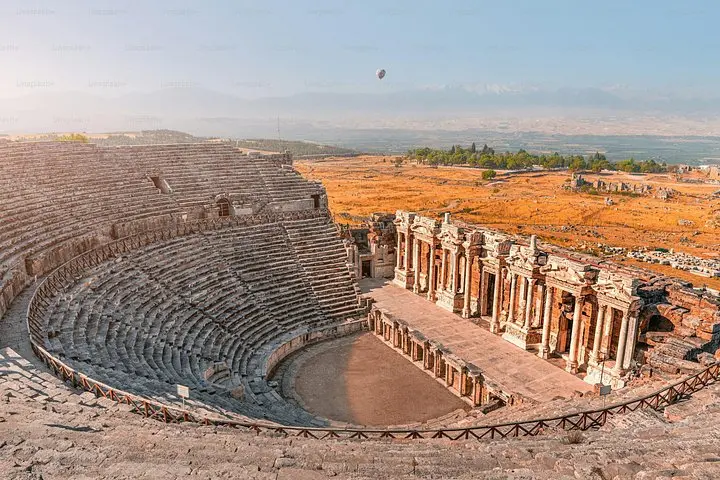
When you first step onto Pamukkale’s white slopes the world narrows to warm water underfoot and the bright desert sun above. The travertine terraces gleam like frozen waterfalls, and steam rises where thermal water still pushes calcium carbonate down the mountainside. A short walk brings you to the ruins of Hierapolis: stone colonnades, a broad Roman theatre, and the necropolis spreading out like a dusty map of ancient lives.
When you first step onto Pamukkale’s white slopes the world narrows to warm water underfoot and the bright desert sun above. The travertine terraces gleam like frozen waterfalls, and steam rises where thermal water still pushes calcium carbonate down the mountainside. A short walk brings you to the ruins of Hierapolis: stone colonnades, a broad Roman theatre, and the necropolis spreading out like a dusty map of ancient lives.
Geology here is literal — mineral-rich springs deposit travertine in delicate sheets over centuries, creating the terraces people come to touch. Hierapolis grew up around those same springs as a Roman spa and pilgrimage center; the site and terraces are a UNESCO World Heritage site. Cleopatra’s Pool lets you float among submerged columns and fallen marble, a rare chance to swim amid archaeological fragments (note: pool admission may be extra on some tours).
Practical notes: this is a full day — expect an 8–9 hour outing with roughly a 3‑hour drive from Kusadası each way under typical traffic. The site requires removing shoes on many terraces to protect the formations, so pack easy-to-stash footwear and a towel. Plan 2–3 km of walking on mixed stone, boardwalks and uneven steps; moderate fitness helps. Bring cash for incidental fees, a swim change, sun protection and a dry bag for electronics. Early morning or late afternoon visits are cooler and offer softer light for photos. Respect the fragile calcium deposits: stay on designated paths and avoid soaps or oils in the thermal waters. With the right gear and timing, this day trip balances striking landscape, living geology and layered history into an unusually tactile encounter with both nature and antiquity.