THE ADVENTURE COLLECTIVE® · Independent discovery and booking for outdoor travel

Visit Pamukkale’s surreal white terraces and the ancient city of Hierapolis on a full-day trip from Antalya or Kemer. Walk the calcified pools, swim in the Cleopatra Pool, and explore Roman ruins with time for a local lunch.
Visit Pamukkale’s surreal white terraces and the ancient city of Hierapolis on a full-day trip from Antalya or Kemer. Walk the calcified pools, swim in the Cleopatra Pool, and explore Roman ruins with time for a local lunch.
You step off the coach into a high plain where white calcium flows look less like stone and more like a frozen river. Steam lifts off warm pools and the terraces gleam under a wide Anatolian sky; the thermal waters seem to keep time for the plates of travertine, each basin catching light and reflecting clouds.
Verified experiences and guided adventures in the surrounding area.
Operated by TREVOPEDIA · Pamukkale, Denizli Province
You step off the coach into a high plain where white calcium flows look less like stone and more like a frozen river. Steam lifts off warm pools and the terraces gleam under a wide Anatolian sky; the thermal waters seem to keep time for the plates of travertine, each basin catching light and reflecting clouds.
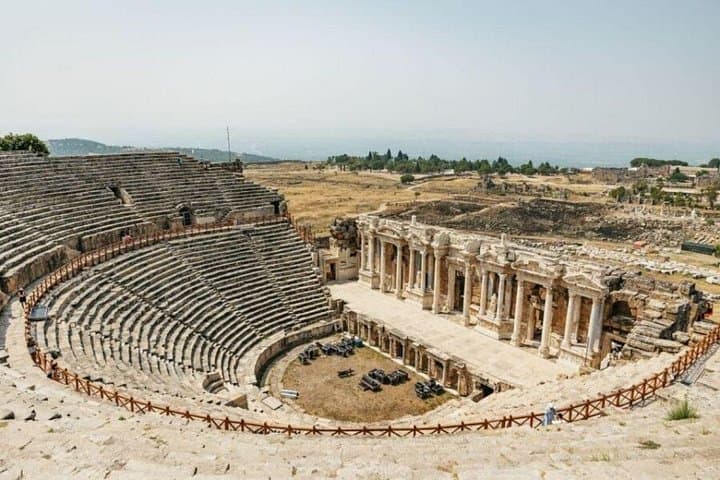
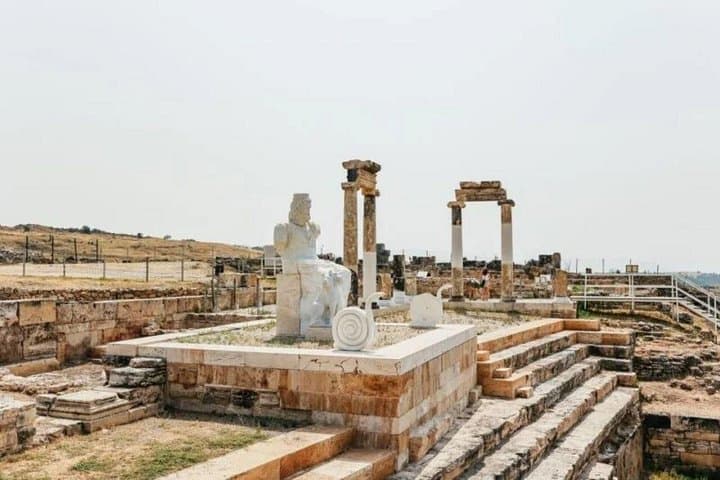
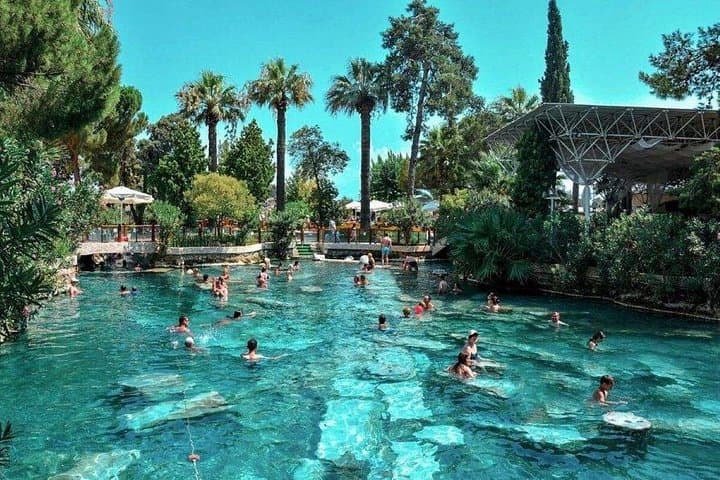
The site combines two stories: the calcified geology that forms Pamukkale’s terraces and the human story of Hierapolis, a Greco-Roman spa city founded in the 2nd century BCE. Roman theaters, baths and a necropolis sit above the cascades, burial stones that watch the valley. Cleopatra’s antique pool—where masonry and marble lie submerged—offers a rare swim among sun-warmed columns.
Geologically, the terraces were built by mineral-rich hot springs depositing calcium carbonate over millennia; culturally, the springs made this a pilgrimage and medical center in antiquity. The modern site is protected—visitors follow boardwalks and may only swim in authorized pools—so the fragile white flow endures.
Practical guidance: expect a long day if traveling from Antalya or Kemer (the tour runs roughly 9–10 hours including transfers). Wear sturdy shoes for uneven stone and a hat for strong sun. Bring swimwear and a towel if you want the Cleopatra pool—note local operators may charge separate entrance fees. Plan for minimal shade and bring water; early or late-season visits are cooler. Photography is excellent on clear days; respect the walkways and closed areas to help preserve the terraces for the next traveler.
Admission policies vary by operator; the tour listing shows site admission and the Cleopatra Pool may be paid separately—confirm when booking.
Expect a full 9–10 hour day; driving one-way typically takes about 3–4 hours depending on traffic and pickup routing.
Parts of the site offer accessible paths and the operator notes wheelchair-accessible transfer options, but some terraces and ruins have steps and uneven ground.
No—swimming is restricted to designated areas such as the Cleopatra Pool to protect the travertine; follow onsite rules and stay on boardwalks.
TREVOPEDIA operates guided outdoor trips and adventures with an emphasis on safety, stewardship, and memorable experiences.
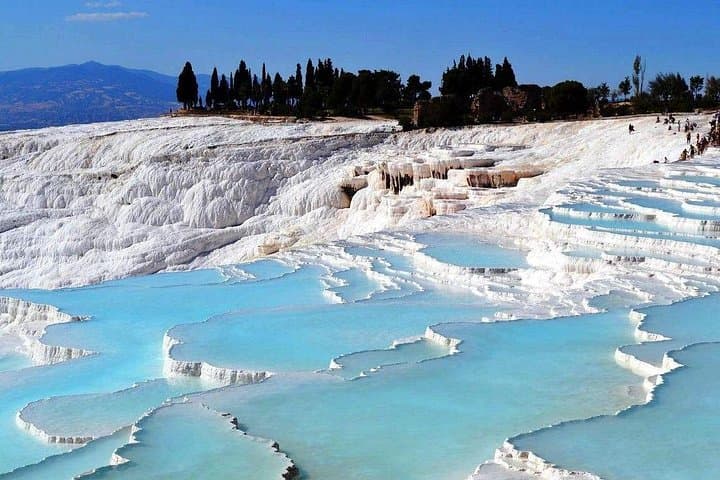
You step off the coach into a high plain where white calcium flows look less like stone and more like a frozen river. Steam lifts off warm pools and the terraces gleam under a wide Anatolian sky; the thermal waters seem to keep time for the plates of travertine, each basin catching light and reflecting clouds.
You step off the coach into a high plain where white calcium flows look less like stone and more like a frozen river. Steam lifts off warm pools and the terraces gleam under a wide Anatolian sky; the thermal waters seem to keep time for the plates of travertine, each basin catching light and reflecting clouds.
The site combines two stories: the calcified geology that forms Pamukkale’s terraces and the human story of Hierapolis, a Greco-Roman spa city founded in the 2nd century BCE. Roman theaters, baths and a necropolis sit above the cascades, burial stones that watch the valley. Cleopatra’s antique pool—where masonry and marble lie submerged—offers a rare swim among sun-warmed columns.
Geologically, the terraces were built by mineral-rich hot springs depositing calcium carbonate over millennia; culturally, the springs made this a pilgrimage and medical center in antiquity. The modern site is protected—visitors follow boardwalks and may only swim in authorized pools—so the fragile white flow endures.
Practical guidance: expect a long day if traveling from Antalya or Kemer (the tour runs roughly 9–10 hours including transfers). Wear sturdy shoes for uneven stone and a hat for strong sun. Bring swimwear and a towel if you want the Cleopatra pool—note local operators may charge separate entrance fees. Plan for minimal shade and bring water; early or late-season visits are cooler. Photography is excellent on clear days; respect the walkways and closed areas to help preserve the terraces for the next traveler.