THE ADVENTURE COLLECTIVE® · Independent discovery and booking for outdoor travel
Walk warm, white travertines and explore the Roman ruins of Hierapolis on a compact small-group day tour. Expect 6–8 hours of thermal pools, ruins, and practical local guidance—perfect for a single-day visit.
Walk warm, white travertines and explore the Roman ruins of Hierapolis on a compact small-group day tour. Expect 6–8 hours of thermal pools, ruins, and practical local guidance—perfect for a single-day visit.
You step onto white calcium steps that catch the sun and blur the line between water and stone—pamukkale’s terraces gleam like frozen waterfalls, warm water threading over them in thin silver sheets.
Verified experiences and guided adventures in the surrounding area.
Operated by Dinner Cruise Show Istanbul · Pamukkale, Denizli Province
You step onto white calcium steps that catch the sun and blur the line between water and stone—pamukkale’s terraces gleam like frozen waterfalls, warm water threading over them in thin silver sheets.
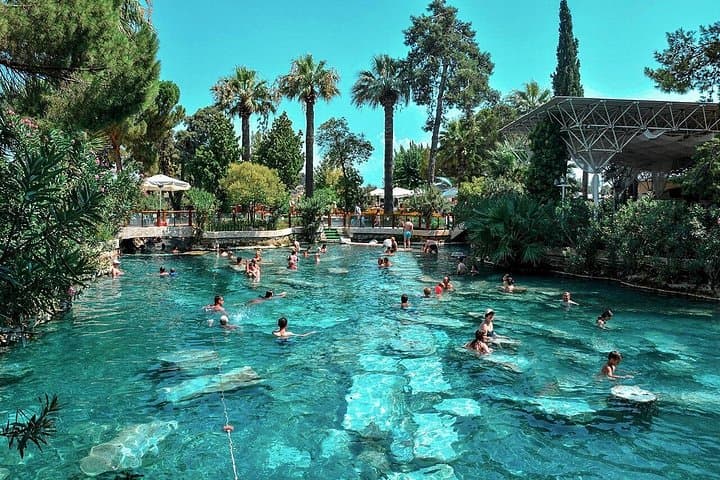
This small-group day tour pairs the surreal travertines with Hierapolis, a Hellenistic-Roman spa city founded around 190 BCE. Geologically, the terraces are living travertine formed by mineral-rich thermal waters deposited over millennia; culturally, locals have long used these springs for healing and ritual. The nearby red springs at Karahayıt and the Cleopatra (Antique) Pool tell parts of the same story: people have been drawn here for health and spectacle for two thousand years.
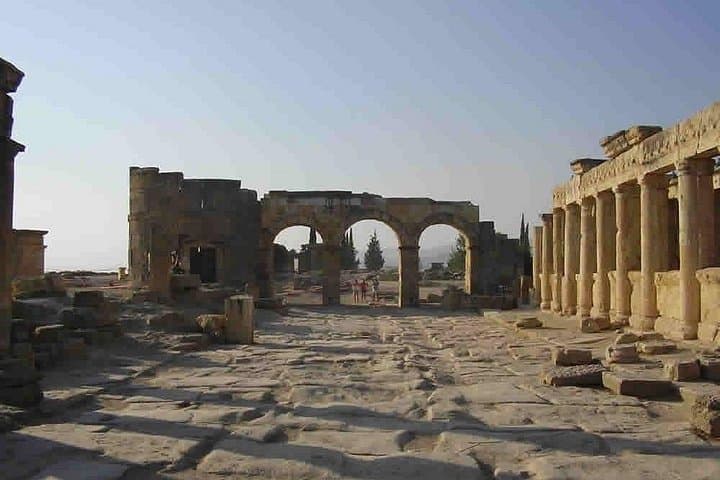
On the ground you’ll walk on firm boardwalks and maintained paths, pass restored colonnades, and stand in the shadow of a Roman theater whose stone still channels applause. The thermal pools invite dipping in designated basins; many travertine surfaces are protected and off-limits to preserve their delicate growth.
Practical guidance: plan for a 6–8 hour day, arrive early for soft light and fewer visitors, and bring a towel, sun protection, and a pair of shoes that dry quickly. Expect an air-conditioned transfer and a guided exploration of the ruins; entrance fees are usually paid locally. Respect posted signs—management frequently restricts access to let the formations recover.
This is an accessible, sensory day trip that balances easy walking with vivid geological and historical sights—ideal for travelers who want a concentrated experience of Turkey’s thermal landscapes and ancient architecture.
Most small-group tours require you to pay site entrance fees locally; confirm with your operator but plan on buying tickets at the park entrance.
No—many terraces are closed to protect the formations. Walk only on designated paths and use marked bathing areas; the Antique Pool requires a paid entrance.
This tour typically includes pickup and drop-off by air-conditioned vehicle; check your booking for the precise pickup point and time.
Yes—paths are generally accessible for families and older visitors, but expect some uneven surfaces and short stair sections; bring appropriate footwear.
Dinner Cruise Show Istanbul operates guided outdoor trips and adventures with an emphasis on safety, stewardship, and memorable experiences.
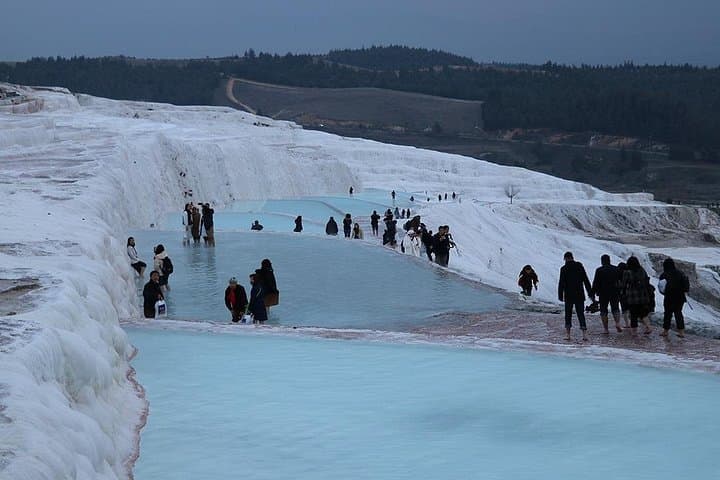
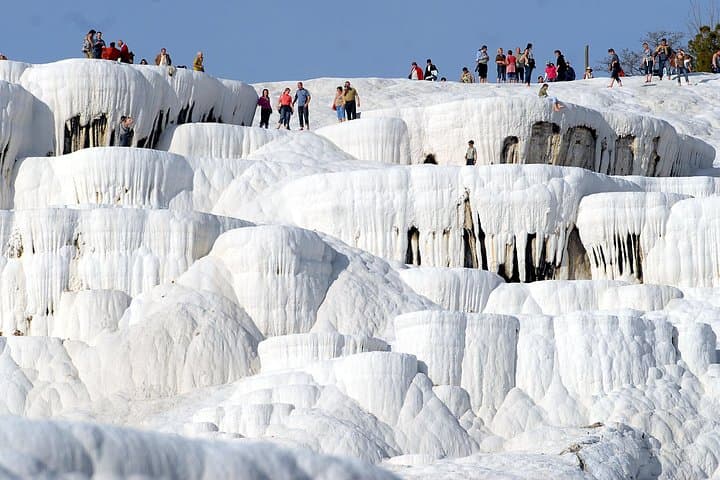
You step onto white calcium steps that catch the sun and blur the line between water and stone—pamukkale’s terraces gleam like frozen waterfalls, warm water threading over them in thin silver sheets.
You step onto white calcium steps that catch the sun and blur the line between water and stone—pamukkale’s terraces gleam like frozen waterfalls, warm water threading over them in thin silver sheets.
This small-group day tour pairs the surreal travertines with Hierapolis, a Hellenistic-Roman spa city founded around 190 BCE. Geologically, the terraces are living travertine formed by mineral-rich thermal waters deposited over millennia; culturally, locals have long used these springs for healing and ritual. The nearby red springs at Karahayıt and the Cleopatra (Antique) Pool tell parts of the same story: people have been drawn here for health and spectacle for two thousand years.
On the ground you’ll walk on firm boardwalks and maintained paths, pass restored colonnades, and stand in the shadow of a Roman theater whose stone still channels applause. The thermal pools invite dipping in designated basins; many travertine surfaces are protected and off-limits to preserve their delicate growth.
Practical guidance: plan for a 6–8 hour day, arrive early for soft light and fewer visitors, and bring a towel, sun protection, and a pair of shoes that dry quickly. Expect an air-conditioned transfer and a guided exploration of the ruins; entrance fees are usually paid locally. Respect posted signs—management frequently restricts access to let the formations recover.
This is an accessible, sensory day trip that balances easy walking with vivid geological and historical sights—ideal for travelers who want a concentrated experience of Turkey’s thermal landscapes and ancient architecture.
