THE ADVENTURE COLLECTIVE® · Independent discovery and booking for outdoor travel

Walk the otherworldly white terraces of Pamukkale and explore the Roman ruins of Hierapolis on a 6–7 hour small-group tour. Learn the geology behind the thermal pools, see ancient baths and enjoy regulated access to designated thermal water areas.
Walk the otherworldly white terraces of Pamukkale and explore the Roman ruins of Hierapolis on a 6–7 hour small-group tour. Learn the geology behind the thermal pools, see ancient baths and enjoy regulated access to designated thermal water areas.
Stepping onto the white terraces at Pamukkale feels like entering a world built by water and time. Calcium-rich springs push upward, carving smooth, rimmed basins that catch sunlight and cloud reflections; the pale slopes glow against the Anatolian plateau as you walk the designated paths toward the ruins of Hierapolis perched above.
Verified experiences and guided adventures in the surrounding area.
Operated by Booking Guide Turkey · Pamukkale, Denizli Province
Stepping onto the white terraces at Pamukkale feels like entering a world built by water and time. Calcium-rich springs push upward, carving smooth, rimmed basins that catch sunlight and cloud reflections; the pale slopes glow against the Anatolian plateau as you walk the designated paths toward the ruins of Hierapolis perched above.
This landscape is geological and cultural: travertine formed as mineral-laden water cooled and deposited calcium carbonate over millennia, while Hierapolis grew as a Roman spa city where emperors and pilgrims sought healing. The archaeological site includes a sprawling necropolis, a Roman theatre, and the thermal source that fed both ritual and daily life.
Local life in Denizli and nearby villages still orbits these waters—small cafés serve ayran and gözleme, and vendors sell handmade textiles tied to Aegean traditions. Conservation efforts focus on protecting fragile carbonate deposits; management limits where visitors can wade and requires careful footwear choices.
Practicalities: the small-group tour runs about 6–7 hours, includes the Pamukkale/Hierapolis entrance fee, guided exploration of ruins, a chance to see and briefly access thermal pools, and lunch. Paths mix flat boardwalks, stone steps and uneven archaeological surfaces—comfortable walking shoes and sun protection are important. Visit mid-morning or late afternoon to avoid peak heat and to catch the terraces in softer light. Expect a steady, sensory experience: warm water, mineral tang in the air, hard white rock underfoot and sweeping views over the plain—all packed into a day that balances geology, history and just enough time to paddle where allowed.
Yes—this tour lists the Pamukkale/Hierapolis entrance fee as included in the price.
You can walk on designated terraces barefoot or with protective covers; swimming is restricted to certain areas and the Antique (Cleopatra) Pool may require a separate fee—access varies by regulation.
The tour is classified easy and suitable for most people, but expect uneven stone, steps and short walks; bring sturdy shoes for archaeological areas and be prepared to walk barefoot briefly on terraces.
Full refunds are available if you cancel at least 24 hours before the scheduled departure time; cancellations within 24 hours are not refundable.
Booking Guide Turkey operates guided outdoor trips and adventures with an emphasis on safety, stewardship, and memorable experiences.
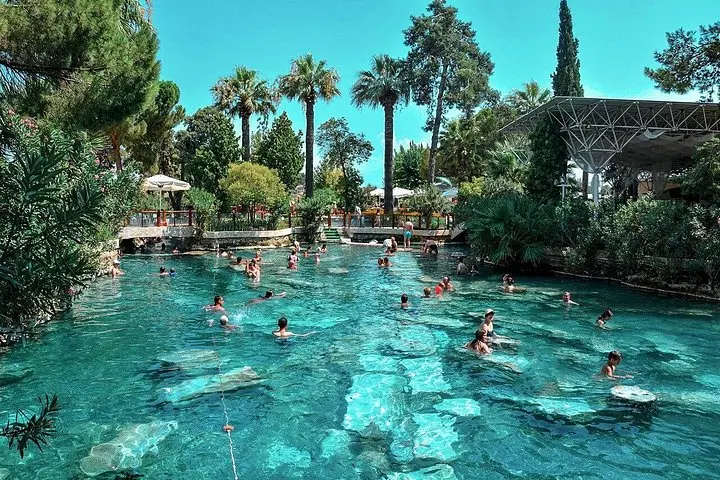
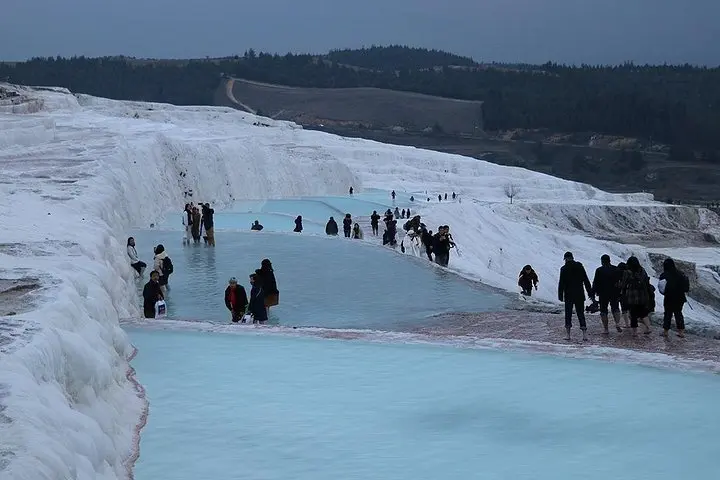
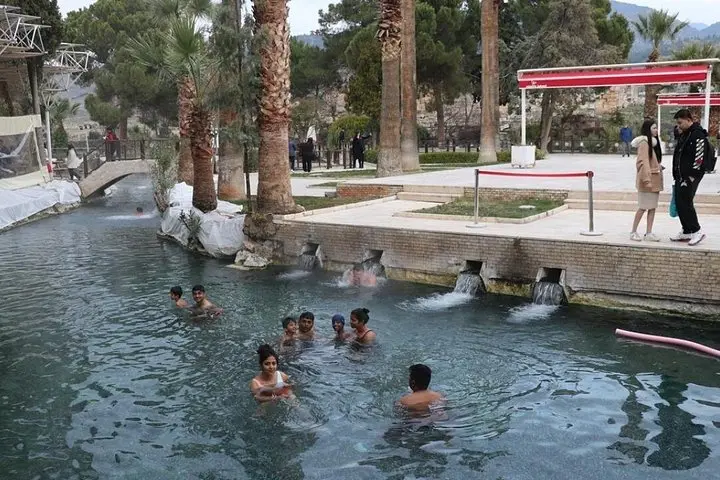
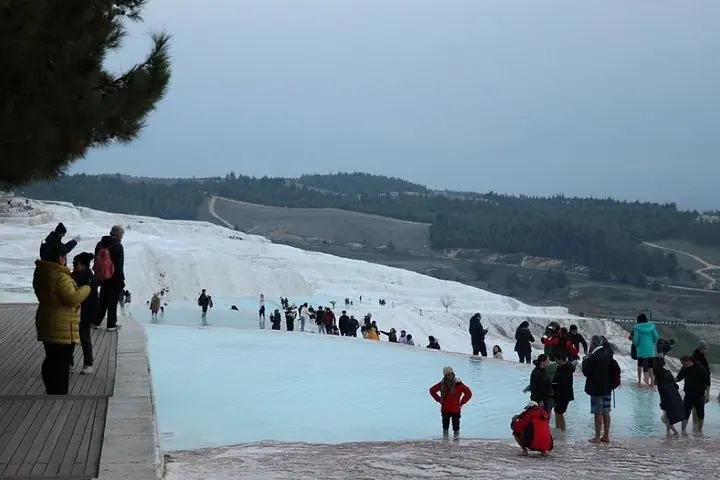
Stepping onto the white terraces at Pamukkale feels like entering a world built by water and time. Calcium-rich springs push upward, carving smooth, rimmed basins that catch sunlight and cloud reflections; the pale slopes glow against the Anatolian plateau as you walk the designated paths toward the ruins of Hierapolis perched above.
Stepping onto the white terraces at Pamukkale feels like entering a world built by water and time. Calcium-rich springs push upward, carving smooth, rimmed basins that catch sunlight and cloud reflections; the pale slopes glow against the Anatolian plateau as you walk the designated paths toward the ruins of Hierapolis perched above.
This landscape is geological and cultural: travertine formed as mineral-laden water cooled and deposited calcium carbonate over millennia, while Hierapolis grew as a Roman spa city where emperors and pilgrims sought healing. The archaeological site includes a sprawling necropolis, a Roman theatre, and the thermal source that fed both ritual and daily life.
Local life in Denizli and nearby villages still orbits these waters—small cafés serve ayran and gözleme, and vendors sell handmade textiles tied to Aegean traditions. Conservation efforts focus on protecting fragile carbonate deposits; management limits where visitors can wade and requires careful footwear choices.
Practicalities: the small-group tour runs about 6–7 hours, includes the Pamukkale/Hierapolis entrance fee, guided exploration of ruins, a chance to see and briefly access thermal pools, and lunch. Paths mix flat boardwalks, stone steps and uneven archaeological surfaces—comfortable walking shoes and sun protection are important. Visit mid-morning or late afternoon to avoid peak heat and to catch the terraces in softer light. Expect a steady, sensory experience: warm water, mineral tang in the air, hard white rock underfoot and sweeping views over the plain—all packed into a day that balances geology, history and just enough time to paddle where allowed.