THE ADVENTURE COLLECTIVE® · Independent discovery and booking for outdoor travel

Rise at dawn and float over Pamukkale’s surreal white travertines, then spend the day wandering Hierapolis and soaking in Cleopatra’s Pool. This full‑day experience pairs a one‑hour sunrise balloon flight with guided time on the terraces and archaeological site.
Rise at dawn and float over Pamukkale’s surreal white travertines, then spend the day wandering Hierapolis and soaking in Cleopatra’s Pool. This full‑day experience pairs a one‑hour sunrise balloon flight with guided time on the terraces and archaeological site.
The balloon lifts as pale light unspools across the Denizli plain, and the white travertine terraces of Pamukkale catch the first rays like stacked pools of milk. From the basket, calcite cascades appear as a lunar landscape carved by mineral-rich springs; slopes, vineyards and the ruins of Hierapolis spread beneath the balloon like a map of human and geological history.
Verified experiences and guided adventures in the surrounding area.
Operated by Vakare Travel Service · Pamukkale, Denizli Province
The balloon lifts as pale light unspools across the Denizli plain, and the white travertine terraces of Pamukkale catch the first rays like stacked pools of milk. From the basket, calcite cascades appear as a lunar landscape carved by mineral-rich springs; slopes, vineyards and the ruins of Hierapolis spread beneath the balloon like a map of human and geological history.
Pamukkale’s travertines formed over millennia as hot spring water deposited calcium carbonate, building the terraces visitors walk along today. Above them lies Hierapolis, a Roman spa city founded in the 2nd century BCE—its theater, necropolis and the famed Cleopatra’s Pool with submerged columns speak to a long tradition of bathing and healing.
The flight itself is typically about an hour at sunrise, followed by time on the ground to explore the terraces, swim in the ancient pool (paid entry) and walk Hierapolis’ stone streets. Local guides will point out geological processes, the best viewpoints and cultural details: Ottoman-era baths, Roman inscriptions and how modern protection rules limit access to sensitive calcite formations.
Practical guidance: expect a full-day schedule because of transfers—bring layered clothing for the cool morning ascent and warmer midday sun, sturdy shoes for uneven paths, and a camera with a fast shutter. Note health restrictions: not suitable for pregnant travelers or those with serious back or heart conditions. Timing your visit for shoulder seasons helps avoid crowds and gives calmer winds for a steadier flight.
This combination of aerial perspective and on-foot exploration offers a concise, sensory encounter with both natural processes and centuries of human use.
The airborne portion is approximately one hour; the full tour runs as a full day due to transfers and time exploring Pamukkale and Hierapolis.
Yes—most tours include time at the pool but entry to the antique pool is usually a paid extra and may require changing facilities.
Ballooning and some walking are not recommended for pregnant travelers or those with serious spinal or heart conditions; infants often must sit on laps—check operator rules before booking.
Shoulder seasons (spring and fall) offer more stable winds for ballooning and milder temperatures, plus fewer visitors than summer.
Vakare Travel Service operates guided outdoor trips and adventures with an emphasis on safety, stewardship, and memorable experiences.

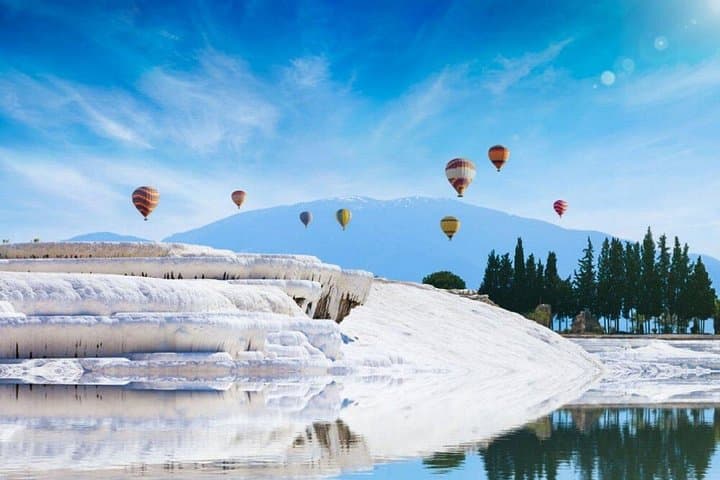


The balloon lifts as pale light unspools across the Denizli plain, and the white travertine terraces of Pamukkale catch the first rays like stacked pools of milk. From the basket, calcite cascades appear as a lunar landscape carved by mineral-rich springs; slopes, vineyards and the ruins of Hierapolis spread beneath the balloon like a map of human and geological history.
The balloon lifts as pale light unspools across the Denizli plain, and the white travertine terraces of Pamukkale catch the first rays like stacked pools of milk. From the basket, calcite cascades appear as a lunar landscape carved by mineral-rich springs; slopes, vineyards and the ruins of Hierapolis spread beneath the balloon like a map of human and geological history.
Pamukkale’s travertines formed over millennia as hot spring water deposited calcium carbonate, building the terraces visitors walk along today. Above them lies Hierapolis, a Roman spa city founded in the 2nd century BCE—its theater, necropolis and the famed Cleopatra’s Pool with submerged columns speak to a long tradition of bathing and healing.
The flight itself is typically about an hour at sunrise, followed by time on the ground to explore the terraces, swim in the ancient pool (paid entry) and walk Hierapolis’ stone streets. Local guides will point out geological processes, the best viewpoints and cultural details: Ottoman-era baths, Roman inscriptions and how modern protection rules limit access to sensitive calcite formations.
Practical guidance: expect a full-day schedule because of transfers—bring layered clothing for the cool morning ascent and warmer midday sun, sturdy shoes for uneven paths, and a camera with a fast shutter. Note health restrictions: not suitable for pregnant travelers or those with serious back or heart conditions. Timing your visit for shoulder seasons helps avoid crowds and gives calmer winds for a steadier flight.
This combination of aerial perspective and on-foot exploration offers a concise, sensory encounter with both natural processes and centuries of human use.