THE ADVENTURE COLLECTIVE® · Independent discovery and booking for outdoor travel

Lift off at first light above Pamukkale’s white travertines and the ancient city of Hierapolis. This sunrise hot-air balloon ride combines panoramic geology, Roman-era ruins, and a smooth, hour-long flight with hotel pickup.
Lift off at first light above Pamukkale’s white travertines and the ancient city of Hierapolis. This sunrise hot-air balloon ride combines panoramic geology, Roman-era ruins, and a smooth, hour-long flight with hotel pickup.
Dawn thins the night into cool blue and the Pamukkale terraces catch first light like spilled milk. From the basket, the white travertines roll away in terraces and pools, the thermal springs steaming in the chill as the ancient ruins of Hierapolis squat on the ridge below. The balloon lifts gently; the valley exhales below and the flight stitches a slow, panoramic ribbon across limestone and farmland.
Verified experiences and guided adventures in the surrounding area.
Dawn thins the night into cool blue and the Pamukkale terraces catch first light like spilled milk. From the basket, the white travertines roll away in terraces and pools, the thermal springs steaming in the chill as the ancient ruins of Hierapolis squat on the ridge below. The balloon lifts gently; the valley exhales below and the flight stitches a slow, panoramic ribbon across limestone and farmland.
The travertines are mineral-rich limestone deposited over millennia by hot springs; Hierapolis was a Roman spa city founded in the 2nd century BCE. Together they form a UNESCO World Heritage landscape where geology and human ritual meet — bath culture, funerary monuments, and calcite formations that keep reshaping with each season.
Expect a calm, 45–60 minute airborne window within a 1.5–2 hour door-to-door excursion that includes hotel pickup and a post-flight celebration with a certificate. The terrain underfoot is fragile: most viewing takes place from the flight or designated walkways. Pilots will point out the white terraces, ancient theatre, and the patchwork of agricultural fields that frame Denizli’s basin.
Practicalities: dress in layers for a cold ascent and warmer mid-flight sun; closed-toe shoes are required for boarding and landing; bring a camera with a secure strap. Motion sensitivity is rare but possible — eat lightly beforehand and hydrate. Flights run at sunrise for the best light and stable conditions; wind can delay or cancel for safety, so build flexibility into your schedule.
This is an aerial, low-impact way to see geology and history together — brief, vivid, and engineered for comfort and safety.
Typical airborne time is about 45–60 minutes; the total experience including pickup, briefing, and celebration runs around 1.5–2 hours.
Many operators accept children and older adults, but check age, height, and weight restrictions and consult your provider if you have mobility concerns.
Flights are canceled or rescheduled for strong winds or unstable conditions; operators usually offer rebooking or refunds depending on their policy.
Most balloon tours provide aerial views only; access to the terraces is controlled separately — plan a dedicated visit to the Pamukkale site if you want to walk the pools.
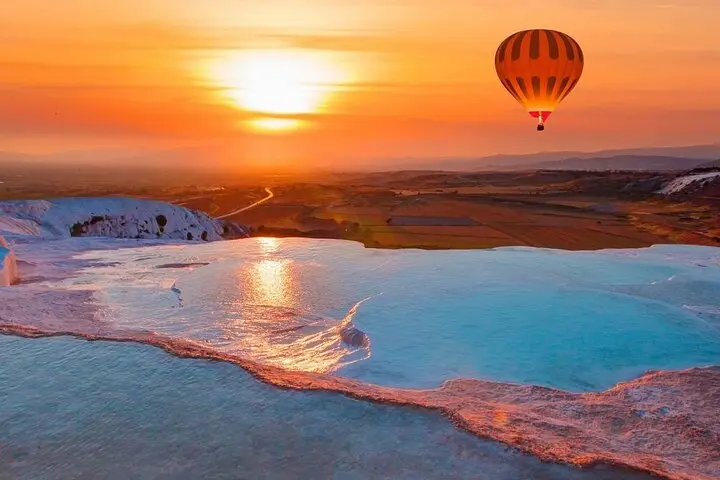
Dawn thins the night into cool blue and the Pamukkale terraces catch first light like spilled milk. From the basket, the white travertines roll away in terraces and pools, the thermal springs steaming in the chill as the ancient ruins of Hierapolis squat on the ridge below. The balloon lifts gently; the valley exhales below and the flight stitches a slow, panoramic ribbon across limestone and farmland.
Dawn thins the night into cool blue and the Pamukkale terraces catch first light like spilled milk. From the basket, the white travertines roll away in terraces and pools, the thermal springs steaming in the chill as the ancient ruins of Hierapolis squat on the ridge below. The balloon lifts gently; the valley exhales below and the flight stitches a slow, panoramic ribbon across limestone and farmland.
The travertines are mineral-rich limestone deposited over millennia by hot springs; Hierapolis was a Roman spa city founded in the 2nd century BCE. Together they form a UNESCO World Heritage landscape where geology and human ritual meet — bath culture, funerary monuments, and calcite formations that keep reshaping with each season.
Expect a calm, 45–60 minute airborne window within a 1.5–2 hour door-to-door excursion that includes hotel pickup and a post-flight celebration with a certificate. The terrain underfoot is fragile: most viewing takes place from the flight or designated walkways. Pilots will point out the white terraces, ancient theatre, and the patchwork of agricultural fields that frame Denizli’s basin.
Practicalities: dress in layers for a cold ascent and warmer mid-flight sun; closed-toe shoes are required for boarding and landing; bring a camera with a secure strap. Motion sensitivity is rare but possible — eat lightly beforehand and hydrate. Flights run at sunrise for the best light and stable conditions; wind can delay or cancel for safety, so build flexibility into your schedule.
This is an aerial, low-impact way to see geology and history together — brief, vivid, and engineered for comfort and safety.