THE ADVENTURE COLLECTIVE® · Independent discovery and booking for outdoor travel

Walk the surreal white travertine terraces and explore the ancient city of Hierapolis on a full-day small-group excursion from Kusadasi. This guide covers what to expect, practical tips, and how to make the most of the day trip.
Walk the surreal white travertine terraces and explore the ancient city of Hierapolis on a full-day small-group excursion from Kusadasi. This guide covers what to expect, practical tips, and how to make the most of the day trip.
You arrive at Pamukkale as pale terraces step down toward a bright Anatolian plain: terraces of glistening white travertine that look almost carved from milk, steam rising where warm water meets cool air. The sound of slow water and distant voices from the ruins of Hierapolis shape the first hour — both nature and history making claims on your attention.
Verified experiences and guided adventures in the surrounding area.
Operated by Private Istanbul Shorex Tours · Pamukkale, Denizli Province
You arrive at Pamukkale as pale terraces step down toward a bright Anatolian plain: terraces of glistening white travertine that look almost carved from milk, steam rising where warm water meets cool air. The sound of slow water and distant voices from the ruins of Hierapolis shape the first hour — both nature and history making claims on your attention.
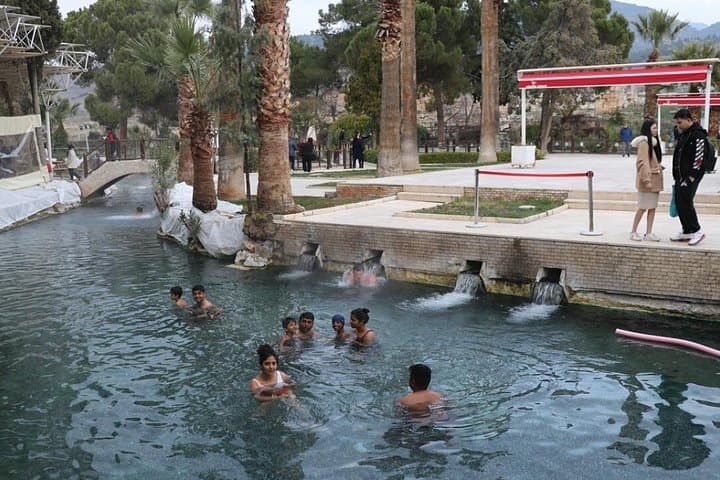
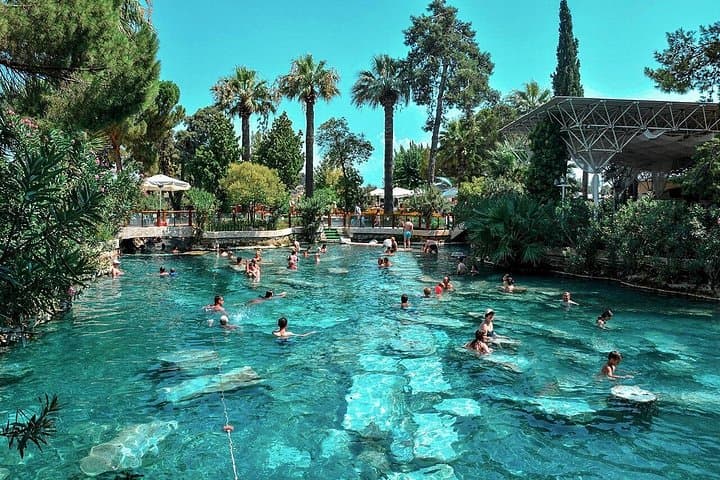
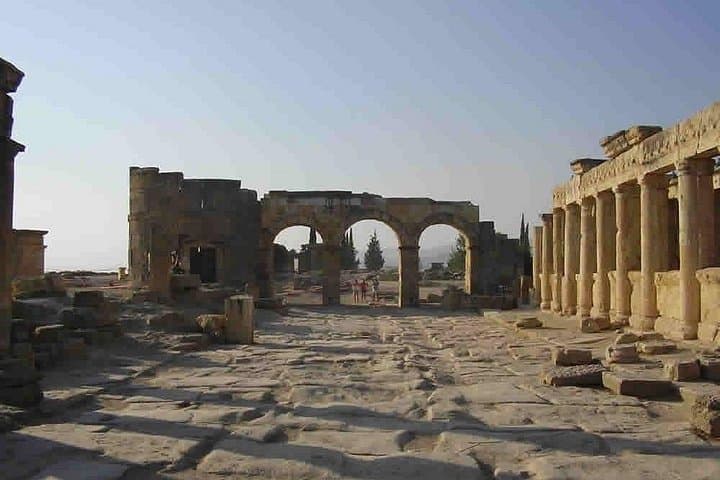
This landscape was created over millennia as calcium-rich thermal springs deposited travertine, building the tiered pools famous in photographs. Above the terraces lie Hierapolis, a Greco‑Roman spa city founded in the 2nd century BCE, with a well-preserved theater, necropolis, and a hot-water antique pool where carved columns sleep beneath the water.
Culturally, the site has long been a healing destination; the Romans and Byzantines treated it as a therapeutic center. Today it's a UNESCO World Heritage Site, carefully managed to balance visitor access with preservation. A common practical note: parts of the terraces are walkable only barefoot and some pools are restricted to protect the deposits.
On a full-day small-group tour from Kusadasi you’ll have several hours at the site, time in the ruins, and a lunch break back in town. Expect a long bus transfer each way, uneven steps in archaeological areas, and variable crowds depending on season. Bring water, sun protection, comfortable shoes you can remove, and a towel if you plan to paddle. Aim for morning or late afternoon visits to avoid peak sun and the busiest crowds — and leave enough battery for photos of the luminous terraces at golden hour.
Road transfer is typically around 2.5–3 hours each way, making this a full-day outing from Kusadasi.
Walking and paddling are allowed in certain shallow terraces; the antique (Cleopatra’s) pool usually requires an additional fee to swim.
No — authorities require visitors to remove shoes in protected terrace areas to prevent damage; wear easy-on/off footwear.
Children can enjoy the pools under supervision, but uneven paths and stairs limit access for those with significant mobility issues; plan accordingly.
Private Istanbul Shorex Tours operates guided outdoor trips and adventures with an emphasis on safety, stewardship, and memorable experiences.
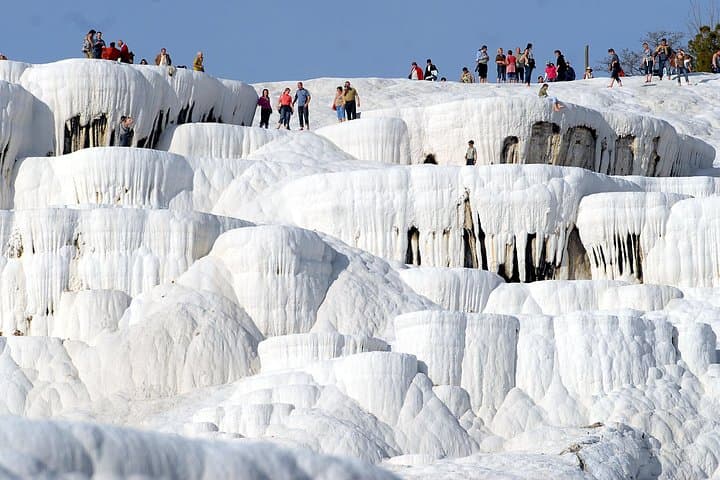
You arrive at Pamukkale as pale terraces step down toward a bright Anatolian plain: terraces of glistening white travertine that look almost carved from milk, steam rising where warm water meets cool air. The sound of slow water and distant voices from the ruins of Hierapolis shape the first hour — both nature and history making claims on your attention.
You arrive at Pamukkale as pale terraces step down toward a bright Anatolian plain: terraces of glistening white travertine that look almost carved from milk, steam rising where warm water meets cool air. The sound of slow water and distant voices from the ruins of Hierapolis shape the first hour — both nature and history making claims on your attention.
This landscape was created over millennia as calcium-rich thermal springs deposited travertine, building the tiered pools famous in photographs. Above the terraces lie Hierapolis, a Greco‑Roman spa city founded in the 2nd century BCE, with a well-preserved theater, necropolis, and a hot-water antique pool where carved columns sleep beneath the water.
Culturally, the site has long been a healing destination; the Romans and Byzantines treated it as a therapeutic center. Today it's a UNESCO World Heritage Site, carefully managed to balance visitor access with preservation. A common practical note: parts of the terraces are walkable only barefoot and some pools are restricted to protect the deposits.
On a full-day small-group tour from Kusadasi you’ll have several hours at the site, time in the ruins, and a lunch break back in town. Expect a long bus transfer each way, uneven steps in archaeological areas, and variable crowds depending on season. Bring water, sun protection, comfortable shoes you can remove, and a towel if you plan to paddle. Aim for morning or late afternoon visits to avoid peak sun and the busiest crowds — and leave enough battery for photos of the luminous terraces at golden hour.