THE ADVENTURE COLLECTIVE® · Independent discovery and booking for outdoor travel

A long, full-day excursion from Antalya that pairs Pamukkale’s snow-white travertine terraces and Roman ruins with the clear, crater-lake shores of Salda. Expect an 18‑hour day with meals included and short walks at both sites.
A long, full-day excursion from Antalya that pairs Pamukkale’s snow-white travertine terraces and Roman ruins with the clear, crater-lake shores of Salda. Expect an 18‑hour day with meals included and short walks at both sites.
You step onto an early-morning minibus before dawn and the highway unfurls westward; olive groves and dry limestone hills slide past as the driver makes for the travertine terraces of Pamukkale. By midmorning the white steps come into view—strange, bright shelves of calcium carbonate filled with shallow, thermal-blue pools that seem to glow against the Anatolian sky.
Verified experiences and guided adventures in the surrounding area.
Operated by tourbookinturkey · Denizli, Denizli
You step onto an early-morning minibus before dawn and the highway unfurls westward; olive groves and dry limestone hills slide past as the driver makes for the travertine terraces of Pamukkale. By midmorning the white steps come into view—strange, bright shelves of calcium carbonate filled with shallow, thermal-blue pools that seem to glow against the Anatolian sky.
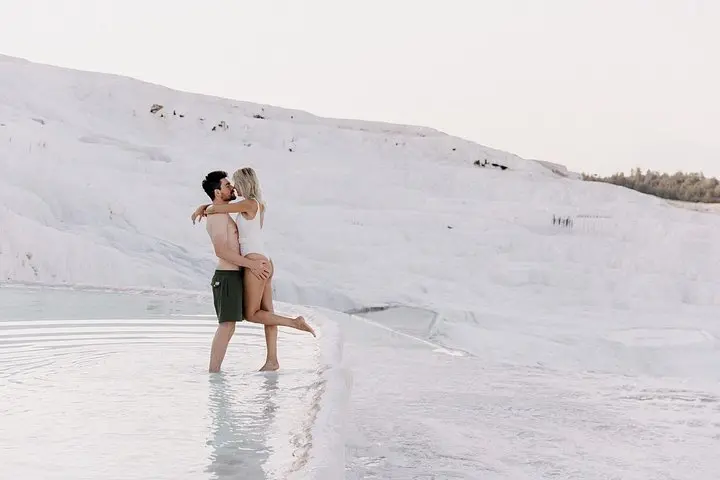
Pamukkale’s terraces are the visible product of hot, mineral-rich springs depositing calcium carbonate over millennia. The Romans founded Hierapolis above these springs, drawing baths, worship and a full provincial economy; the theatre and necropolis still sit adjacent to the white cascades and tell a practical story of how people used the springs for health and ceremony.
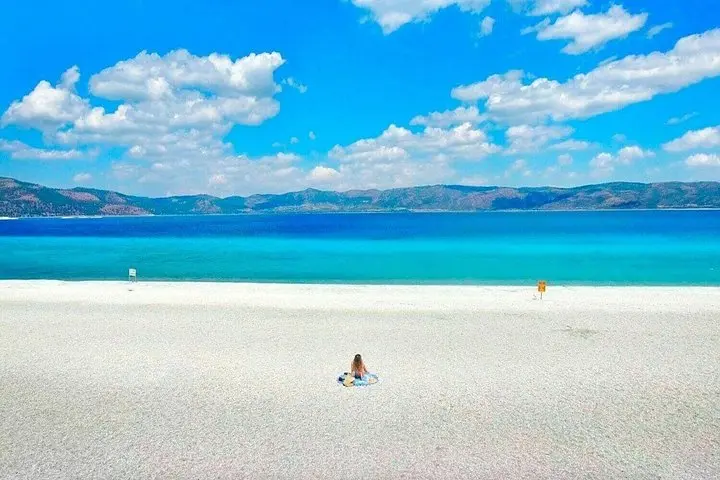
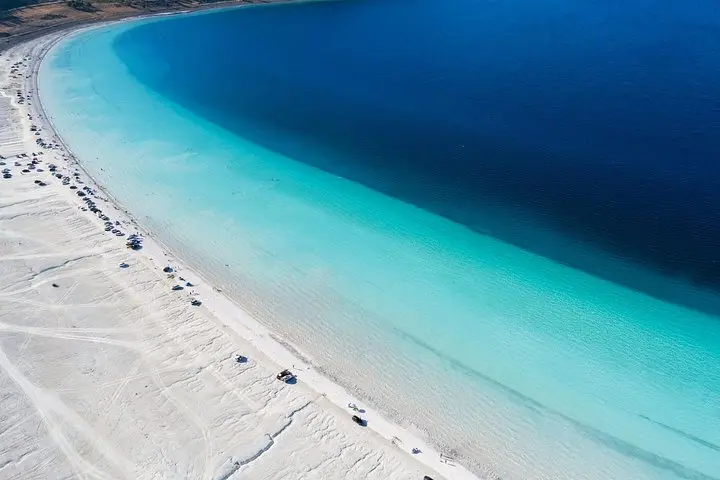
Later the tour moves to Salda Lake, a crater lake famous for its clear, turquoise water and pale, fine shore sediments. Geologically distinct from the travertines, Salda’s basin and microbialites attract scientists and birdwatchers; culturally, both sites occupy important places in regional tourism between Denizli and Burdur provinces.
Practical guidance: this is a long, full-day trip—expect roughly 18 hours including round-trip transit from Antalya. Bring a refillable water bottle, sun protection, and shoes you can remove quickly at Pamukkale’s protection zones. Time your photos for early or late light when terraces and ruins are easiest to read visually, and leave swimming for designated spots—walking barefoot on terraces is often required to protect the site.
The day pairs dramatic geology with light walking and cultural ruins; it’s a compact primer on southwestern Turkey’s natural and historical contrasts.
Pamukkale terrace entry policies vary; this tour includes Salda Lake entrance per the operator, but Pamukkale admission may not be included — confirm with the operator before booking.
Pickup is around 04:30–05:00; the full-day itinerary runs about 18 hours with an approximate return to hotel around 21:00–22:00 depending on traffic.
Swimming in most travertine terraces is restricted to protect the formations; there are designated spots like the Antique (Cleopatra) Pool where swimming is allowed for a fee.
Yes — the tour notes stroller accessibility and infant seats are available, but consider the long transit times and early start when traveling with young children.
tourbookinturkey operates guided outdoor trips and adventures with an emphasis on safety, stewardship, and memorable experiences.

You step onto an early-morning minibus before dawn and the highway unfurls westward; olive groves and dry limestone hills slide past as the driver makes for the travertine terraces of Pamukkale. By midmorning the white steps come into view—strange, bright shelves of calcium carbonate filled with shallow, thermal-blue pools that seem to glow against the Anatolian sky.
You step onto an early-morning minibus before dawn and the highway unfurls westward; olive groves and dry limestone hills slide past as the driver makes for the travertine terraces of Pamukkale. By midmorning the white steps come into view—strange, bright shelves of calcium carbonate filled with shallow, thermal-blue pools that seem to glow against the Anatolian sky.
Pamukkale’s terraces are the visible product of hot, mineral-rich springs depositing calcium carbonate over millennia. The Romans founded Hierapolis above these springs, drawing baths, worship and a full provincial economy; the theatre and necropolis still sit adjacent to the white cascades and tell a practical story of how people used the springs for health and ceremony.
Later the tour moves to Salda Lake, a crater lake famous for its clear, turquoise water and pale, fine shore sediments. Geologically distinct from the travertines, Salda’s basin and microbialites attract scientists and birdwatchers; culturally, both sites occupy important places in regional tourism between Denizli and Burdur provinces.
Practical guidance: this is a long, full-day trip—expect roughly 18 hours including round-trip transit from Antalya. Bring a refillable water bottle, sun protection, and shoes you can remove quickly at Pamukkale’s protection zones. Time your photos for early or late light when terraces and ruins are easiest to read visually, and leave swimming for designated spots—walking barefoot on terraces is often required to protect the site.
The day pairs dramatic geology with light walking and cultural ruins; it’s a compact primer on southwestern Turkey’s natural and historical contrasts.