THE ADVENTURE COLLECTIVE® · Independent discovery and booking for outdoor travel

Walk the dazzling white travertine pools of Pamukkale and explore the Roman ruins of Hierapolis on a full-day small-group tour from Kusadasi or Selcuk. Expect guided history, thermal waters, and time to soak in the region’s unique geology.
Walk the dazzling white travertine pools of Pamukkale and explore the Roman ruins of Hierapolis on a full-day small-group tour from Kusadasi or Selcuk. Expect guided history, thermal waters, and time to soak in the region’s unique geology.
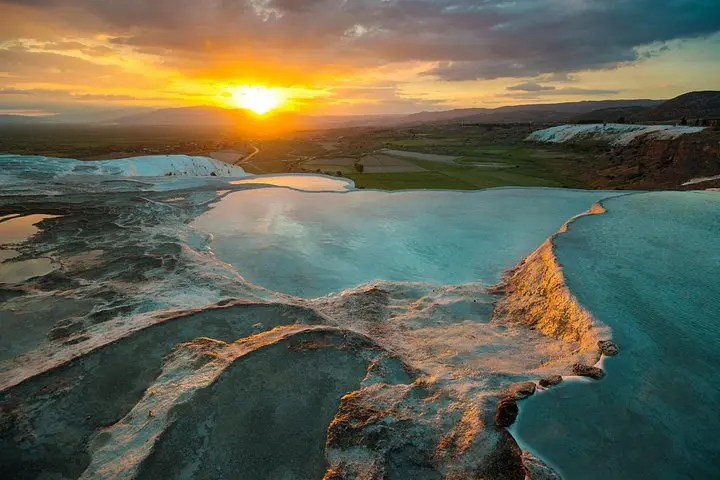
You step onto a white slope that looks more like a sculpted shore than land — warm water glides over a chalky terrace and small basins invite you to pause barefoot. The sun pushes steam from the springs and the ruins of Hierapolis sit above like a weathered observatory, watching centuries of visitors arrive.
Verified experiences and guided adventures in the surrounding area.
Operated by Turkey Tours Company · Pamukkale, Denizli Province
You step onto a white slope that looks more like a sculpted shore than land — warm water glides over a chalky terrace and small basins invite you to pause barefoot. The sun pushes steam from the springs and the ruins of Hierapolis sit above like a weathered observatory, watching centuries of visitors arrive.
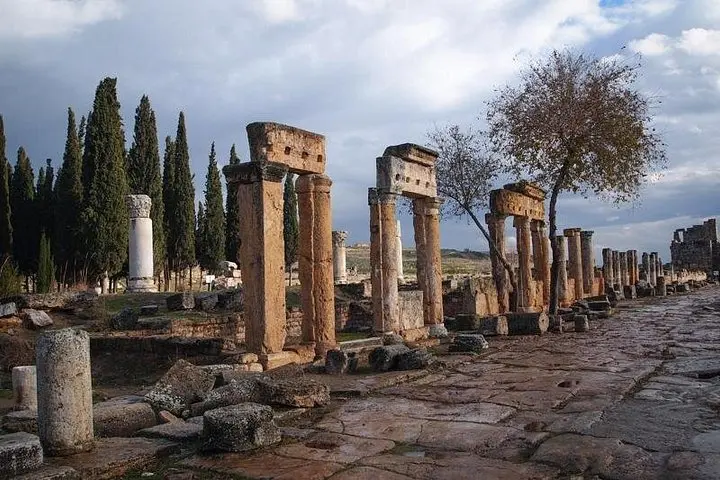
The terraces at Pamukkale are travertine formations formed by mineral-rich thermal waters depositing calcium carbonate over millennia. Hierapolis, founded in the Hellenistic period and later expanded by the Romans, became a spa city built directly atop these springs; its theater, necropolis and bath complexes map layers of regional history and ritual bathing culture.
Locals long used the waters for therapeutic bathing; today the site balances tourism and preservation. Nearby Karahayit’s red springs and the underground Kaklik Cave are lesser-known geological neighbors worth a detour.
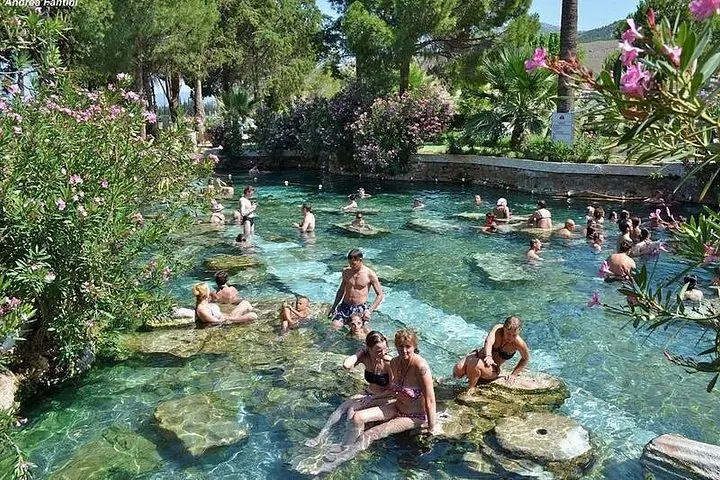
On a full-day small-group tour from Kusadasi or Selcuk (about 9–11 hours door-to-door), expect guided visits to the Hierapolis ruins, a museum stop, and two hours walking the terraces and pool edges. You will walk barefoot on the calcite; wear sun protection and bring a swimsuit if you plan to enter designated thermal pools. Entrance fees and optional Cleopatra’s Pool access are typically paid on-site or through your guide. The route includes paved and uneven stone paths—comfortable footwear for the transfer and a light daypack for water, camera and a towel are practical.
Timing matters: early morning or late afternoon light reduces glare and crowds, while mid-day brings heat and the thickest visitor traffic. Respect the conservation rules — the white terraces are fragile and protected.
The full-day small-group tour runs about 9–11 hours door-to-door, including hotel pickup and return.
Yes—Pamukkale entrance and optional Cleopatra’s Pool are usually paid on-site; guides often collect for skip-the-line tickets in local currency or euros.
Swimming in the open travertine terraces is prohibited to protect the formations; paid, designated pools such as Cleopatra’s Pool are available separately.
Parts of Hierapolis museum and some paved areas are accessible, but the travertine terraces and many ruins are uneven and not suitable for standard wheelchairs.
Turkey Tours Company operates guided outdoor trips and adventures with an emphasis on safety, stewardship, and memorable experiences.
You step onto a white slope that looks more like a sculpted shore than land — warm water glides over a chalky terrace and small basins invite you to pause barefoot. The sun pushes steam from the springs and the ruins of Hierapolis sit above like a weathered observatory, watching centuries of visitors arrive.
You step onto a white slope that looks more like a sculpted shore than land — warm water glides over a chalky terrace and small basins invite you to pause barefoot. The sun pushes steam from the springs and the ruins of Hierapolis sit above like a weathered observatory, watching centuries of visitors arrive.
The terraces at Pamukkale are travertine formations formed by mineral-rich thermal waters depositing calcium carbonate over millennia. Hierapolis, founded in the Hellenistic period and later expanded by the Romans, became a spa city built directly atop these springs; its theater, necropolis and bath complexes map layers of regional history and ritual bathing culture.
Locals long used the waters for therapeutic bathing; today the site balances tourism and preservation. Nearby Karahayit’s red springs and the underground Kaklik Cave are lesser-known geological neighbors worth a detour.
On a full-day small-group tour from Kusadasi or Selcuk (about 9–11 hours door-to-door), expect guided visits to the Hierapolis ruins, a museum stop, and two hours walking the terraces and pool edges. You will walk barefoot on the calcite; wear sun protection and bring a swimsuit if you plan to enter designated thermal pools. Entrance fees and optional Cleopatra’s Pool access are typically paid on-site or through your guide. The route includes paved and uneven stone paths—comfortable footwear for the transfer and a light daypack for water, camera and a towel are practical.
Timing matters: early morning or late afternoon light reduces glare and crowds, while mid-day brings heat and the thickest visitor traffic. Respect the conservation rules — the white terraces are fragile and protected.