THE ADVENTURE COLLECTIVE® · Independent discovery and booking for outdoor travel

Walk bright white travertine terraces and explore the ancient city of Hierapolis on a full-day tour to Pamukkale. Expect warm mineral pools, Roman ruins, and easy-to-moderate walking across uneven stone.
Walk bright white travertine terraces and explore the ancient city of Hierapolis on a full-day tour to Pamukkale. Expect warm mineral pools, Roman ruins, and easy-to-moderate walking across uneven stone.
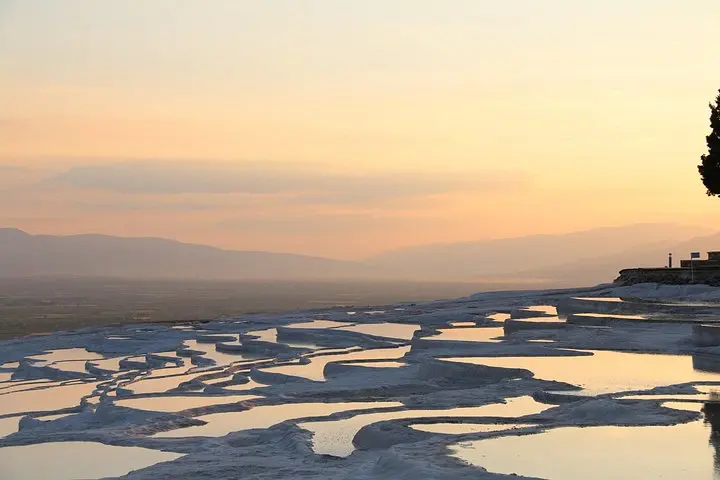
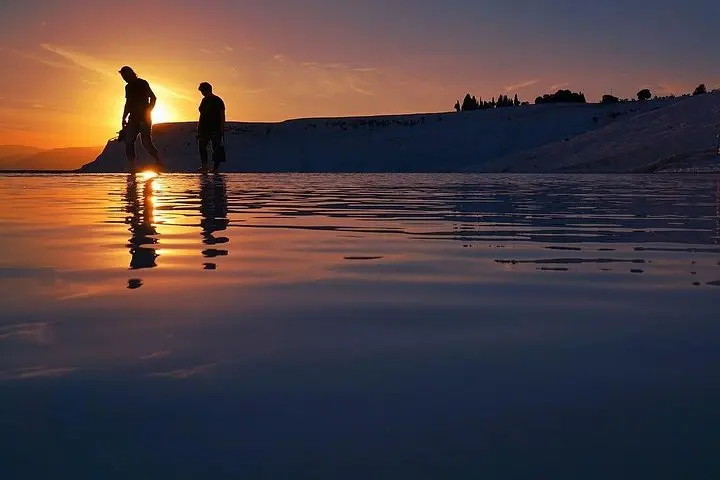
You arrive on the edge of a white plateau where mineral-rich water has been carving the hill into terraces for millennia. Sunlight picks out the calcified edges; steam rises from warm basins that seem to glow. The travertine cascades dare you to walk their rim while, a short climb above, the stones of Hierapolis hold the slow, human history of the Aegean.
Verified experiences and guided adventures in the surrounding area.
Operated by Deren Koray Tourism · Pamukkale, Denizli Province
You arrive on the edge of a white plateau where mineral-rich water has been carving the hill into terraces for millennia. Sunlight picks out the calcified edges; steam rises from warm basins that seem to glow. The travertine cascades dare you to walk their rim while, a short climb above, the stones of Hierapolis hold the slow, human history of the Aegean.
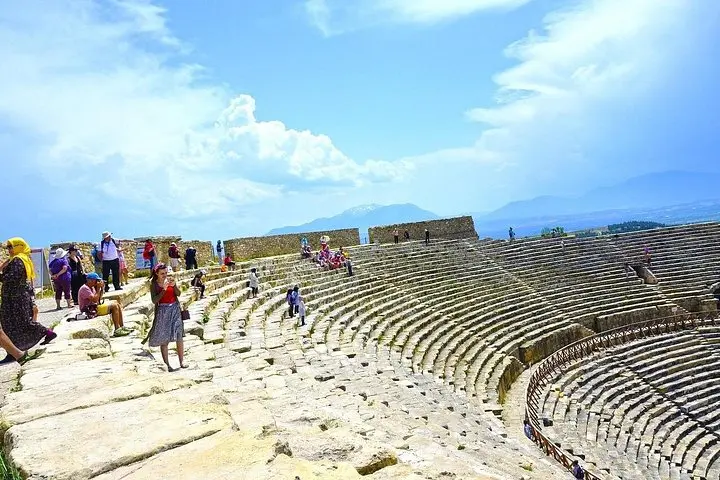
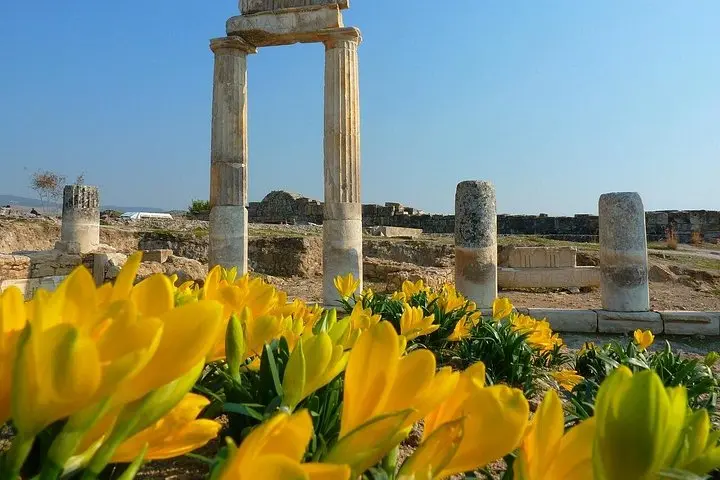
Geology here is obvious and raw: spring water saturated with calcium carbonate deposits the mineral as it cools, building the stepped pools that give Pamukkale its nickname, the Cotton Castle. The site’s hot springs were recorded by Romans and Byzantines and used for bathing and healing; the Roman city of Hierapolis grew beside the thermal plateau and left a theatre, necropolis and bath complex that are still visible today.
Culturally, the contrast between white terraces and weathered ruins reflects centuries of Anatolian life—pilgrims, physicians, and holiday-makers drawn to the waters.
Practical guidance: allow a full day (the typical tour runs 6–8 hours), plan to walk 1–3 km across uneven, often slippery stone, and expect modest elevation changes as you move between terraces and ruins. Some terraces require barefoot access or walking on defined paths; follow signs to protect formations. Bring sunscreen, a hat, water, and sturdy shoes you can remove or step out of easily. If you plan to swim in the ancient thermal pool (Cleopatra’s Pool), bring a towel and swimsuit; water averages near 36°C. Visit early morning or late afternoon to avoid crowds and midday glare. The experience is equal parts geology and archaeology—dress practically and move slowly to savor both.
Most guided day tours last about 6–8 hours including transportation; plan at least 2–3 hours on-site to see terraces and Hierapolis.
Swimming on the main terraces is not allowed to protect the formations, but the ancient Roman pool (Cleopatra’s Pool) permits swimming for a separate fee and stays around 36°C.
Some paths and viewing platforms are wheelchair-accessible, but many areas involve uneven stone, steps and barefoot sections—check with your operator for specific accessibility options.
Yes, there is an archaeological site entrance fee for Hierapolis and the terraces; fees and opening hours can change, so verify in advance or ask your tour operator.
Deren Koray Tourism operates guided outdoor trips and adventures with an emphasis on safety, stewardship, and memorable experiences.
You arrive on the edge of a white plateau where mineral-rich water has been carving the hill into terraces for millennia. Sunlight picks out the calcified edges; steam rises from warm basins that seem to glow. The travertine cascades dare you to walk their rim while, a short climb above, the stones of Hierapolis hold the slow, human history of the Aegean.
You arrive on the edge of a white plateau where mineral-rich water has been carving the hill into terraces for millennia. Sunlight picks out the calcified edges; steam rises from warm basins that seem to glow. The travertine cascades dare you to walk their rim while, a short climb above, the stones of Hierapolis hold the slow, human history of the Aegean.
Geology here is obvious and raw: spring water saturated with calcium carbonate deposits the mineral as it cools, building the stepped pools that give Pamukkale its nickname, the Cotton Castle. The site’s hot springs were recorded by Romans and Byzantines and used for bathing and healing; the Roman city of Hierapolis grew beside the thermal plateau and left a theatre, necropolis and bath complex that are still visible today.
Culturally, the contrast between white terraces and weathered ruins reflects centuries of Anatolian life—pilgrims, physicians, and holiday-makers drawn to the waters.
Practical guidance: allow a full day (the typical tour runs 6–8 hours), plan to walk 1–3 km across uneven, often slippery stone, and expect modest elevation changes as you move between terraces and ruins. Some terraces require barefoot access or walking on defined paths; follow signs to protect formations. Bring sunscreen, a hat, water, and sturdy shoes you can remove or step out of easily. If you plan to swim in the ancient thermal pool (Cleopatra’s Pool), bring a towel and swimsuit; water averages near 36°C. Visit early morning or late afternoon to avoid crowds and midday glare. The experience is equal parts geology and archaeology—dress practically and move slowly to savor both.