THE ADVENTURE COLLECTIVE® · Independent discovery and booking for outdoor travel

Short on time but hungry for Himalayan views? This private Panchase Hill trek from Pokhara delivers sweeping Annapurna panoramas, tea-house nights and easy 4–5 hour walking days—ideal for a compact Annapurna experience.
Short on time but hungry for Himalayan views? This private Panchase Hill trek from Pokhara delivers sweeping Annapurna panoramas, tea-house nights and easy 4–5 hour walking days—ideal for a compact Annapurna experience.
The morning air on the Panchase trail smells of damp earth and pine; low clouds lift off the terraced hillside and reveal a jagged sweep of Annapurna peaks that seem close enough to touch. Walkers begin in lakeside Pokhara, cross Fewa Lake by boat and climb through cedar forests, Nepali villages and quiet ridgelines that open onto the Fishtail (Machhapuchhre), Annapurna and distant Manaslu ranges.
Verified experiences and guided adventures in the surrounding area.
Operated by Altitude Himalaya · Pokhara, Gandaki Province
The morning air on the Panchase trail smells of damp earth and pine; low clouds lift off the terraced hillside and reveal a jagged sweep of Annapurna peaks that seem close enough to touch. Walkers begin in lakeside Pokhara, cross Fewa Lake by boat and climb through cedar forests, Nepali villages and quiet ridgelines that open onto the Fishtail (Machhapuchhre), Annapurna and distant Manaslu ranges.
Panchase sits on a ridge used for centuries as grazing and pilgrimage ground, a cultural buffer between lowland farmland and high Himalayan life. Geologically the ridge is part of the Lesser Himalaya—rounded hills of schist and quartzite where narrow streams have cut steep flanks and left broad viewing benches. Local Gurung and Brahmin communities maintain terraced fields and hilltop temples; on clear mornings the World Peace Pagoda and Pokhara’s lake lie like stage scenery below.
Expect 4–5 hours of walking most days over well-worn trails, steps and occasional muddy stretches, with a high point near 2,500 m at Panchase Peak. Tea houses and simple lodges keep your pack light; the trip usually includes a licensed guide, porter support and park permits (TIMS/National Park entry).
Practical notes: aim for spring or autumn for stable weather, carry warm layers for pre-dawn summit views, and allow a day in Pokhara to acclimatize and sort permits. Moderate fitness and steady hiking experience are enough—take a headlamp for early starts, hydrate often, and move slowly on steep descents to protect knees. A private guide smooths logistics; the payoff is compact trekking with big Himalayan panoramas.
Yes—trekkers commonly require a TIMS card and Annapurna Conservation Area entry; your operator generally arranges these before trekking.
Panchase tops out around 2,500 m—altitude effects are usually mild, but allow a day in Pokhara to acclimatize and monitor symptoms.
Yes—tea houses and simple lodges provide basic rooms and meals; expect shared bathrooms and modest comforts in villages.
It’s suitable for hikers with basic fitness who can walk 4–5 hours over uneven terrain; a private guide and porter make it accessible for first-time trekkers.
Altitude Himalaya operates guided outdoor trips and adventures with an emphasis on safety, stewardship, and memorable experiences.
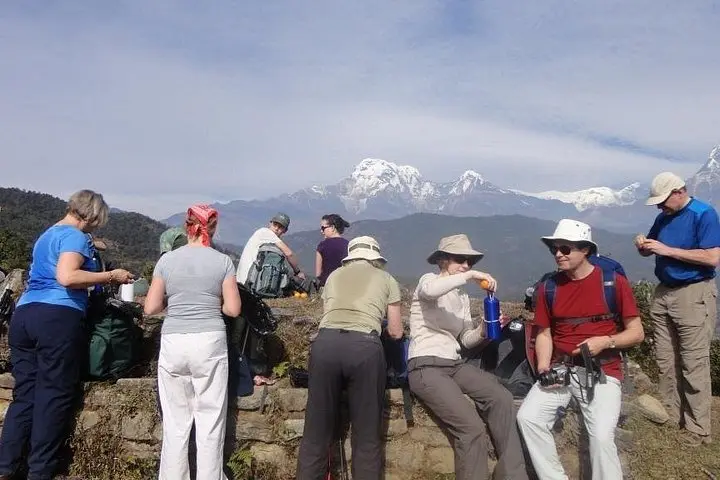
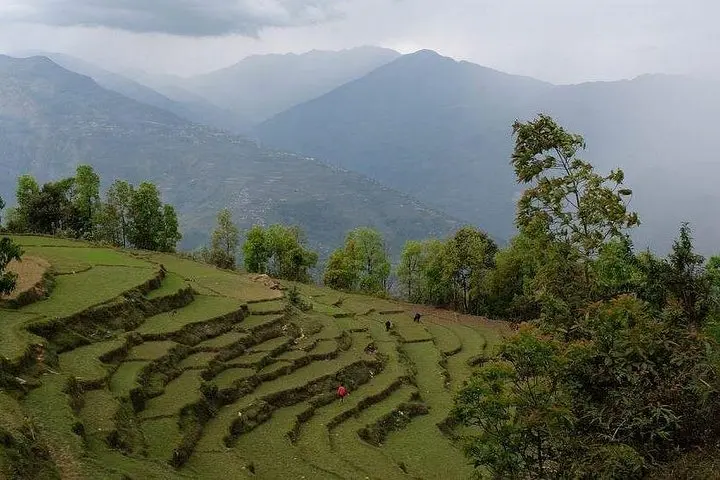
The morning air on the Panchase trail smells of damp earth and pine; low clouds lift off the terraced hillside and reveal a jagged sweep of Annapurna peaks that seem close enough to touch. Walkers begin in lakeside Pokhara, cross Fewa Lake by boat and climb through cedar forests, Nepali villages and quiet ridgelines that open onto the Fishtail (Machhapuchhre), Annapurna and distant Manaslu ranges.
The morning air on the Panchase trail smells of damp earth and pine; low clouds lift off the terraced hillside and reveal a jagged sweep of Annapurna peaks that seem close enough to touch. Walkers begin in lakeside Pokhara, cross Fewa Lake by boat and climb through cedar forests, Nepali villages and quiet ridgelines that open onto the Fishtail (Machhapuchhre), Annapurna and distant Manaslu ranges.
Panchase sits on a ridge used for centuries as grazing and pilgrimage ground, a cultural buffer between lowland farmland and high Himalayan life. Geologically the ridge is part of the Lesser Himalaya—rounded hills of schist and quartzite where narrow streams have cut steep flanks and left broad viewing benches. Local Gurung and Brahmin communities maintain terraced fields and hilltop temples; on clear mornings the World Peace Pagoda and Pokhara’s lake lie like stage scenery below.
Expect 4–5 hours of walking most days over well-worn trails, steps and occasional muddy stretches, with a high point near 2,500 m at Panchase Peak. Tea houses and simple lodges keep your pack light; the trip usually includes a licensed guide, porter support and park permits (TIMS/National Park entry).
Practical notes: aim for spring or autumn for stable weather, carry warm layers for pre-dawn summit views, and allow a day in Pokhara to acclimatize and sort permits. Moderate fitness and steady hiking experience are enough—take a headlamp for early starts, hydrate often, and move slowly on steep descents to protect knees. A private guide smooths logistics; the payoff is compact trekking with big Himalayan panoramas.