THE ADVENTURE COLLECTIVE® · Independent discovery and booking for outdoor travel

A day-long sweep of Mpumalanga’s Panorama Route: towering viewpoints, thunderous waterfalls and the sculpted potholes of Bourke’s Luck. This guided tour packs geology, history and crisp lookout moments into one long, rewarding day from Nelspruit.
A day-long sweep of Mpumalanga’s Panorama Route: towering viewpoints, thunderous waterfalls and the sculpted potholes of Bourke’s Luck. This guided tour packs geology, history and crisp lookout moments into one long, rewarding day from Nelspruit.
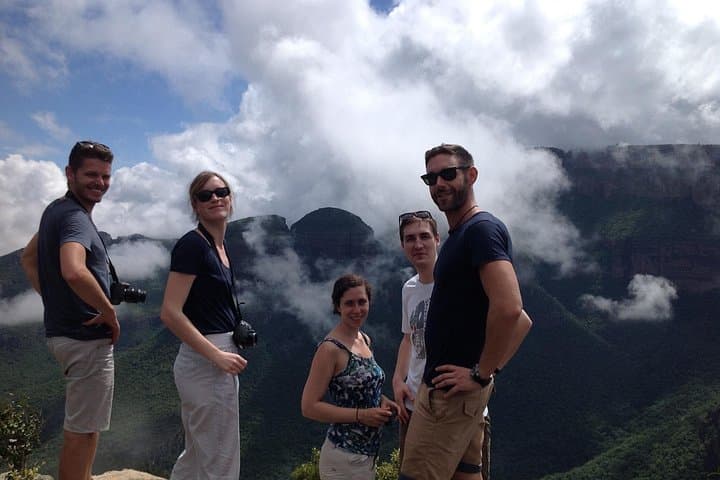
You round a bend and the world opens: a river carved a cliff so clean it looks intentional, and three rounded peaks—like enormous traditional huts—rise from a green gorge. The guide eases the minibus to the viewpoint and gestures toward the Blyde River Canyon. Wind chases leaves across the lookout; the canyon seems to inhale and hold its breath, offering you a long, steady view.
Verified experiences and guided adventures in the surrounding area.
Operated by Kruger Flexi Tours · Graskop, Mpumalanga
You round a bend and the world opens: a river carved a cliff so clean it looks intentional, and three rounded peaks—like enormous traditional huts—rise from a green gorge. The guide eases the minibus to the viewpoint and gestures toward the Blyde River Canyon. Wind chases leaves across the lookout; the canyon seems to inhale and hold its breath, offering you a long, steady view.
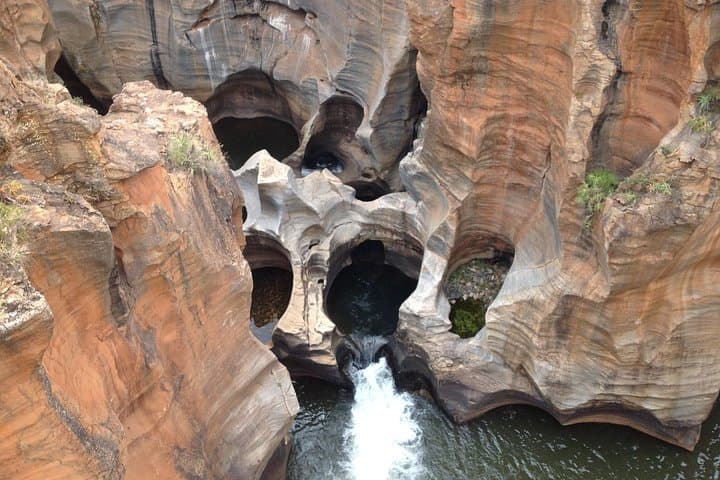
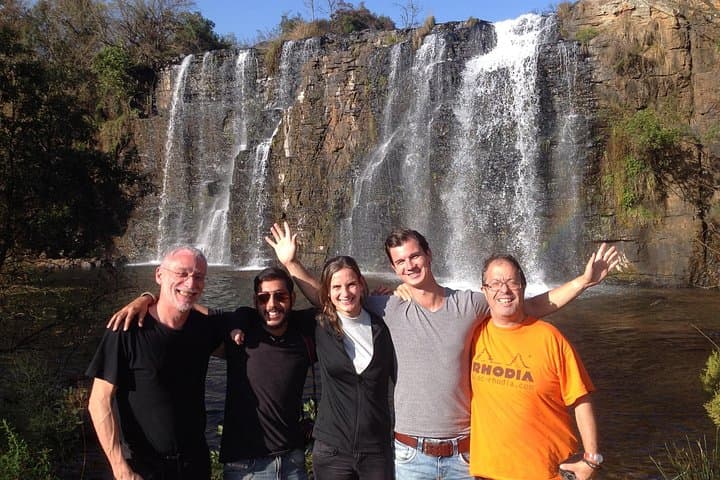
This full-day drive along Mpumalanga’s Panorama Route stitches together geology, gold rush history and highland forest. You’ll stop for roughly 40 minutes at major sites: God’s Window, where the escarpment drops away and you can feel the lowveld heat press up from below; Lisbon Falls, a 90m curtain of water that thunders into a ferned amphitheater; Bourke’s Luck Potholes, where centuries of swirling water and grit hollowed cylindrical chambers at the confluence of the Treur and Blyde rivers; and the Three Rondavels, which tower about 700m above the valley floor from a viewpoint roughly 1,380m in elevation.
Geology here is active reading: the canyon is a shallow crustal fracture, cut and widened by the Blyde River over millions of years. The potholes are literal archives of hydraulic force—whorls of sand and stone grinding holes into bedrock. Culturally, the route crosses farmland, small-market towns, and scruffy settlements that grew during the late-19th-century gold rush, when prospectors like Tom Bourke prospected these rivers.
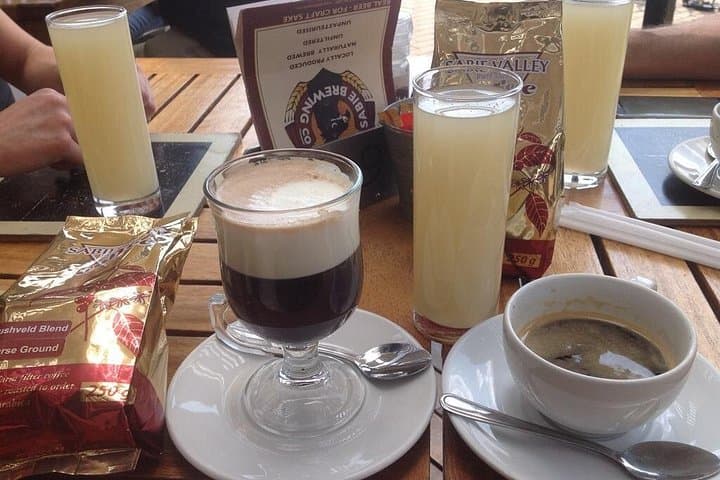
The tour’s rhythm is busied but measured—short walks, photo stops and a satisfying pause at Harrie’s Pancakes for a lunch that feels earned. Guides point out endemic fynbos patches, the highland grasslands and how the escarpment’s microclimates feed waterfalls and forest.
Practical edge: the day is long and mostly roadside walking; expect short climbs and exposed viewpoints with limited railings. Wear comfortable walking shoes, bring sun protection and at least 1–2 liters of water. A polarizing filter will increase contrast on falls and reduce glare over the river; a zoom helps with distant pinnacles. Arrive with a camera battery charged and layers—morning on the escarpment can be cool, and midday in the lowveld warms quickly.
Timing matters: early departures avoid midday crowds at Lisbon Falls and Bourke’s Luck; late afternoons warm the canyon rock in golden light for the Rondavels. Respect posted paths—erosion and fragile flora are visible and fragile. If you want a quieter moment, ask your guide about a lesser-used pullout along the canyon rim for a short, contemplative stop before the return to Nelspruit.
The tour is approximately 10 hours (fixed duration 600 minutes); hotel pickups begin about 30 minutes before the published departure—confirm exact pickup time with the local operator.
Yes—admission to the listed attractions on the itinerary is included in the tour price.
Yes—infants and small children can use strollers at some stops, but watch viewpoint edges and keep children supervised.
Yes—there are restroom facilities at major viewpoints and a scheduled lunch stop at Harrie’s Pancakes is included.
Coverage is patchy along parts of the Panorama Route; download directions or contact numbers beforehand and let your guide know any urgent needs.
Tipping is discretionary; a standard guideline is about 10–15% of the tour cost split between driver and guide depending on service.
Kruger Flexi Tours operates guided outdoor trips and adventures with an emphasis on safety, stewardship, and memorable experiences.
You round a bend and the world opens: a river carved a cliff so clean it looks intentional, and three rounded peaks—like enormous traditional huts—rise from a green gorge. The guide eases the minibus to the viewpoint and gestures toward the Blyde River Canyon. Wind chases leaves across the lookout; the canyon seems to inhale and hold its breath, offering you a long, steady view.
You round a bend and the world opens: a river carved a cliff so clean it looks intentional, and three rounded peaks—like enormous traditional huts—rise from a green gorge. The guide eases the minibus to the viewpoint and gestures toward the Blyde River Canyon. Wind chases leaves across the lookout; the canyon seems to inhale and hold its breath, offering you a long, steady view.
This full-day drive along Mpumalanga’s Panorama Route stitches together geology, gold rush history and highland forest. You’ll stop for roughly 40 minutes at major sites: God’s Window, where the escarpment drops away and you can feel the lowveld heat press up from below; Lisbon Falls, a 90m curtain of water that thunders into a ferned amphitheater; Bourke’s Luck Potholes, where centuries of swirling water and grit hollowed cylindrical chambers at the confluence of the Treur and Blyde rivers; and the Three Rondavels, which tower about 700m above the valley floor from a viewpoint roughly 1,380m in elevation.
Geology here is active reading: the canyon is a shallow crustal fracture, cut and widened by the Blyde River over millions of years. The potholes are literal archives of hydraulic force—whorls of sand and stone grinding holes into bedrock. Culturally, the route crosses farmland, small-market towns, and scruffy settlements that grew during the late-19th-century gold rush, when prospectors like Tom Bourke prospected these rivers.
The tour’s rhythm is busied but measured—short walks, photo stops and a satisfying pause at Harrie’s Pancakes for a lunch that feels earned. Guides point out endemic fynbos patches, the highland grasslands and how the escarpment’s microclimates feed waterfalls and forest.
Practical edge: the day is long and mostly roadside walking; expect short climbs and exposed viewpoints with limited railings. Wear comfortable walking shoes, bring sun protection and at least 1–2 liters of water. A polarizing filter will increase contrast on falls and reduce glare over the river; a zoom helps with distant pinnacles. Arrive with a camera battery charged and layers—morning on the escarpment can be cool, and midday in the lowveld warms quickly.
Timing matters: early departures avoid midday crowds at Lisbon Falls and Bourke’s Luck; late afternoons warm the canyon rock in golden light for the Rondavels. Respect posted paths—erosion and fragile flora are visible and fragile. If you want a quieter moment, ask your guide about a lesser-used pullout along the canyon rim for a short, contemplative stop before the return to Nelspruit.