THE ADVENTURE COLLECTIVE® · Independent discovery and booking for outdoor travel

A one-day multivan circuit through Gran Canaria’s dramatic interior, the Panorama VIP Tour links Fataga, Tejeda and the Barranco de los Tilos. Expect short walks, panoramic viewpoints and a lunch stop in a traditional village.
A one-day multivan circuit through Gran Canaria’s dramatic interior, the Panorama VIP Tour links Fataga, Tejeda and the Barranco de los Tilos. Expect short walks, panoramic viewpoints and a lunch stop in a traditional village.
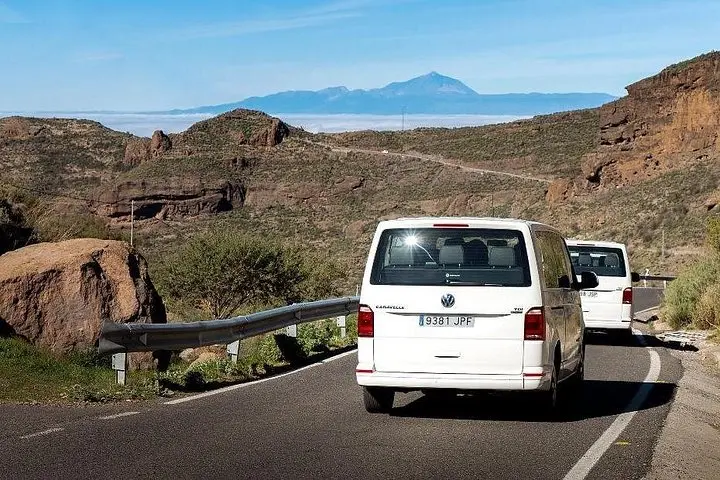
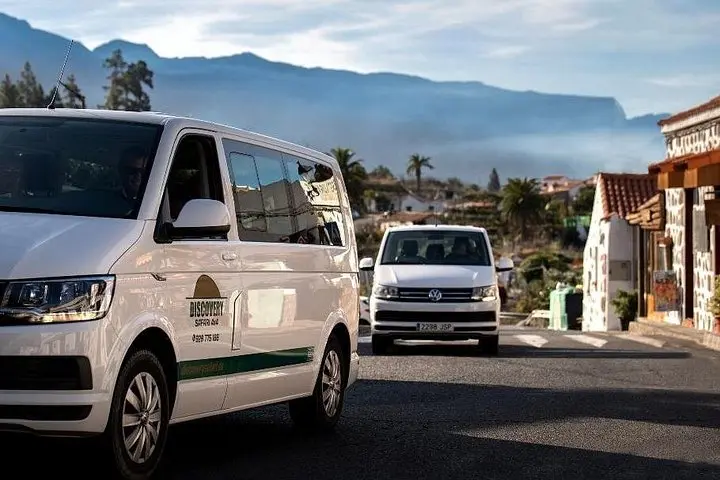
Passengers board a fully equipped multivan in the sun-warmed south as the road climbs out of the resort plain and the island begins to change. Fataga opens first: dry gullies and terraced fields slide beneath steep ridgelines while wind shapes the pines and palms as if sketching the map of Gran Canaria itself.
Verified experiences and guided adventures in the surrounding area.
Operated by VIMOTIONS · Tejeda, Las Palmas
Passengers board a fully equipped multivan in the sun-warmed south as the road climbs out of the resort plain and the island begins to change. Fataga opens first: dry gullies and terraced fields slide beneath steep ridgelines while wind shapes the pines and palms as if sketching the map of Gran Canaria itself.
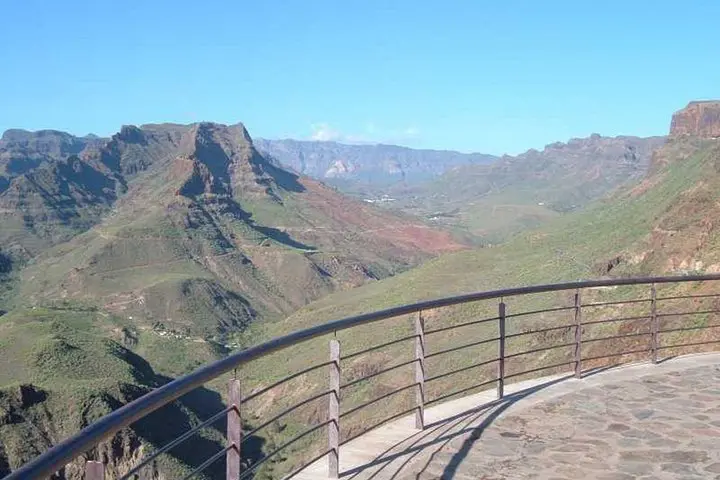
The route threads through San Bartolomé de Tirajana’s viewpoint, then climbs into highland villages. Ayacata’s stone-built hamlets and Tejeda’s aromatic herbal markets sit on volcanic shoulders carved by millennia of erosion. Geology here is direct and readable—ancient lava flows folded into calderas, later cut by rain into deep barrancos. Artenara and Barranco Hondo reveal cave-houses hewn from tuff and basalt, and Monte Pavón offers a frame where, on clear days, Las Palmas and Tenerife’s El Teide appear in the same panorama.
Culturally the tour highlights rural life: medicinal-plant infusions in Tejeda, small churches in Moya, and a lunch stop in Fontanales where food follows local rhythm rather than a timetable. The final descent through the Barranco de los Tilos passes a protected laurel-forest ravine—humid air and mossy trunks remind riders that this island balances arid slopes with pockets of cloud forest.
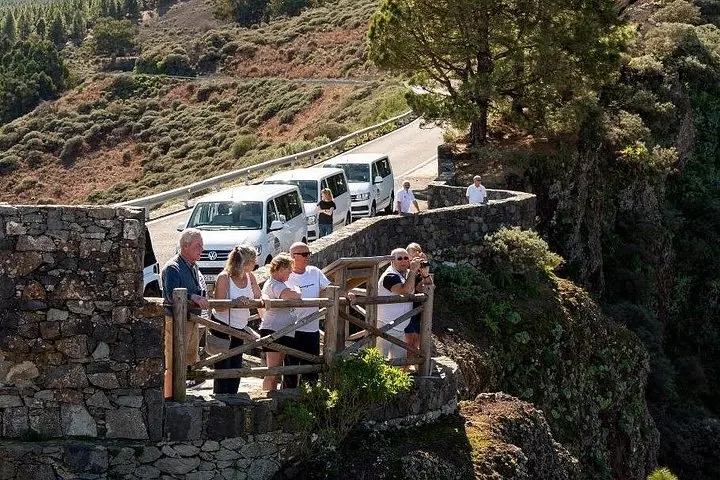
Practically, expect a mostly seated seven-hour day with multiple 30–60 minute stops for walking, photos, and a restaurant break. Wear layered clothing for high-altitude chills, sturdy shoes for uneven village streets, sunscreen for open viewpoints, and bring water and a camera. The van makes remote panoramas accessible without long hikes, offering a compact survey of Gran Canaria’s dramatic interior.
The tour departs from pickup points in south Gran Canaria (hotel pickup included for southern hotels) and returns to the same area after the full circuit.
No, lunch is not included; there is a scheduled one-hour stop in Fontanales where participants can buy a meal.
No—stops include short walks of 15–45 minutes to viewpoints, village centres and short trail sections rather than extended hikes.
Yes, on clear days Monte Pavón offers views where El Teide is visible across the sea along with Las Palmas in the same frame.
VIMOTIONS operates guided outdoor trips and adventures with an emphasis on safety, stewardship, and memorable experiences.
Passengers board a fully equipped multivan in the sun-warmed south as the road climbs out of the resort plain and the island begins to change. Fataga opens first: dry gullies and terraced fields slide beneath steep ridgelines while wind shapes the pines and palms as if sketching the map of Gran Canaria itself.
Passengers board a fully equipped multivan in the sun-warmed south as the road climbs out of the resort plain and the island begins to change. Fataga opens first: dry gullies and terraced fields slide beneath steep ridgelines while wind shapes the pines and palms as if sketching the map of Gran Canaria itself.
The route threads through San Bartolomé de Tirajana’s viewpoint, then climbs into highland villages. Ayacata’s stone-built hamlets and Tejeda’s aromatic herbal markets sit on volcanic shoulders carved by millennia of erosion. Geology here is direct and readable—ancient lava flows folded into calderas, later cut by rain into deep barrancos. Artenara and Barranco Hondo reveal cave-houses hewn from tuff and basalt, and Monte Pavón offers a frame where, on clear days, Las Palmas and Tenerife’s El Teide appear in the same panorama.
Culturally the tour highlights rural life: medicinal-plant infusions in Tejeda, small churches in Moya, and a lunch stop in Fontanales where food follows local rhythm rather than a timetable. The final descent through the Barranco de los Tilos passes a protected laurel-forest ravine—humid air and mossy trunks remind riders that this island balances arid slopes with pockets of cloud forest.
Practically, expect a mostly seated seven-hour day with multiple 30–60 minute stops for walking, photos, and a restaurant break. Wear layered clothing for high-altitude chills, sturdy shoes for uneven village streets, sunscreen for open viewpoints, and bring water and a camera. The van makes remote panoramas accessible without long hikes, offering a compact survey of Gran Canaria’s dramatic interior.