THE ADVENTURE COLLECTIVE® · Independent discovery and booking for outdoor travel

A four- to five-hour coastal ridge walk from Parc Pastré to Callelongue that combines linen-rock scrambles, sweeping views of Marseille and the Frioul islands, and a finish in the fishing cove of Les Goudes. Perfect for hikers who want city history and rugged Mediterranean coastline in one outing.
A four- to five-hour coastal ridge walk from Parc Pastré to Callelongue that combines linen-rock scrambles, sweeping views of Marseille and the Frioul islands, and a finish in the fishing cove of Les Goudes. Perfect for hikers who want city history and rugged Mediterranean coastline in one outing.
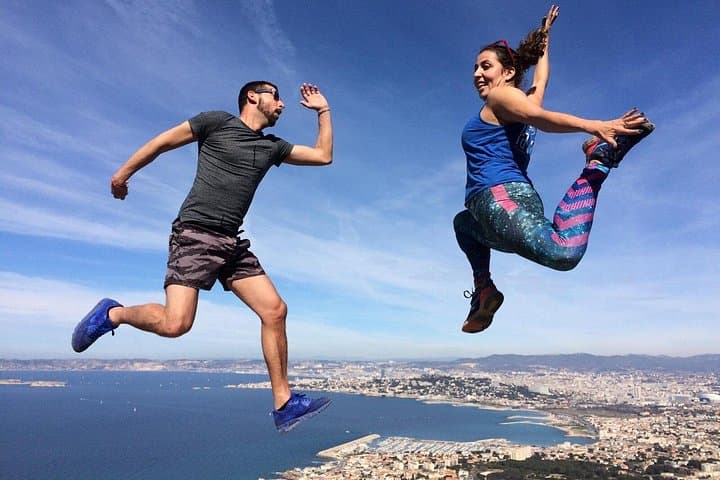
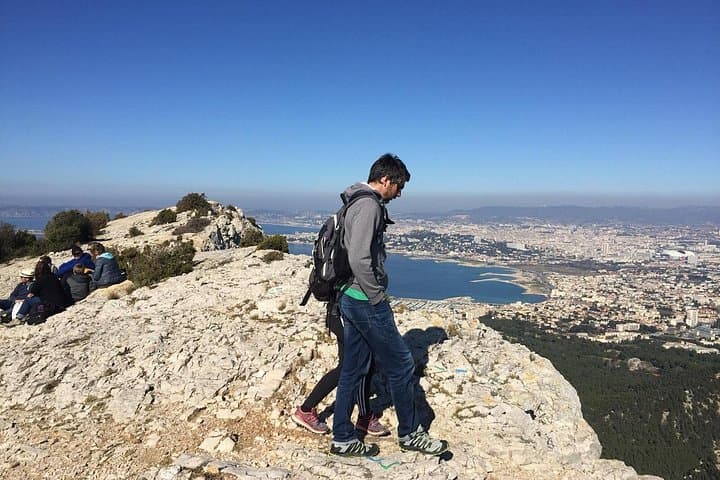
The path begins under a stand of Aleppo pines whose needles strew sunlight onto the dirt, the sea murmuring somewhere beyond the hill. You set off from the fine arts school at Luminy and slide into Parc Pastré, a 19th-century estate where old stone walls and espaliered terraces still frame views toward the Phocaean city. The route climbs; at times you’ll find yourself on all fours for short, exposed scrambles. When the cross at the goat neck appears, the city and the blue expanse of the bay open out like a map laid at your feet.
Verified experiences and guided adventures in the surrounding area.
Operated by Planetazur · Marseille, Provence-Alpes-Côte d'Azur
The path begins under a stand of Aleppo pines whose needles strew sunlight onto the dirt, the sea murmuring somewhere beyond the hill. You set off from the fine arts school at Luminy and slide into Parc Pastré, a 19th-century estate where old stone walls and espaliered terraces still frame views toward the Phocaean city. The route climbs; at times you’ll find yourself on all fours for short, exposed scrambles. When the cross at the goat neck appears, the city and the blue expanse of the bay open out like a map laid at your feet.
This strip of coastline has been moving people for millennia: Greek sailors founded Massalia here in the 7th century BCE, and the limestone ridges that give the Calanques their angle were folded and fossilized long before human history. Geologically, you hike through Cretaceous limestone—craggy outcrops, karst pockets and small caves that have sheltered shepherds and smugglers in different eras.
Culturally, the walk stitches together Marseille’s character: urban neighborhoods give way to maritime villages, and the scent of thyme and juniper replaces car exhaust. Callelongue and Les Goudes are old fishing enclaves; their narrow streets and low houses feel like a quiet conversation with the Mediterranean.
Practically, expect a 4–5 hour outing with varied terrain—packed earth, loose scree, and rocky steps. The most sustained climbs are short but steep; exposed sections require attention and steady footing. You’ll pass through changing vegetation zones: maritime scrub near the shore, denser oaks in the park, and pockets of rosemary and wild thyme that perfume pauses.
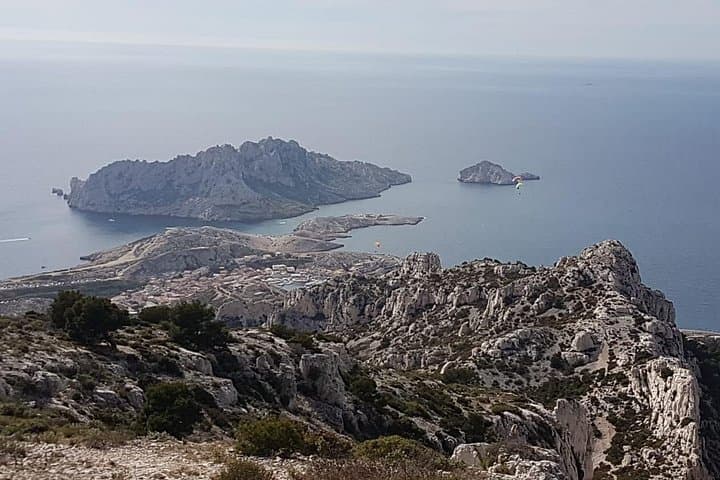
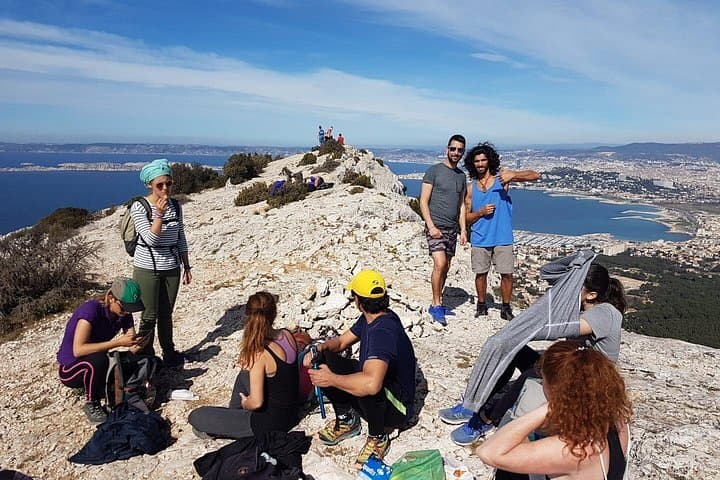
Bring water—shoreline rescues are rare but dehydration isn’t—and a light wind shell; the Mistral can cut the air suddenly. Start early to catch softer light and cooler temps, and plan your picnic at the high viewpoint above the cross where the panoramic view rewards the ascent: the Frioul archipelago and the island of Riou sit like punctuation marks on the horizon.
Navigation is straightforward on marked trails, but cairns and narrow traverses demand care. Dogs are common in the park but not recommended on exposed sections. Respect the Calanques’ fragile flora: keep to trails, pack out waste, and avoid barbecues—wildfire risk is real.
For hikers looking for a concentrated taste of Marseille’s coastal geology, history and harbor culture, this route delivers: city vistas, rugged limestone, and the satisfying drift from urban green space to the small ports where the day finishes with seawind and a chance to relax on the stones of Les Goudes.
The route typically takes 4–5 hours; plan for roughly 8–12 km depending on exact variations and 300–450 m of cumulative elevation gain.
Older children who are steady on rocky terrain and comfortable with short scrambles can do it; younger kids may struggle on exposed passages.
Yes, but summer brings heat and wildfire risk—spring and fall offer the most comfortable conditions; winter is wet and can make rocks slippery.
Meeting point is in front of the fine arts school at Luminy, Parc Pastré; the route descends to Callelongue and often finishes in Les Goudes.
The trail is marked but has exposed sections; guided groups are recommended if you’re unfamiliar with the area or uncomfortable on narrow traverses.
Limited facilities along the way—bring snacks. Callelongue and Les Goudes have small cafés and restaurants at the end of the hike.
Planetazur operates guided outdoor trips and adventures with an emphasis on safety, stewardship, and memorable experiences.
The path begins under a stand of Aleppo pines whose needles strew sunlight onto the dirt, the sea murmuring somewhere beyond the hill. You set off from the fine arts school at Luminy and slide into Parc Pastré, a 19th-century estate where old stone walls and espaliered terraces still frame views toward the Phocaean city. The route climbs; at times you’ll find yourself on all fours for short, exposed scrambles. When the cross at the goat neck appears, the city and the blue expanse of the bay open out like a map laid at your feet.
The path begins under a stand of Aleppo pines whose needles strew sunlight onto the dirt, the sea murmuring somewhere beyond the hill. You set off from the fine arts school at Luminy and slide into Parc Pastré, a 19th-century estate where old stone walls and espaliered terraces still frame views toward the Phocaean city. The route climbs; at times you’ll find yourself on all fours for short, exposed scrambles. When the cross at the goat neck appears, the city and the blue expanse of the bay open out like a map laid at your feet.
This strip of coastline has been moving people for millennia: Greek sailors founded Massalia here in the 7th century BCE, and the limestone ridges that give the Calanques their angle were folded and fossilized long before human history. Geologically, you hike through Cretaceous limestone—craggy outcrops, karst pockets and small caves that have sheltered shepherds and smugglers in different eras.
Culturally, the walk stitches together Marseille’s character: urban neighborhoods give way to maritime villages, and the scent of thyme and juniper replaces car exhaust. Callelongue and Les Goudes are old fishing enclaves; their narrow streets and low houses feel like a quiet conversation with the Mediterranean.
Practically, expect a 4–5 hour outing with varied terrain—packed earth, loose scree, and rocky steps. The most sustained climbs are short but steep; exposed sections require attention and steady footing. You’ll pass through changing vegetation zones: maritime scrub near the shore, denser oaks in the park, and pockets of rosemary and wild thyme that perfume pauses.
Bring water—shoreline rescues are rare but dehydration isn’t—and a light wind shell; the Mistral can cut the air suddenly. Start early to catch softer light and cooler temps, and plan your picnic at the high viewpoint above the cross where the panoramic view rewards the ascent: the Frioul archipelago and the island of Riou sit like punctuation marks on the horizon.
Navigation is straightforward on marked trails, but cairns and narrow traverses demand care. Dogs are common in the park but not recommended on exposed sections. Respect the Calanques’ fragile flora: keep to trails, pack out waste, and avoid barbecues—wildfire risk is real.
For hikers looking for a concentrated taste of Marseille’s coastal geology, history and harbor culture, this route delivers: city vistas, rugged limestone, and the satisfying drift from urban green space to the small ports where the day finishes with seawind and a chance to relax on the stones of Les Goudes.