THE ADVENTURE COLLECTIVE® · Independent discovery and booking for outdoor travel

Explore the Paracas Peninsula on a self-guided bike rental that moves across desert flats and coastal roads. Expect mixed terrain, strong coastal winds, and plenty of wildlife sightings with flexible pacing and mapped routes.
Explore the Paracas Peninsula on a self-guided bike rental that moves across desert flats and coastal roads. Expect mixed terrain, strong coastal winds, and plenty of wildlife sightings with flexible pacing and mapped routes.
The trail opens with wind and salt shaping the light — the peninsula’s low cliffs stand sharp against a high, thin sky as the Pacific pushes light spray toward riders. Pedaling out from the small port town, cyclists trade the hush of desert plains for the constant whisper of surf; sands shift under tire and wind dares you to hold speed on exposed ridgelines.
Verified experiences and guided adventures in the surrounding area.
Operated by PlayaRoja Tours · Paracas, Ica
The trail opens with wind and salt shaping the light — the peninsula’s low cliffs stand sharp against a high, thin sky as the Pacific pushes light spray toward riders. Pedaling out from the small port town, cyclists trade the hush of desert plains for the constant whisper of surf; sands shift under tire and wind dares you to hold speed on exposed ridgelines.
This stretch of the Paracas Peninsula carries human history and geology in plain sight. Pre-Columbian Paracas culture left pottery and textiles inland while the peninsula itself is a collage of wave-carved sandstone, ancient marine terraces and dusty dunes where seabirds roost. Local fishing communities still read currents the way couriers once read landmarks — the coastline’s character is both practical and cultural.
On a self-guided rental, expect mixed surfaces: paved coastal roads, compacted gravel, occasional sandy forays and low dunes. Wildlife is immediate — colonies of sea lions bark from rocky islets and pelicans wheel in the thermal bands. The landscape demands respect; fragile desert plants grow slowly and the marine reserve limits where you can ride.
Practical guidance: the operator supplies a bike, helmet, and a printed route map with suggested stops; bring at least 2 liters of water, sun protection and a basic repair kit. Plan for roughly a full day (about nine hours with stops) if you follow recommended loops along the reserve. Start early to avoid the strongest sun, check wind forecasts, and budget time for short hikes to viewpoints where the red sand beaches and offshore islands make clear why the sea shapes everything here.
Yes, helmets are included with the bike rental; you can still bring your own for a preferred fit.
Terrain varies from flat paved roads to compact gravel and occasional soft sand; basic cycling experience is recommended.
You can ride on designated roads and paths shown on the provided map, but some areas are restricted to protect wildlife and habitats.
Older children with good cycling skills may manage shorter loops, but full-day loops require sustained fitness and confidence on mixed surfaces.
PlayaRoja Tours operates guided outdoor trips and adventures with an emphasis on safety, stewardship, and memorable experiences.
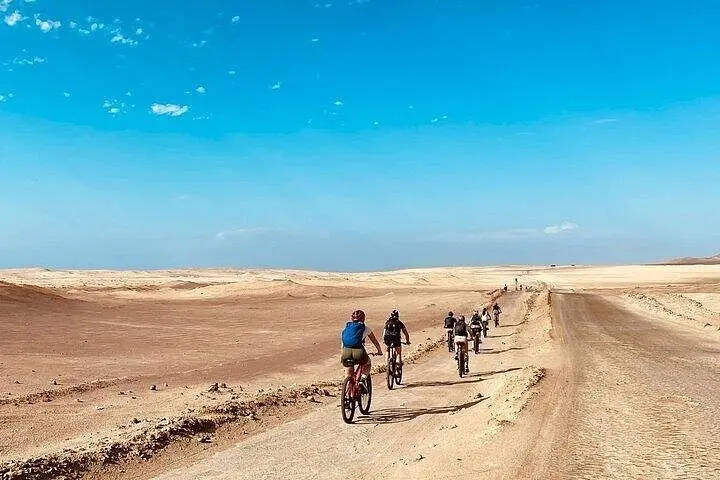
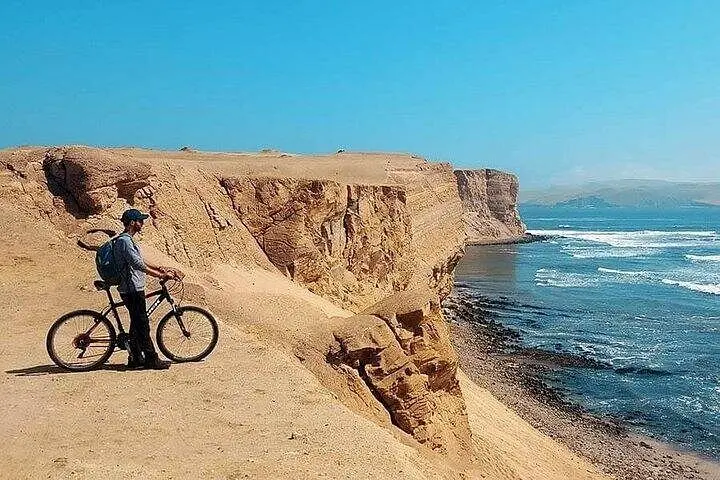
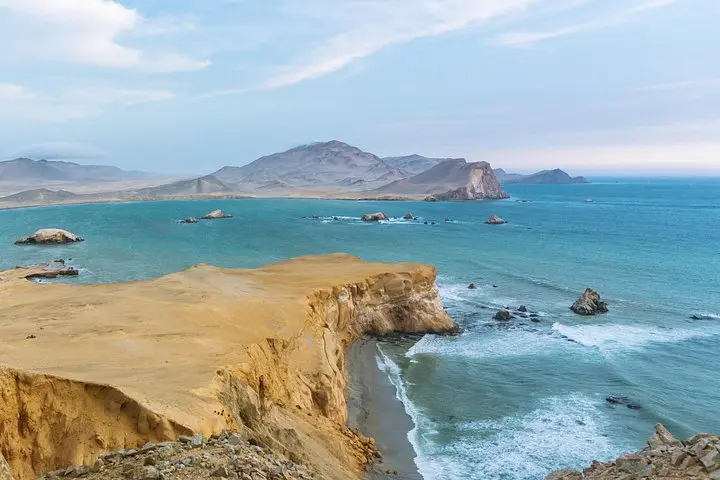
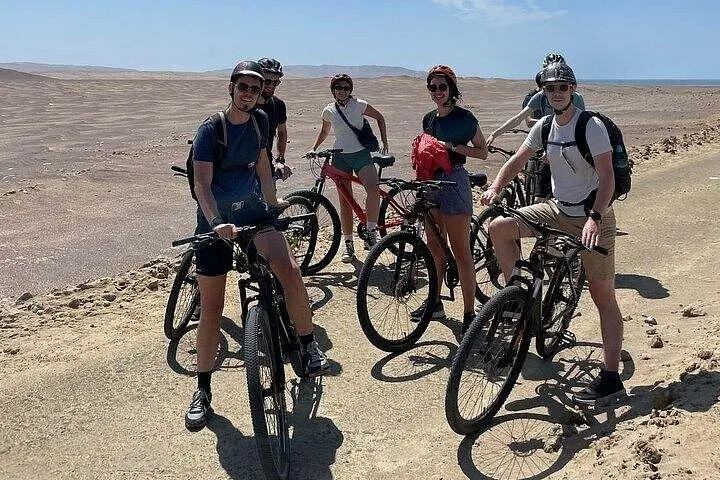
The trail opens with wind and salt shaping the light — the peninsula’s low cliffs stand sharp against a high, thin sky as the Pacific pushes light spray toward riders. Pedaling out from the small port town, cyclists trade the hush of desert plains for the constant whisper of surf; sands shift under tire and wind dares you to hold speed on exposed ridgelines.
The trail opens with wind and salt shaping the light — the peninsula’s low cliffs stand sharp against a high, thin sky as the Pacific pushes light spray toward riders. Pedaling out from the small port town, cyclists trade the hush of desert plains for the constant whisper of surf; sands shift under tire and wind dares you to hold speed on exposed ridgelines.
This stretch of the Paracas Peninsula carries human history and geology in plain sight. Pre-Columbian Paracas culture left pottery and textiles inland while the peninsula itself is a collage of wave-carved sandstone, ancient marine terraces and dusty dunes where seabirds roost. Local fishing communities still read currents the way couriers once read landmarks — the coastline’s character is both practical and cultural.
On a self-guided rental, expect mixed surfaces: paved coastal roads, compacted gravel, occasional sandy forays and low dunes. Wildlife is immediate — colonies of sea lions bark from rocky islets and pelicans wheel in the thermal bands. The landscape demands respect; fragile desert plants grow slowly and the marine reserve limits where you can ride.
Practical guidance: the operator supplies a bike, helmet, and a printed route map with suggested stops; bring at least 2 liters of water, sun protection and a basic repair kit. Plan for roughly a full day (about nine hours with stops) if you follow recommended loops along the reserve. Start early to avoid the strongest sun, check wind forecasts, and budget time for short hikes to viewpoints where the red sand beaches and offshore islands make clear why the sea shapes everything here.