THE ADVENTURE COLLECTIVE® · Independent discovery and booking for outdoor travel

Walk where desert meets ocean in Paracas National Reserve—short coastal trails, dramatic eroded cliffs, and close-up wildlife viewings like flamingos and sea lions. This four-hour guided tour covers key viewpoints and cultural stops with private transport and entrance included.
Walk where desert meets ocean in Paracas National Reserve—short coastal trails, dramatic eroded cliffs, and close-up wildlife viewings like flamingos and sea lions. This four-hour guided tour covers key viewpoints and cultural stops with private transport and entrance included.
A wind-etched road deposits you at a wide horizon where the Pacific pushes cool air across sun-baked sand. In Paracas National Reserve the sea and desert meet with a crisp, visible line: waves carving cliffs, dunes rolling inland. Visitors step from a shaded vehicle onto salty gravel tracks, camera in hand, as coastal birds wheel and flamingos pick at shallow lagoons.
Verified experiences and guided adventures in the surrounding area.
Operated by Flamencos Bahia Tours · Paracas, Ica
A wind-etched road deposits you at a wide horizon where the Pacific pushes cool air across sun-baked sand. In Paracas National Reserve the sea and desert meet with a crisp, visible line: waves carving cliffs, dunes rolling inland. Visitors step from a shaded vehicle onto salty gravel tracks, camera in hand, as coastal birds wheel and flamingos pick at shallow lagoons.
Created to protect the productive waters of the Humboldt Current, the reserve preserves marine upwelling zones, desert plains and archaeological sites tied to the Paracas culture. Geology here is straightforward and dramatic—soft sedimentary cliffs and eroded rock arches like La Catedral, eroded by wind and wave. Cultural traces surface in the Julio C. Tello Museum, where textiles and skulls recall the region’s pre-Columbian inhabitants.
Expect short walks rather than long hikes: firm sandy trails, compacted gravel access, and low dunes leading to viewpoints and secluded beaches such as Playa Yumaque and Playa Lagunillas. Wildlife is the main draw—flamingos in the salt pans, sea lions on rocky points, and migratory seabirds using the reserve as a stopover.
Practical guidance: arrive early for cooler temperatures and softer light, bring sun protection and at least 1–2 liters of water, and wear closed-toe shoes for rocky shorelines. Stay on marked paths and follow guide directions—many fragile habitats are closed to off-trail travel. Facilities are limited; use the Environmental Interpretation Center to learn the reserve’s rules and cultural context. With private transport and entrance included, this four-hour tour is an accessible way to experience a rare coastal-desert interface without technical demands.
Yes—this private tour includes round-trip transportation from arranged pickup points and the reserve entrance fee.
Swimming is generally not recommended due to strong currents and protected zones; check with your guide for safe areas.
Facilities are limited; use restrooms at the Environmental Interpretation Center and bring snacks and water for the outing.
Early morning and late afternoon offer cooler temperatures and more active seabird and shorebird behavior, improving chances to see flamingos and sea lions.
Flamencos Bahia Tours operates guided outdoor trips and adventures with an emphasis on safety, stewardship, and memorable experiences.
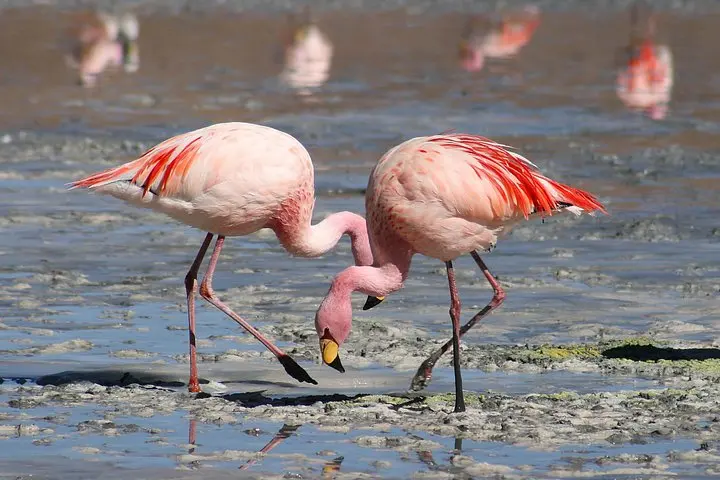
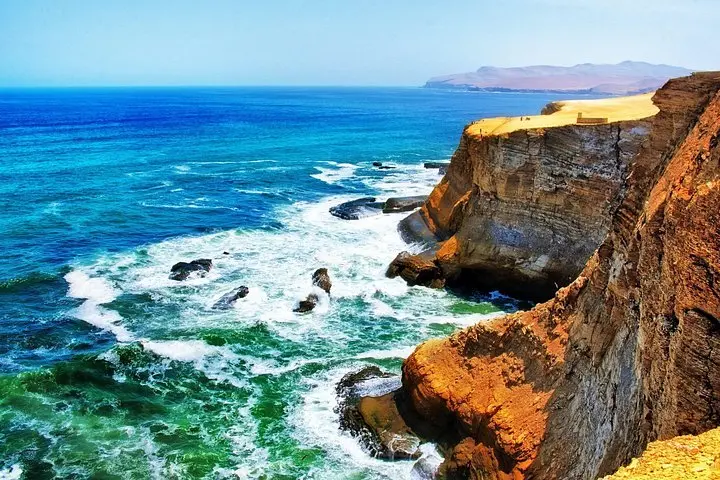
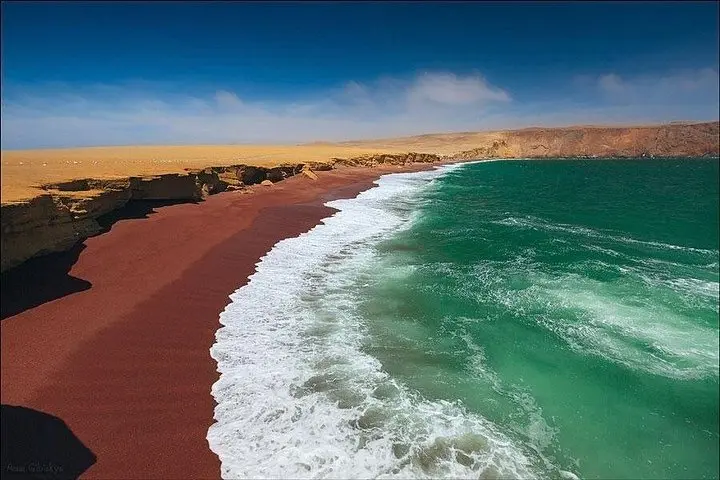
A wind-etched road deposits you at a wide horizon where the Pacific pushes cool air across sun-baked sand. In Paracas National Reserve the sea and desert meet with a crisp, visible line: waves carving cliffs, dunes rolling inland. Visitors step from a shaded vehicle onto salty gravel tracks, camera in hand, as coastal birds wheel and flamingos pick at shallow lagoons.
A wind-etched road deposits you at a wide horizon where the Pacific pushes cool air across sun-baked sand. In Paracas National Reserve the sea and desert meet with a crisp, visible line: waves carving cliffs, dunes rolling inland. Visitors step from a shaded vehicle onto salty gravel tracks, camera in hand, as coastal birds wheel and flamingos pick at shallow lagoons.
Created to protect the productive waters of the Humboldt Current, the reserve preserves marine upwelling zones, desert plains and archaeological sites tied to the Paracas culture. Geology here is straightforward and dramatic—soft sedimentary cliffs and eroded rock arches like La Catedral, eroded by wind and wave. Cultural traces surface in the Julio C. Tello Museum, where textiles and skulls recall the region’s pre-Columbian inhabitants.
Expect short walks rather than long hikes: firm sandy trails, compacted gravel access, and low dunes leading to viewpoints and secluded beaches such as Playa Yumaque and Playa Lagunillas. Wildlife is the main draw—flamingos in the salt pans, sea lions on rocky points, and migratory seabirds using the reserve as a stopover.
Practical guidance: arrive early for cooler temperatures and softer light, bring sun protection and at least 1–2 liters of water, and wear closed-toe shoes for rocky shorelines. Stay on marked paths and follow guide directions—many fragile habitats are closed to off-trail travel. Facilities are limited; use the Environmental Interpretation Center to learn the reserve’s rules and cultural context. With private transport and entrance included, this four-hour tour is an accessible way to experience a rare coastal-desert interface without technical demands.