THE ADVENTURE COLLECTIVE® · Independent discovery and booking for outdoor travel

A compact two-day circuit from Paracas to Nazca that combines wildlife viewing at the Ballestas, adrenaline on Huacachina’s dunes, and an aerial look at the mysterious Nazca Lines. Ideal for travelers wanting varied landscapes in a short window.
A compact two-day circuit from Paracas to Nazca that combines wildlife viewing at the Ballestas, adrenaline on Huacachina’s dunes, and an aerial look at the mysterious Nazca Lines. Ideal for travelers wanting varied landscapes in a short window.
The tour begins with salt and wind: a low coastline where the Pacific wind pushes foam against ochre cliffs and the Ballestas Islands hunch offshore like weathered sculptures. In the half-light, cormorants wheel and penguins line the ledges while the guide points to a patchwork of guano-streaked rock. By afternoon the landscape shifts inland—an unexpected green bowl, the Huacachina oasis, ringsed by steep sand that begs for a buggy run and a short, breath-stealing sandboard descent.
Verified experiences and guided adventures in the surrounding area.
Operated by Kultour Perú · Ica, Ica
The tour begins with salt and wind: a low coastline where the Pacific wind pushes foam against ochre cliffs and the Ballestas Islands hunch offshore like weathered sculptures. In the half-light, cormorants wheel and penguins line the ledges while the guide points to a patchwork of guano-streaked rock. By afternoon the landscape shifts inland—an unexpected green bowl, the Huacachina oasis, ringsed by steep sand that begs for a buggy run and a short, breath-stealing sandboard descent.
Geology and culture here are compact and outspoken: a coastal desert sculpted by the cold Humboldt Current, marine terraces cut into cliffs, and ancient Nazca engineers who marked the desert floor with giant geoglyphs between roughly 200 BCE and 600 CE. The Nazca flight on day two gives the clearest view of those straight lines and animal figures; nearby the pre-Hispanic puquios (underground aqueducts) hint at early hydraulic ingenuity. Ica’s vineyards and pisco bodegas add a living cultural note—this is farming born from aridity and the art of coaxing water out of sand.
Practical guidance: expect early starts, dusty winds, and bright sun—sunscreen, a hat, and wraparound sunglasses are required. All passenger weights must be declared before the Nazca flight; carry your passport and a printed ticket. Dress in layers for the coast’s chill in the morning and heat inland; closed-toe shoes help on dunes and in buggies. The trip mixes gentle walks, vehicle time, a short boat/shore wildlife view, dune runs, and a 30–40 minute aerial loop—physically accessible but logistically structured. Plan for motion on rough roads, keep water on hand, and book morning flights for steadier air and the best light on the geoglyphs.
No—most wildlife viewing is from a short boat circumnavigation of the islands; passengers remain on the boat while guides point out wildlife and rock formations.
Typical sightseeing flights loop 30–40 minutes over the Nazca lines; airlines require each passenger’s weight at booking for balance and safety—provide it when requested.
Yes—operators provide short instruction and safety gear; buggies are driven by professionals and routes can be adjusted to comfort levels.
A current passport is required for the day of travel; bring your booking confirmation and any required passenger weight details for the flight.
Kultour Perú operates guided outdoor trips and adventures with an emphasis on safety, stewardship, and memorable experiences.
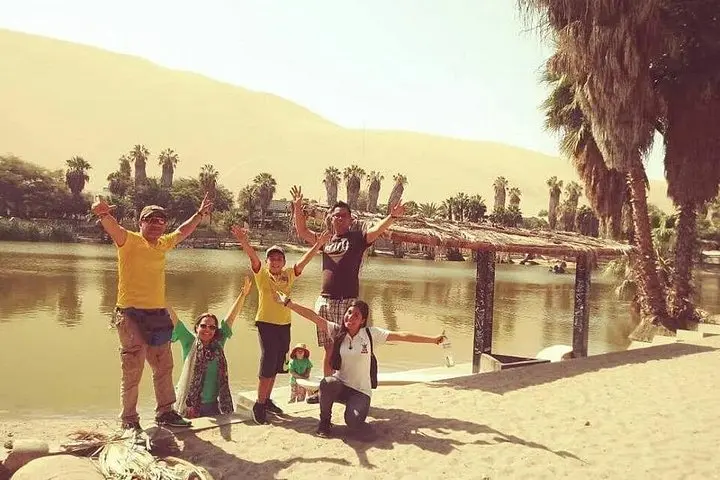


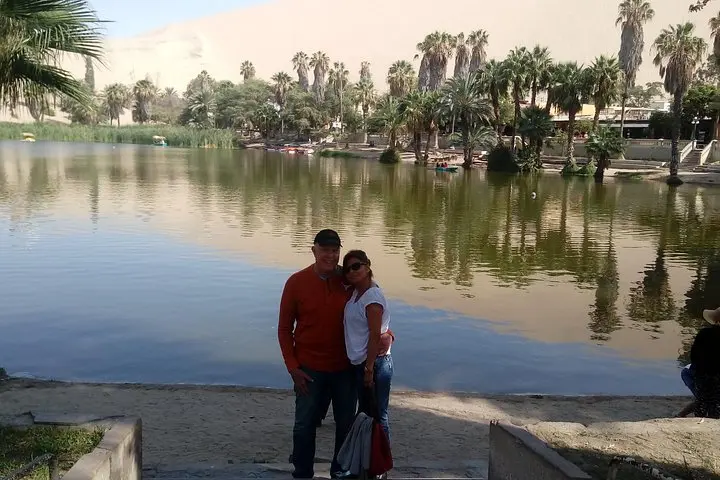
The tour begins with salt and wind: a low coastline where the Pacific wind pushes foam against ochre cliffs and the Ballestas Islands hunch offshore like weathered sculptures. In the half-light, cormorants wheel and penguins line the ledges while the guide points to a patchwork of guano-streaked rock. By afternoon the landscape shifts inland—an unexpected green bowl, the Huacachina oasis, ringsed by steep sand that begs for a buggy run and a short, breath-stealing sandboard descent.
The tour begins with salt and wind: a low coastline where the Pacific wind pushes foam against ochre cliffs and the Ballestas Islands hunch offshore like weathered sculptures. In the half-light, cormorants wheel and penguins line the ledges while the guide points to a patchwork of guano-streaked rock. By afternoon the landscape shifts inland—an unexpected green bowl, the Huacachina oasis, ringsed by steep sand that begs for a buggy run and a short, breath-stealing sandboard descent.
Geology and culture here are compact and outspoken: a coastal desert sculpted by the cold Humboldt Current, marine terraces cut into cliffs, and ancient Nazca engineers who marked the desert floor with giant geoglyphs between roughly 200 BCE and 600 CE. The Nazca flight on day two gives the clearest view of those straight lines and animal figures; nearby the pre-Hispanic puquios (underground aqueducts) hint at early hydraulic ingenuity. Ica’s vineyards and pisco bodegas add a living cultural note—this is farming born from aridity and the art of coaxing water out of sand.
Practical guidance: expect early starts, dusty winds, and bright sun—sunscreen, a hat, and wraparound sunglasses are required. All passenger weights must be declared before the Nazca flight; carry your passport and a printed ticket. Dress in layers for the coast’s chill in the morning and heat inland; closed-toe shoes help on dunes and in buggies. The trip mixes gentle walks, vehicle time, a short boat/shore wildlife view, dune runs, and a 30–40 minute aerial loop—physically accessible but logistically structured. Plan for motion on rough roads, keep water on hand, and book morning flights for steadier air and the best light on the geoglyphs.