THE ADVENTURE COLLECTIVE® · Independent discovery and booking for outdoor travel

Escape Agadir for a day to Paradise Valley in the Anti-Atlas — a canyon of palm groves, natural pools and weathered rock. This accessible day trip mixes scenic driving, easy hikes and a chance to swim beneath dramatic cliffs.
Escape Agadir for a day to Paradise Valley in the Anti-Atlas — a canyon of palm groves, natural pools and weathered rock. This accessible day trip mixes scenic driving, easy hikes and a chance to swim beneath dramatic cliffs.
You step out of the air-conditioned van and the heat shifts into a canyon hush — sun on stone, palms sketching shade, water waiting in carved basins. Paradise Valley sits in the foothills of the Anti-Atlas a roughly 60 km drive northeast of Agadir; the first steps are along shale terraces and argan-scented tracks leading toward a wadi dotted with natural pools.
Verified experiences and guided adventures in the surrounding area.
Operated by Agadir Trip · Agadir, Souss-Massa
You step out of the air-conditioned van and the heat shifts into a canyon hush — sun on stone, palms sketching shade, water waiting in carved basins. Paradise Valley sits in the foothills of the Anti-Atlas a roughly 60 km drive northeast of Agadir; the first steps are along shale terraces and argan-scented tracks leading toward a wadi dotted with natural pools.
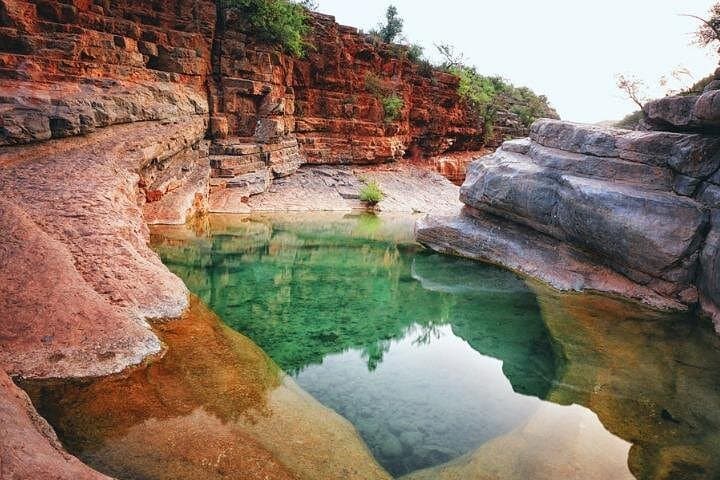
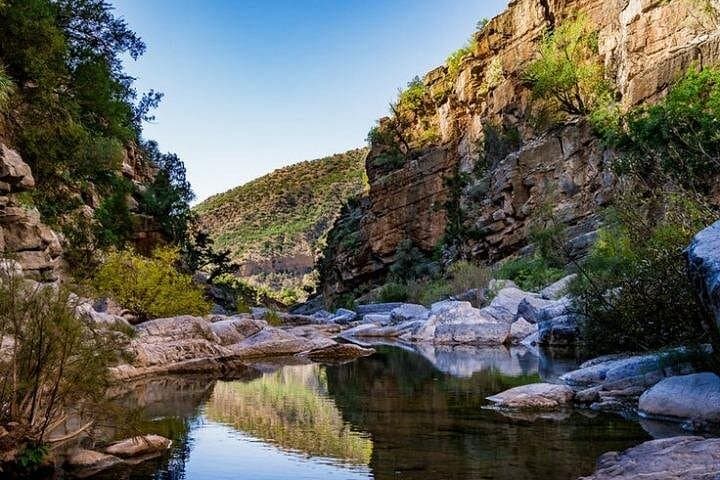
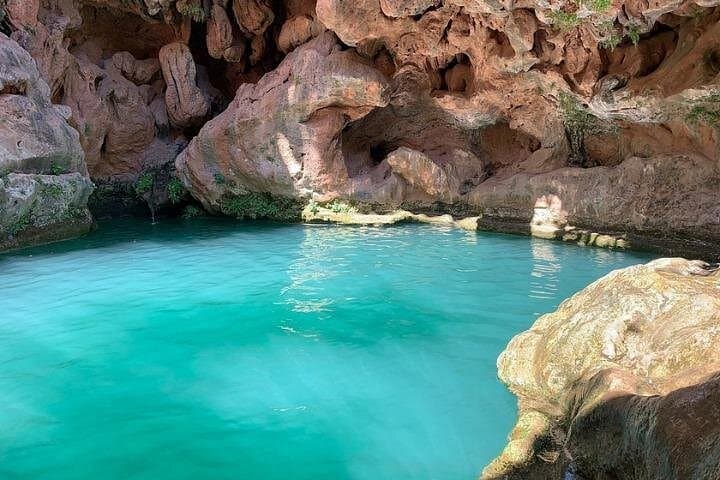
Geology here is blunt and honest: layered volcanic and sedimentary rock cut by seasonal water, creating narrow gorges and plunge pools where the current dared to carve deeper. The valley has long been part of Amazigh (Berber) territory; local villages grow olives, almonds and bananas on terraced slopes and produce argan oil from characteristic low-branching trees. Passing through the Gorges de Oued Tamzargoute, you see how water shapes both land and livelihoods.
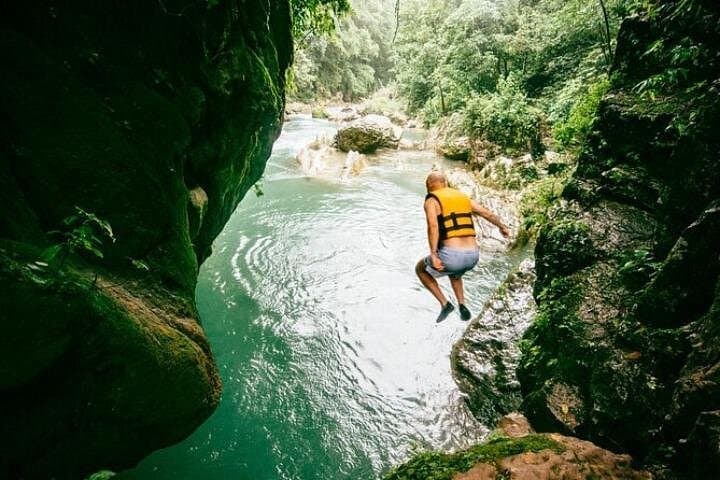
On the walk you’ll alternate short steep scrambles with easy riverside walking; many visitors end by cooling off in blue-green pools rimmed by polished boulders. Guides from nearby towns point out traditional irrigation channels and local plant uses as part of the route.
Practical guidance: arrive early to avoid crowds and harsh mid-day sun, carry at least 1.5 liters of water and sturdy shoes with grip for wet rock. Respect private terraces and stay on the main paths; pools are tempting but can be deep and slippery. Expect a long round-trip from Agadir — plan for a full day that combines scenic driving and several hours on your feet. Sunscreen, a hat and modest swimwear are useful; bring local currency for small snacks and tip the guide.
The drive is roughly 60 km and takes about 1.5–2 hours each way depending on traffic and pickup location.
Yes—many sections are easy, but expect some uneven ground and short scrambles; assess mobility and avoid slippery pools for young children.
Yes, many visitors swim; check for depth and slippery rocks first and avoid swimming after heavy rains when currents can be stronger.
Local guides are common and helpful for navigation and interpreting local culture; organised tours include pickup, transport and a guide.
Agadir Trip operates guided outdoor trips and adventures with an emphasis on safety, stewardship, and memorable experiences.
You step out of the air-conditioned van and the heat shifts into a canyon hush — sun on stone, palms sketching shade, water waiting in carved basins. Paradise Valley sits in the foothills of the Anti-Atlas a roughly 60 km drive northeast of Agadir; the first steps are along shale terraces and argan-scented tracks leading toward a wadi dotted with natural pools.
You step out of the air-conditioned van and the heat shifts into a canyon hush — sun on stone, palms sketching shade, water waiting in carved basins. Paradise Valley sits in the foothills of the Anti-Atlas a roughly 60 km drive northeast of Agadir; the first steps are along shale terraces and argan-scented tracks leading toward a wadi dotted with natural pools.
Geology here is blunt and honest: layered volcanic and sedimentary rock cut by seasonal water, creating narrow gorges and plunge pools where the current dared to carve deeper. The valley has long been part of Amazigh (Berber) territory; local villages grow olives, almonds and bananas on terraced slopes and produce argan oil from characteristic low-branching trees. Passing through the Gorges de Oued Tamzargoute, you see how water shapes both land and livelihoods.
On the walk you’ll alternate short steep scrambles with easy riverside walking; many visitors end by cooling off in blue-green pools rimmed by polished boulders. Guides from nearby towns point out traditional irrigation channels and local plant uses as part of the route.
Practical guidance: arrive early to avoid crowds and harsh mid-day sun, carry at least 1.5 liters of water and sturdy shoes with grip for wet rock. Respect private terraces and stay on the main paths; pools are tempting but can be deep and slippery. Expect a long round-trip from Agadir — plan for a full day that combines scenic driving and several hours on your feet. Sunscreen, a hat and modest swimwear are useful; bring local currency for small snacks and tip the guide.