THE ADVENTURE COLLECTIVE® · Independent discovery and booking for outdoor travel

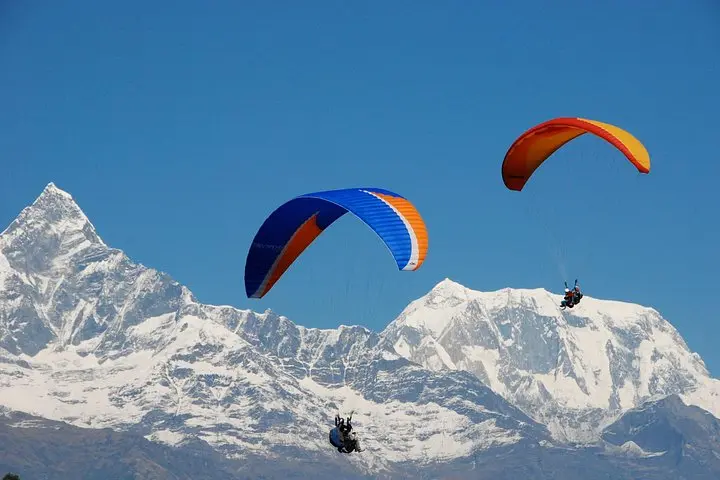
Launch from Sarangkot for a 20–30 minute tandem paraglide with sweeping views of Phewa Lake and the Annapurna range. This accessible aerial adventure pairs stable thermals with a gentle lakeside landing—perfect for first-time flyers.
Launch from Sarangkot for a 20–30 minute tandem paraglide with sweeping views of Phewa Lake and the Annapurna range. This accessible aerial adventure pairs stable thermals with a gentle lakeside landing—perfect for first-time flyers.
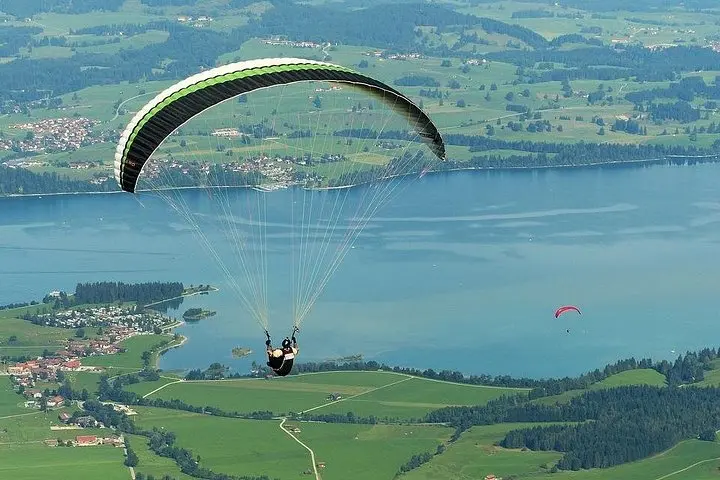
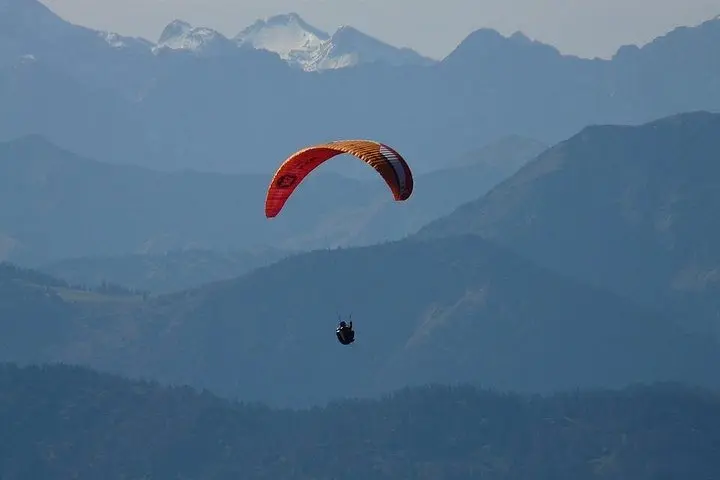
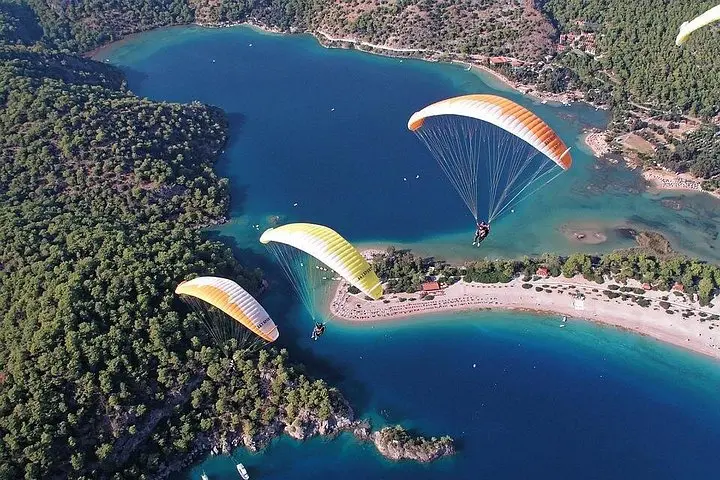
The wind at Sarangkot lifts with purpose: it tucks under the wing and sends tandem gliders drifting out over Phewa Lake, the city below turning into a patchwork of roofs and rice fields. For 20–30 minutes passengers hover between mountain and water, the Annapurna and Dhaulagiri ranges cutting a white line along the horizon while the lake gleams and gulls quarter the air.
Verified experiences and guided adventures in the surrounding area.
Operated by Liberty Holidays · Pokhara, Gandaki Province
The wind at Sarangkot lifts with purpose: it tucks under the wing and sends tandem gliders drifting out over Phewa Lake, the city below turning into a patchwork of roofs and rice fields. For 20–30 minutes passengers hover between mountain and water, the Annapurna and Dhaulagiri ranges cutting a white line along the horizon while the lake gleams and gulls quarter the air.
Sarangkot’s ridge has been a local viewpoint for generations; its role in modern adventure tourism began in the 1990s as tandem paragliding techniques and reliable thermals made this hill an international draw. Geologically, the ridge is part of the Lesser Himalaya—steep terraces and folded limestones that create predictable updrafts. Culturally, flights launch near small villages where morning chai and roadside momo are common; pilots are often Nepali climbers and mountaineers versed in local weather patterns.
Practical guidance begins at arrival: expect a short uphill walk to takeoff, a safety briefing in English, and a harness check. Flights typically start around 9 a.m. when thermals stabilize; photos and video are usually included. Travelers should declare medical conditions, avoid heavy backpacks, and wear sturdy, closed-toe shoes for landing near the lakeshore.
For first-timers this is an accessible way to feel the mechanics of flight without technical skill—follow the pilot’s instructions, keep your core engaged during takeoff and landing, and pack a windproof layer. When weather is right, Sarangkot gives a rare combination: stable lift, a soft lake landing, and Himalayan vistas that make the flight worth planning around.
The airborne portion is typically 20–30 minutes; expect total time including pickup, briefing, and transit to be about 2–3 hours.
Operators set weight limits and require passengers to be fit for a short physical exertion; infants must sit on laps and some operators may restrict very young children—confirm during booking.
Flights are canceled for unsafe winds or low visibility; reputable operators use updated forecasts and will reschedule or refund according to their policy.
No—this is a tandem flight with a certified pilot. Basic mobility and the ability to follow instructions are all that’s required.
Liberty Holidays operates guided outdoor trips and adventures with an emphasis on safety, stewardship, and memorable experiences.
The wind at Sarangkot lifts with purpose: it tucks under the wing and sends tandem gliders drifting out over Phewa Lake, the city below turning into a patchwork of roofs and rice fields. For 20–30 minutes passengers hover between mountain and water, the Annapurna and Dhaulagiri ranges cutting a white line along the horizon while the lake gleams and gulls quarter the air.
The wind at Sarangkot lifts with purpose: it tucks under the wing and sends tandem gliders drifting out over Phewa Lake, the city below turning into a patchwork of roofs and rice fields. For 20–30 minutes passengers hover between mountain and water, the Annapurna and Dhaulagiri ranges cutting a white line along the horizon while the lake gleams and gulls quarter the air.
Sarangkot’s ridge has been a local viewpoint for generations; its role in modern adventure tourism began in the 1990s as tandem paragliding techniques and reliable thermals made this hill an international draw. Geologically, the ridge is part of the Lesser Himalaya—steep terraces and folded limestones that create predictable updrafts. Culturally, flights launch near small villages where morning chai and roadside momo are common; pilots are often Nepali climbers and mountaineers versed in local weather patterns.
Practical guidance begins at arrival: expect a short uphill walk to takeoff, a safety briefing in English, and a harness check. Flights typically start around 9 a.m. when thermals stabilize; photos and video are usually included. Travelers should declare medical conditions, avoid heavy backpacks, and wear sturdy, closed-toe shoes for landing near the lakeshore.
For first-timers this is an accessible way to feel the mechanics of flight without technical skill—follow the pilot’s instructions, keep your core engaged during takeoff and landing, and pack a windproof layer. When weather is right, Sarangkot gives a rare combination: stable lift, a soft lake landing, and Himalayan vistas that make the flight worth planning around.