THE ADVENTURE COLLECTIVE® · Independent discovery and booking for outdoor travel

Walk or ride to Pastoruri Glacier at 5,250 m and see rapidly retreating tropical ice alongside towering Puya Raimondii. This full-day trip from Huaraz blends short alpine hiking with cultural and geological context.
Walk or ride to Pastoruri Glacier at 5,250 m and see rapidly retreating tropical ice alongside towering Puya Raimondii. This full-day trip from Huaraz blends short alpine hiking with cultural and geological context.
The wind at 5,250 meters cuts a clean line across the high puna as walkers climb toward the pale flank of Pastoruri Glacier. Puya Raimondii—towering spires of ancient bromeliads—loom beside the dirt road, their flower stalks rising like slow-moving weather vanes. A short, steep hike (or a donkey ride) delivers you to a rim where hard ice and black moraine meet an unusually bright Andean sky.
Verified experiences and guided adventures in the surrounding area.
Operated by Andean Summit Multiservicios S.R.L. · Huaraz, Ancash
The wind at 5,250 meters cuts a clean line across the high puna as walkers climb toward the pale flank of Pastoruri Glacier. Puya Raimondii—towering spires of ancient bromeliads—loom beside the dirt road, their flower stalks rising like slow-moving weather vanes. A short, steep hike (or a donkey ride) delivers you to a rim where hard ice and black moraine meet an unusually bright Andean sky.
Geology places Pastoruri in the eastern reaches of the Cordillera Blanca, a tropical glacial system carved through uplifted granite and metamorphic rock. Once a broad ice cap fed by wetter climate pulses, Pastoruri has retreated noticeably in recent decades—an instructive stop for anyone interested in cryosphere change and downstream water security. Culturally the valley is tied to Quechua-speaking communities; shepherds still graze llamas and alpacas on the slopes and local guides share stories of seasonal transhumance.
Practically, the excursion starts with a morning pickup in Huaraz and a roadside stop to view the Puya Raimondii. From the drop-off expect roughly a 40-minute uphill walk—about 1–2 km round-trip with 200–400 m of ascent depending on the trailhead—over rocky trail and loose scree. Bring layered insulation for sudden cold, high-SPF sun protection, and plan for altitude: move slowly, hydrate, and allow time to acclimatize in Huaraz beforehand. The tour typically includes a midday lunch in Ticapampa and returns late afternoon, making it a full-day outing that doubles as useful acclimatization for higher objectives in the Cordillera Blanca.
The uphill walk is typically about 40 minutes from the drop-off—roughly 1–2 km round-trip with variable trail conditions and 200–400 m of ascent depending on the starting point.
Yes—altitude is the main risk. Spend at least one night in Huaraz and avoid heavy exercise the day before; bring medication like acetazolamide only if prescribed by your doctor.
Yes, many operators or local handlers offer horse/donkey rides up the steeper section for an additional fee; they’re a common option for those who prefer to avoid the walk.
The dry season (May–September) offers the most stable weather and clearer skies, while the wet season (December–March) brings afternoon storms and more difficult trail conditions.
Andean Summit Multiservicios S.R.L. operates guided outdoor trips and adventures with an emphasis on safety, stewardship, and memorable experiences.
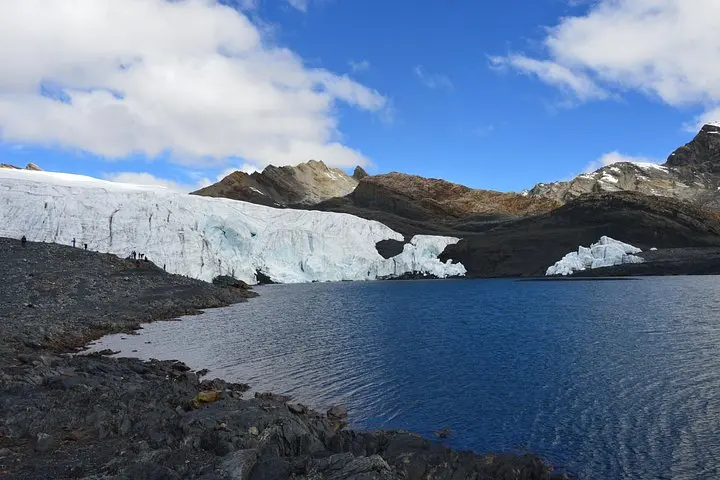
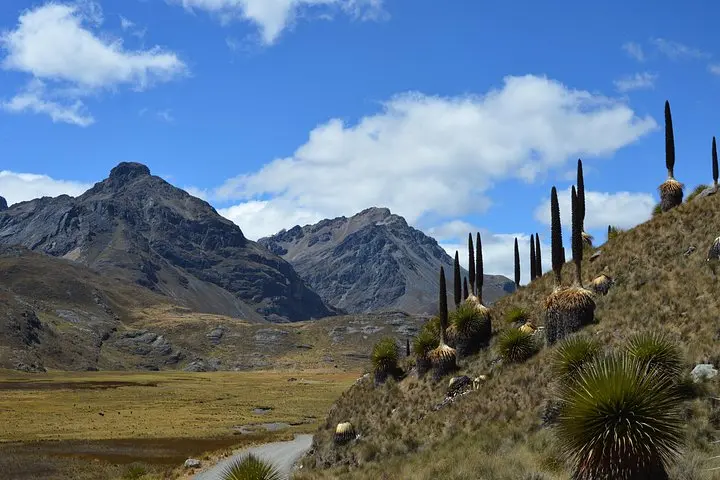
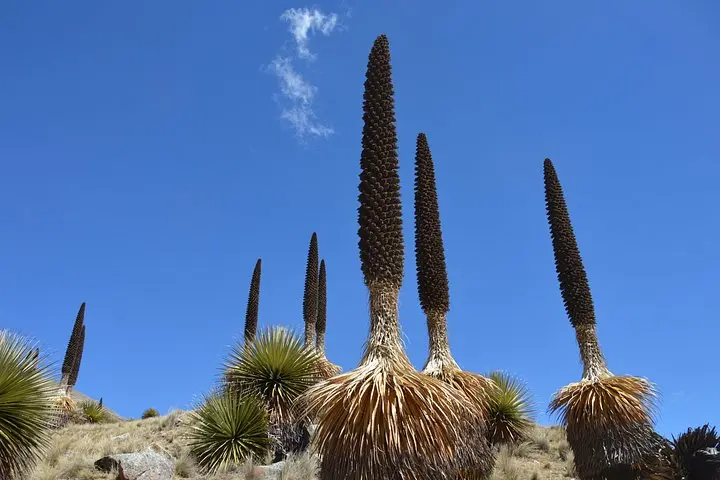
The wind at 5,250 meters cuts a clean line across the high puna as walkers climb toward the pale flank of Pastoruri Glacier. Puya Raimondii—towering spires of ancient bromeliads—loom beside the dirt road, their flower stalks rising like slow-moving weather vanes. A short, steep hike (or a donkey ride) delivers you to a rim where hard ice and black moraine meet an unusually bright Andean sky.
The wind at 5,250 meters cuts a clean line across the high puna as walkers climb toward the pale flank of Pastoruri Glacier. Puya Raimondii—towering spires of ancient bromeliads—loom beside the dirt road, their flower stalks rising like slow-moving weather vanes. A short, steep hike (or a donkey ride) delivers you to a rim where hard ice and black moraine meet an unusually bright Andean sky.
Geology places Pastoruri in the eastern reaches of the Cordillera Blanca, a tropical glacial system carved through uplifted granite and metamorphic rock. Once a broad ice cap fed by wetter climate pulses, Pastoruri has retreated noticeably in recent decades—an instructive stop for anyone interested in cryosphere change and downstream water security. Culturally the valley is tied to Quechua-speaking communities; shepherds still graze llamas and alpacas on the slopes and local guides share stories of seasonal transhumance.
Practically, the excursion starts with a morning pickup in Huaraz and a roadside stop to view the Puya Raimondii. From the drop-off expect roughly a 40-minute uphill walk—about 1–2 km round-trip with 200–400 m of ascent depending on the trailhead—over rocky trail and loose scree. Bring layered insulation for sudden cold, high-SPF sun protection, and plan for altitude: move slowly, hydrate, and allow time to acclimatize in Huaraz beforehand. The tour typically includes a midday lunch in Ticapampa and returns late afternoon, making it a full-day outing that doubles as useful acclimatization for higher objectives in the Cordillera Blanca.