THE ADVENTURE COLLECTIVE® · Independent discovery and booking for outdoor travel

Step into the Bogside and follow a concise, carefully curated narrative of conflict and reconciliation. The Peacemakers Museum in Derry/Londonderry uses objects, testimony and multimedia to trace Northern Ireland’s path from violence to the Good Friday Agreement.
Step into the Bogside and follow a concise, carefully curated narrative of conflict and reconciliation. The Peacemakers Museum in Derry/Londonderry uses objects, testimony and multimedia to trace Northern Ireland’s path from violence to the Good Friday Agreement.
You step off a tight street in the Bogside and the city changes—brick facades hold murals, and the low push of the River Foyle keeps the air brisk. Inside the Peacemakers Museum the pace slows: lighting draws you toward oral histories, archive footage and objects that once belonged to people who shaped a fragile peace.
Verified experiences and guided adventures in the surrounding area.
Operated by Peacemakers Museum · Derry/Londonderry, County Londonderry
You step off a tight street in the Bogside and the city changes—brick facades hold murals, and the low push of the River Foyle keeps the air brisk. Inside the Peacemakers Museum the pace slows: lighting draws you toward oral histories, archive footage and objects that once belonged to people who shaped a fragile peace.
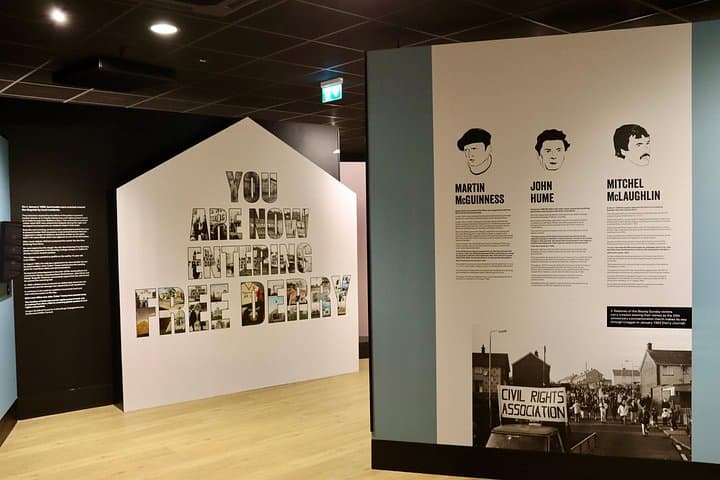
The museum focuses on the crucial years from August 1972 to May 2007. Exhibits map events such as the Battle of the Bogside and Bloody Sunday, then follow the political negotiations that led to the 1998 Good Friday Agreement. The narrative foregrounds local leaders—John Hume, Martin McGuinness and others—showing how community action and political compromise reshaped everyday life in Derry/Londonderry.
Geology and place matter: the museum sits where urban streets meet the wide River Foyle, and the river’s presence shaped transport, economy and the city’s strategic role during the Troubles. Cultural context is clear and specific—this is a working-class neighbourhood that became a stage for national change, and the museum treats memory with restraint and detail rather than spectacle.
Practical side: plan 60–90 minutes, use the included multilingual audio guide, and note that the site is wheelchair and stroller accessible. Tickets are confirmed instantly; one ticket per booking applies and sales are final. Public transport and on-foot routes from the city walls put this visit conveniently into a broader walking itinerary of murals, Free Derry Corner and the Guildhall.
Plan 60–90 minutes to experience the exhibits and multimedia; allow extra time if you explore surrounding murals.
Yes—an audio guide in English, Spanish, French, German and Italian is available and included with admission.
Yes; the site and all internal surfaces are wheelchair and stroller accessible and suitable for all physical fitness levels.
All sales are final—tickets are non-refundable, so confirm your schedule before booking. Confirmation is instant at purchase.
Peacemakers Museum operates guided outdoor trips and adventures with an emphasis on safety, stewardship, and memorable experiences.
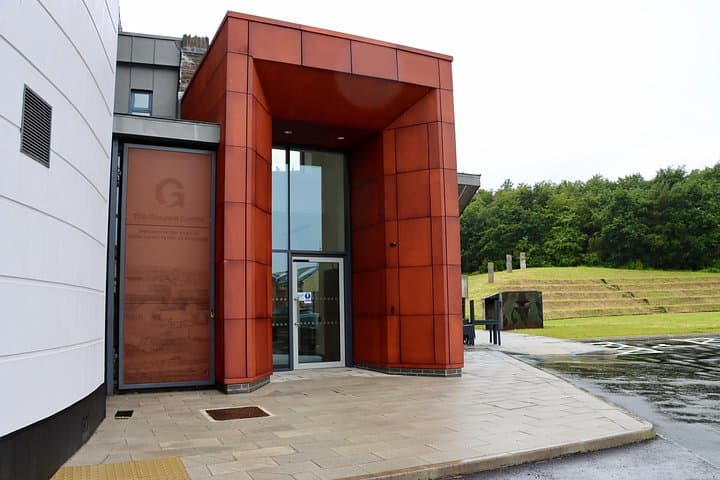
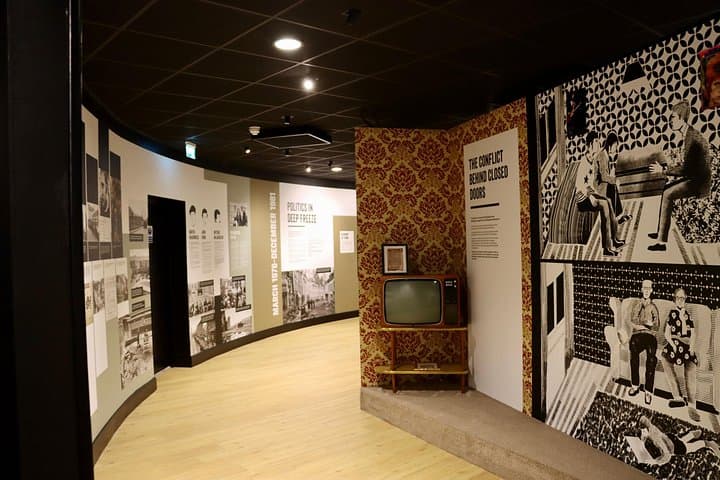
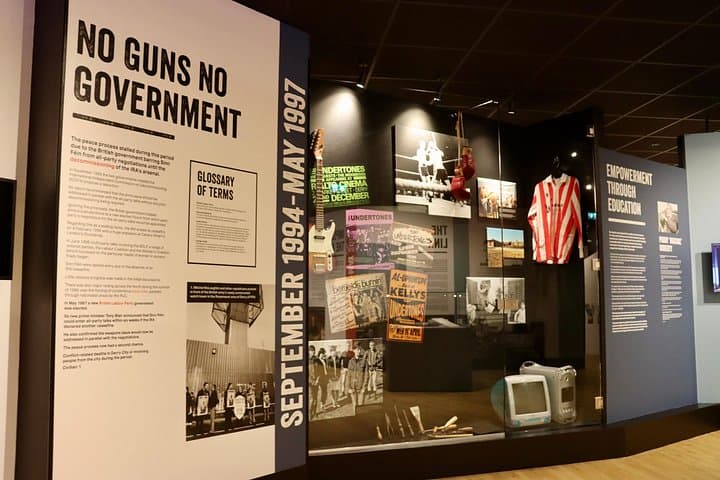
You step off a tight street in the Bogside and the city changes—brick facades hold murals, and the low push of the River Foyle keeps the air brisk. Inside the Peacemakers Museum the pace slows: lighting draws you toward oral histories, archive footage and objects that once belonged to people who shaped a fragile peace.
You step off a tight street in the Bogside and the city changes—brick facades hold murals, and the low push of the River Foyle keeps the air brisk. Inside the Peacemakers Museum the pace slows: lighting draws you toward oral histories, archive footage and objects that once belonged to people who shaped a fragile peace.
The museum focuses on the crucial years from August 1972 to May 2007. Exhibits map events such as the Battle of the Bogside and Bloody Sunday, then follow the political negotiations that led to the 1998 Good Friday Agreement. The narrative foregrounds local leaders—John Hume, Martin McGuinness and others—showing how community action and political compromise reshaped everyday life in Derry/Londonderry.
Geology and place matter: the museum sits where urban streets meet the wide River Foyle, and the river’s presence shaped transport, economy and the city’s strategic role during the Troubles. Cultural context is clear and specific—this is a working-class neighbourhood that became a stage for national change, and the museum treats memory with restraint and detail rather than spectacle.
Practical side: plan 60–90 minutes, use the included multilingual audio guide, and note that the site is wheelchair and stroller accessible. Tickets are confirmed instantly; one ticket per booking applies and sales are final. Public transport and on-foot routes from the city walls put this visit conveniently into a broader walking itinerary of murals, Free Derry Corner and the Guildhall.