THE ADVENTURE COLLECTIVE® · Independent discovery and booking for outdoor travel

Walk an easy trail through Tijuca Forest to the Pedra Bonita viewpoint, where panoramic views and frequent wildlife sightings reward a short hike. Ideal for birdwatchers and first-time hikers, the tour pairs natural history with accessible viewpoints and a stop at Vista Chinesa.
Walk an easy trail through Tijuca Forest to the Pedra Bonita viewpoint, where panoramic views and frequent wildlife sightings reward a short hike. Ideal for birdwatchers and first-time hikers, the tour pairs natural history with accessible viewpoints and a stop at Vista Chinesa.
A narrow track through Atlantic Forest ferns and towering bromeliads opens onto the slope that leads to Pedra Bonita. Light filters through high canopy; calls from marmosets and distant toucans thread the air as the city unfolds below. You push past a final band of rock and the view breaks—Christ the Redeemer, São Conrado’s curve, and Barra da Tijuca stretched along the horizon. The hang-gliding ramp sits to one side, wings ready to take off, while the forest keeps a slow, watchful rhythm.
Verified experiences and guided adventures in the surrounding area.
Operated by RIOTRIPS · Rio de Janeiro, Rio de Janeiro
A narrow track through Atlantic Forest ferns and towering bromeliads opens onto the slope that leads to Pedra Bonita. Light filters through high canopy; calls from marmosets and distant toucans thread the air as the city unfolds below. You push past a final band of rock and the view breaks—Christ the Redeemer, São Conrado’s curve, and Barra da Tijuca stretched along the horizon. The hang-gliding ramp sits to one side, wings ready to take off, while the forest keeps a slow, watchful rhythm.
Pedra Bonita sits inside Tijuca National Park, a restored urban forest replanted in the 19th century to protect water supplies and stabilize slopes. The geology is part of Rio’s granite-and-gneiss massif—rounded domes and steep faces carved by long erosion. Culturally, the site mixes carioca outdoor life with traditional uses of the park: morning runs, birdwatching and hang-gliding launches that punctuate quiet trails.
Expect an easy, accessible walk—well-marked paths, light elevation gain and a 4-hour window allowing for guided interpretation and time at the viewpoint and Vista Chinesa. Wildlife sightings are common but intermittent: look and listen for squirrel-like marmosets and bright toucans; keep a respectful distance.
Practical guidance: bring layered clothing for sudden shade-to-sun shifts, sturdy trail shoes for rocky sections, and a refillable water bottle. Morning visits reduce haze and heat, and weekdays offer vehicle access to Vista Chinesa; weekends may alter the route. Follow park rules, avoid feeding animals and leave no trace—this keeps the forest healthy and sightings frequent.
The route is classified easy—well-marked and accessible with short uphill sections; suitable for most fitness levels.
Yes, tours typically include bilingual guides who point out wildlife and explain local history.
Yes—Pedra Bonita has an active hang-gliding ramp; you can watch launches but do not enter launch zones.
Public transport options reach nearby São Conrado and Alto da Boa Vista; many travelers use local buses or taxis to the park entrance.
RIOTRIPS operates guided outdoor trips and adventures with an emphasis on safety, stewardship, and memorable experiences.


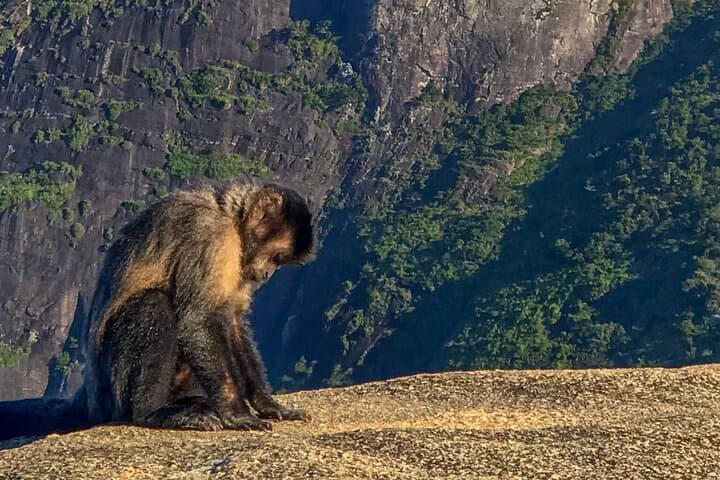

A narrow track through Atlantic Forest ferns and towering bromeliads opens onto the slope that leads to Pedra Bonita. Light filters through high canopy; calls from marmosets and distant toucans thread the air as the city unfolds below. You push past a final band of rock and the view breaks—Christ the Redeemer, São Conrado’s curve, and Barra da Tijuca stretched along the horizon. The hang-gliding ramp sits to one side, wings ready to take off, while the forest keeps a slow, watchful rhythm.
A narrow track through Atlantic Forest ferns and towering bromeliads opens onto the slope that leads to Pedra Bonita. Light filters through high canopy; calls from marmosets and distant toucans thread the air as the city unfolds below. You push past a final band of rock and the view breaks—Christ the Redeemer, São Conrado’s curve, and Barra da Tijuca stretched along the horizon. The hang-gliding ramp sits to one side, wings ready to take off, while the forest keeps a slow, watchful rhythm.
Pedra Bonita sits inside Tijuca National Park, a restored urban forest replanted in the 19th century to protect water supplies and stabilize slopes. The geology is part of Rio’s granite-and-gneiss massif—rounded domes and steep faces carved by long erosion. Culturally, the site mixes carioca outdoor life with traditional uses of the park: morning runs, birdwatching and hang-gliding launches that punctuate quiet trails.
Expect an easy, accessible walk—well-marked paths, light elevation gain and a 4-hour window allowing for guided interpretation and time at the viewpoint and Vista Chinesa. Wildlife sightings are common but intermittent: look and listen for squirrel-like marmosets and bright toucans; keep a respectful distance.
Practical guidance: bring layered clothing for sudden shade-to-sun shifts, sturdy trail shoes for rocky sections, and a refillable water bottle. Morning visits reduce haze and heat, and weekdays offer vehicle access to Vista Chinesa; weekends may alter the route. Follow park rules, avoid feeding animals and leave no trace—this keeps the forest healthy and sightings frequent.