THE ADVENTURE COLLECTIVE® · Independent discovery and booking for outdoor travel

Climb to the top of Pedra da Gávea on a guided, safety‑equipped hike through Tijuca National Park. Expect shaded forest approaches, exposed granite slabs and a rope‑assisted 30‑metre descent handled by professional guides.
Climb to the top of Pedra da Gávea on a guided, safety‑equipped hike through Tijuca National Park. Expect shaded forest approaches, exposed granite slabs and a rope‑assisted 30‑metre descent handled by professional guides.
You step off the city grid into humid shade and the hush of Atlantic Forest—trail roots and the smell of wet granite underfoot. The path climbs through closed canopy for roughly 2.5 km before opening onto jagged slabs and a final exposed approach to Pedra da Gávea’s 844‑metre crest, where beaches, forest and Rio unfold like a map.
Verified experiences and guided adventures in the surrounding area.
Operated by Carioca Experience · Rio de Janeiro, Rio de Janeiro
You step off the city grid into humid shade and the hush of Atlantic Forest—trail roots and the smell of wet granite underfoot. The path climbs through closed canopy for roughly 2.5 km before opening onto jagged slabs and a final exposed approach to Pedra da Gávea’s 844‑metre crest, where beaches, forest and Rio unfold like a map.
Geology here is blunt and old: a granite monolith carved by wind and sea, one of the largest seaside rock faces in the world. Cultural layers sit on top of that geology—rock formations that have long drawn climbers and local stories about a face, a portal and disputed markings sometimes attributed to ancient visitors. Pedra da Gávea is a landmark of Brazilian mountaineering, a place where city life gives way to sustained verticality.
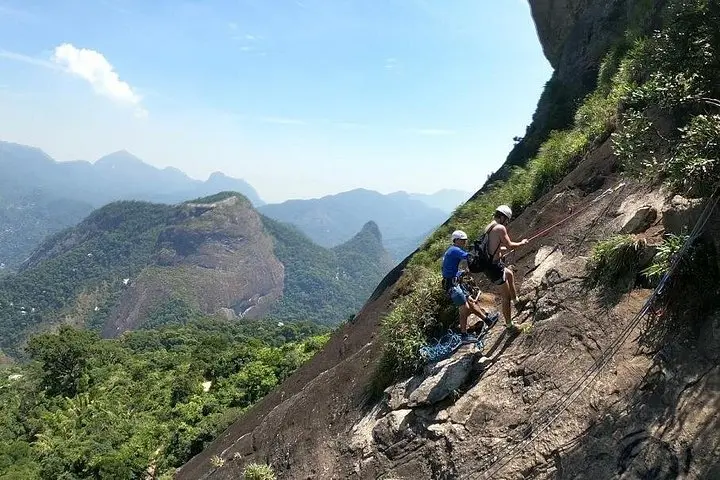
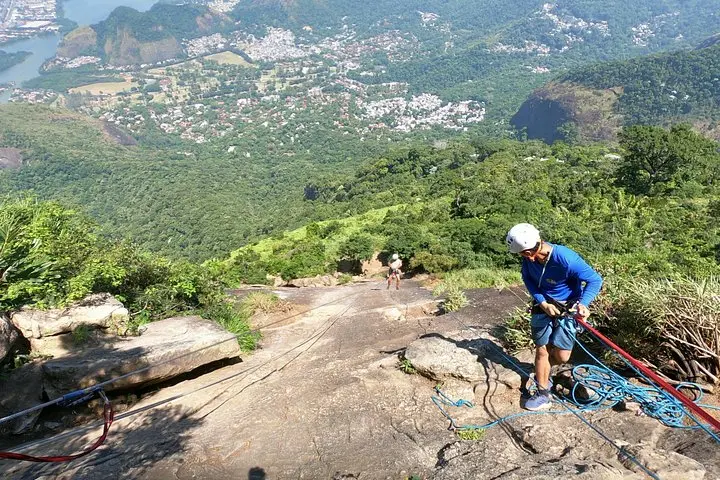
The guided route covers about 3 km from the meeting point to the summit and includes Peak 4 and the steep “carrasqueira,” a 30‑metre, rope‑assisted descent handled with helmets, harnesses, carabiners and friction devices. Guides provide technical gear and lead ropework; the hike itself is physically demanding with sustained grades and exposed sections.
Plan for a full‑day outing (around 6–8 hours): bring 3 L of water, sun protection, insect repellent and snacks. Start early to avoid afternoon storms and heat, wear high‑traction shoes and be prepared for rope belays and short vertical pitches. Check weather and health restrictions—this route isn’t recommended for people with serious heart or spinal conditions or for pregnant travelers.
Expect a challenging day: roughly 3 km of ascent from the meeting point with steep, exposed sections and a rope‑assisted 30 m descent; overall time is about 6–8 hours.
No formal climbing certification is required, but you should be comfortable with scrambling, exposure and following belay instructions; guides handle technical rope work.
The tour supplies helmets, harnesses (boudrier), ropes, carabiners, ribbons and braking devices; you still should bring appropriate footwear and gloves.
Travelers must be in moderate to good health; it’s not recommended for pregnant people or those with serious heart or spinal conditions—booking collects age, weight and height info for safety.
Carioca Experience operates guided outdoor trips and adventures with an emphasis on safety, stewardship, and memorable experiences.
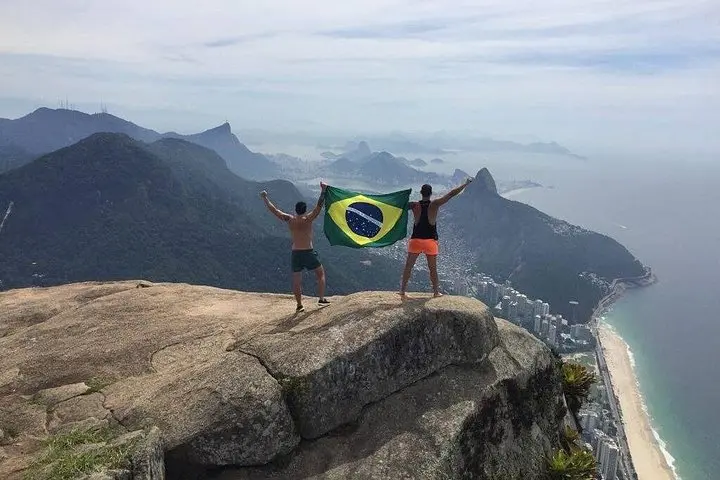
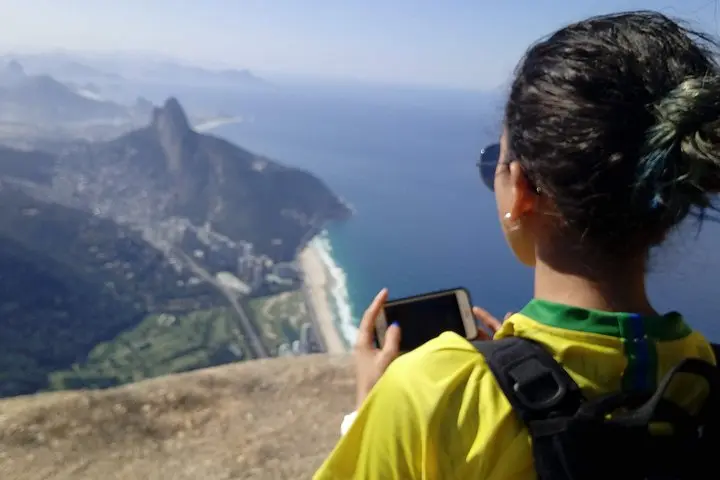
You step off the city grid into humid shade and the hush of Atlantic Forest—trail roots and the smell of wet granite underfoot. The path climbs through closed canopy for roughly 2.5 km before opening onto jagged slabs and a final exposed approach to Pedra da Gávea’s 844‑metre crest, where beaches, forest and Rio unfold like a map.
You step off the city grid into humid shade and the hush of Atlantic Forest—trail roots and the smell of wet granite underfoot. The path climbs through closed canopy for roughly 2.5 km before opening onto jagged slabs and a final exposed approach to Pedra da Gávea’s 844‑metre crest, where beaches, forest and Rio unfold like a map.
Geology here is blunt and old: a granite monolith carved by wind and sea, one of the largest seaside rock faces in the world. Cultural layers sit on top of that geology—rock formations that have long drawn climbers and local stories about a face, a portal and disputed markings sometimes attributed to ancient visitors. Pedra da Gávea is a landmark of Brazilian mountaineering, a place where city life gives way to sustained verticality.
The guided route covers about 3 km from the meeting point to the summit and includes Peak 4 and the steep “carrasqueira,” a 30‑metre, rope‑assisted descent handled with helmets, harnesses, carabiners and friction devices. Guides provide technical gear and lead ropework; the hike itself is physically demanding with sustained grades and exposed sections.
Plan for a full‑day outing (around 6–8 hours): bring 3 L of water, sun protection, insect repellent and snacks. Start early to avoid afternoon storms and heat, wear high‑traction shoes and be prepared for rope belays and short vertical pitches. Check weather and health restrictions—this route isn’t recommended for people with serious heart or spinal conditions or for pregnant travelers.