THE ADVENTURE COLLECTIVE® · Independent discovery and booking for outdoor travel

A demanding, high-reward hike to Pedra da Gávea in Tijuca National Park — an 844 m coastal monolith with exposed scrambles, rainforest approach, and panoramic views over Rio. This private guided ascent blends technical sections with sustained climbing and varied terrain.
A demanding, high-reward hike to Pedra da Gávea in Tijuca National Park — an 844 m coastal monolith with exposed scrambles, rainforest approach, and panoramic views over Rio. This private guided ascent blends technical sections with sustained climbing and varied terrain.
You step out of the van into thick, humid air and the rainforest seems to breathe around you — palms and figs crowd the narrow trail as insect song fills the understory. The path climbs quickly, roots and rock alternating underfoot, opening at intervals to sudden, wide views of Rio’s beaches and the Atlantic, the city folding beneath the massif.
Verified experiences and guided adventures in the surrounding area.
Operated by OIR - Aventura · Rio de Janeiro, Rio de Janeiro
You step out of the van into thick, humid air and the rainforest seems to breathe around you — palms and figs crowd the narrow trail as insect song fills the understory. The path climbs quickly, roots and rock alternating underfoot, opening at intervals to sudden, wide views of Rio’s beaches and the Atlantic, the city folding beneath the massif.
Pedra da Gávea rises to roughly 844 meters, a dramatic coastal monolith carved from granite and gneiss. The feature has fed local lore for generations; early maps and explorers noted its imposing face, and modern climbers still talk about the exposed final chimney where chains and a short, secured scramble lead to the summit.
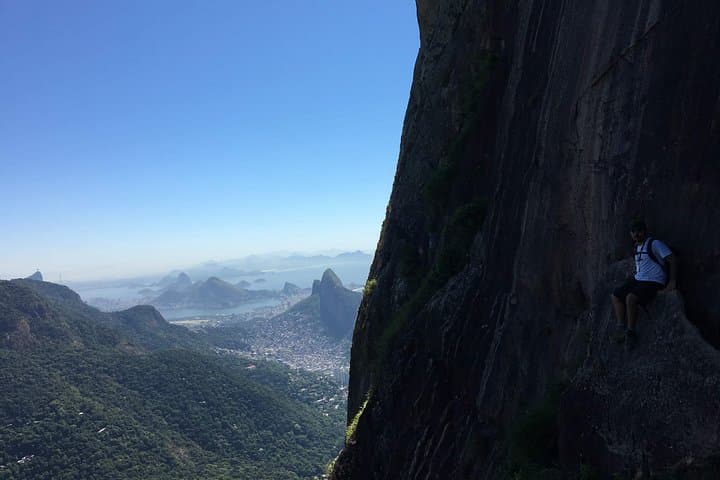
The route threads through Tijuca National Park, one of the largest urban forests on Earth — a 19th-century reforestation project that now protects fragments of Atlantic Forest and native wildlife. Expect steep, often muddy switchbacks, rock slabs, and a final section that requires hands-on scrambling and basic climbing moves. Weather shifts fast here; clouds can roll in and turn a clear view into a fogged panorama.
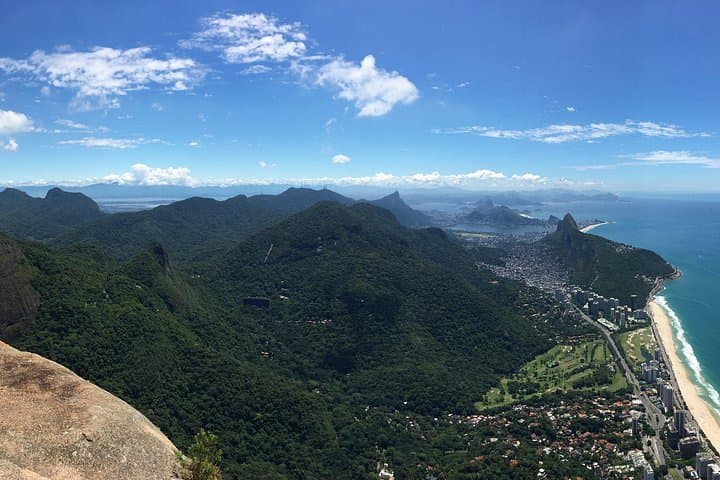
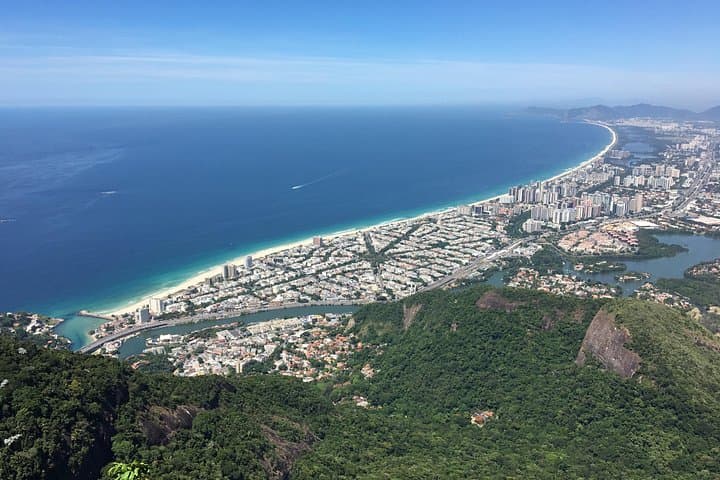
Practically: bring sturdy boots, gloves for the scramble, and 2–3 liters of water. Start early to avoid heat and crowds; the guided private tour typically runs 6–8 hours door-to-door. The payoff is uncompromised: a raw summit perch with sweeping views of Leblon, Ipanema and the endless Atlantic — the city, momentarily small beneath the stone.
The last section is a steep chimney with exposed moves and fixed anchors; it requires confident scrambling and a head for exposure — guides often provide gear for safety.
Basic scrambling experience and comfort with exposure are important; technical rock-climbing skills aren’t required for the standard guided route, but you should be steady on hands-and-feet terrain.
Early morning is best year-round for clearer views and cooler temperatures; the dry season (May–September) has more stable skies but mornings can still be foggy.
Rain makes rock slabs and roots dangerously slippery; local operators will cancel or reroute if conditions are unsafe — follow guide advice and reschedule if needed.
OIR - Aventura operates guided outdoor trips and adventures with an emphasis on safety, stewardship, and memorable experiences.

You step out of the van into thick, humid air and the rainforest seems to breathe around you — palms and figs crowd the narrow trail as insect song fills the understory. The path climbs quickly, roots and rock alternating underfoot, opening at intervals to sudden, wide views of Rio’s beaches and the Atlantic, the city folding beneath the massif.
You step out of the van into thick, humid air and the rainforest seems to breathe around you — palms and figs crowd the narrow trail as insect song fills the understory. The path climbs quickly, roots and rock alternating underfoot, opening at intervals to sudden, wide views of Rio’s beaches and the Atlantic, the city folding beneath the massif.
Pedra da Gávea rises to roughly 844 meters, a dramatic coastal monolith carved from granite and gneiss. The feature has fed local lore for generations; early maps and explorers noted its imposing face, and modern climbers still talk about the exposed final chimney where chains and a short, secured scramble lead to the summit.
The route threads through Tijuca National Park, one of the largest urban forests on Earth — a 19th-century reforestation project that now protects fragments of Atlantic Forest and native wildlife. Expect steep, often muddy switchbacks, rock slabs, and a final section that requires hands-on scrambling and basic climbing moves. Weather shifts fast here; clouds can roll in and turn a clear view into a fogged panorama.
Practically: bring sturdy boots, gloves for the scramble, and 2–3 liters of water. Start early to avoid heat and crowds; the guided private tour typically runs 6–8 hours door-to-door. The payoff is uncompromised: a raw summit perch with sweeping views of Leblon, Ipanema and the endless Atlantic — the city, momentarily small beneath the stone.