THE ADVENTURE COLLECTIVE® · Independent discovery and booking for outdoor travel

Climb one of the world’s largest coastal monoliths inside Tijuca National Park. This guided hike mixes rainforest tread, exposed scrambling and sweeping city-and-sea panoramas—expect 6–7 hours and one short assisted rock climb.
Climb one of the world’s largest coastal monoliths inside Tijuca National Park. This guided hike mixes rainforest tread, exposed scrambling and sweeping city-and-sea panoramas—expect 6–7 hours and one short assisted rock climb.
A low morning sun throws the granite face of Pedra da Gávea into sharp relief as the group slips from the shade of Tijuca’s rainforest and onto exposed rock. The trail climbs quickly, the air thick with humidity and bird calls, then narrows into steep steps and a short, secured scramble that separates most hikers from the 360° view above—city, ocean, and the sweep of Guanabara Bay laid out like a map.
Verified experiences and guided adventures in the surrounding area.
Operated by Aventuras Brasil · Rio de Janeiro, Rio de Janeiro
A low morning sun throws the granite face of Pedra da Gávea into sharp relief as the group slips from the shade of Tijuca’s rainforest and onto exposed rock. The trail climbs quickly, the air thick with humidity and bird calls, then narrows into steep steps and a short, secured scramble that separates most hikers from the 360° view above—city, ocean, and the sweep of Guanabara Bay laid out like a map.
Geologically, Pedra da Gávea is an ancient coastal monolith of Precambrian gneiss and granite; its sheer cliffs and blocky ledges reflect a landscape carved by tectonics and relentless tropical weather. Culturally the peak has a mythic place in Rio’s outdoor life, part of Tijuca National Park—one of the largest urban forests on Earth—where Afro-Brazilian, indigenous, and colonial histories overlap in the villages and viewpoints below.
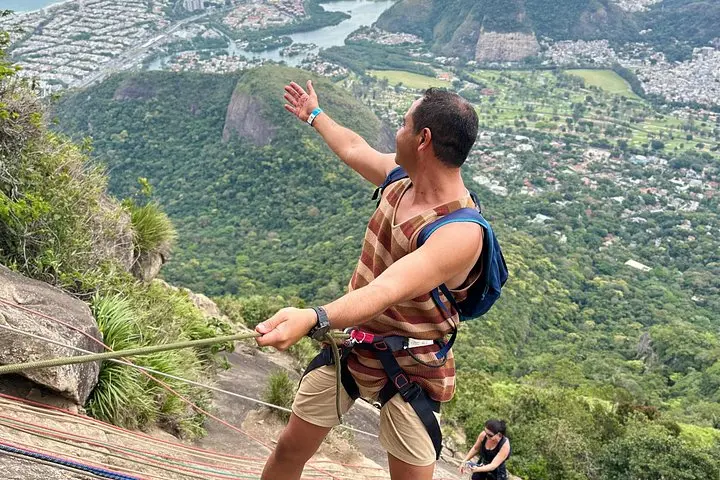
On this guided route hikers should expect mixed terrain: packed dirt, loose stone, rooty rainforest tread, and a 30–35m assisted rock scramble requiring concentration and a head for exposure. Guides provide safety gear and route-finding; travelers move as a small group for efficient rope-assisted sections and photo stops.
Practical notes: start early to avoid midday heat and crowds; carry 2–3 liters of water, a light rain jacket, and shoes with sticky rubber soles. Allow 6–7 hours round-trip for fitness stops and descent. Respect park rules, pack out trash, and listen to the guide—conditions change quickly in the mountains above the city.
The hike is strenuous with steep sections and a short 30–35m assisted rock climb; guides use safety gear but participants should be comfortable with exposure and scrambling.
No formal climbing certification is needed—guides provide ropes and instruction—but basic scrambling ability and a steady head for heights are required.
Most groups meet near the Tijuca Park entrances or by shuttle from central Rio; public transport reaches nearby neighborhoods like São Conrado and Barra da Tijuca—confirm the exact meeting point with the operator.
This tour is not recommended for pregnant people or travelers with spinal, cardiac, or severe mobility issues; age/fitness restrictions may apply—check with the operator.
Aventuras Brasil operates guided outdoor trips and adventures with an emphasis on safety, stewardship, and memorable experiences.
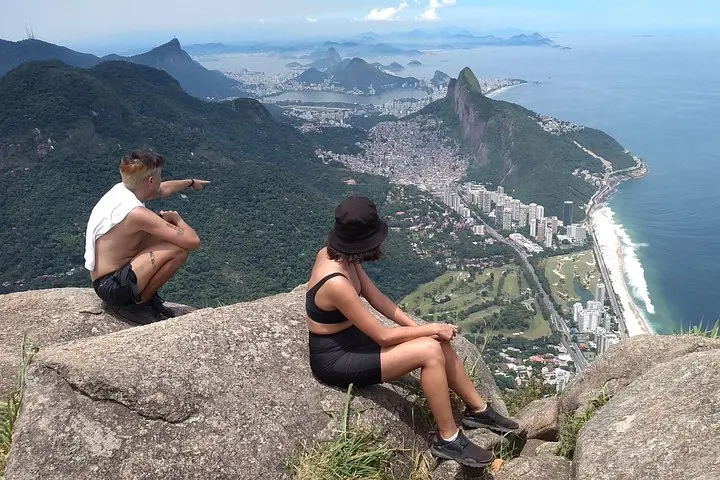
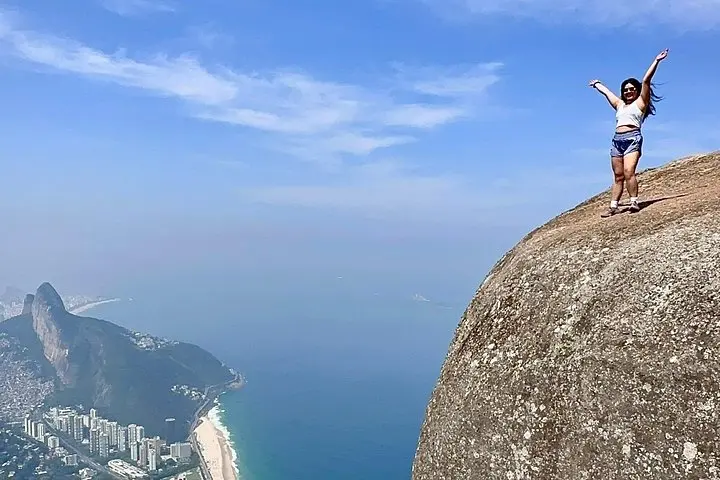
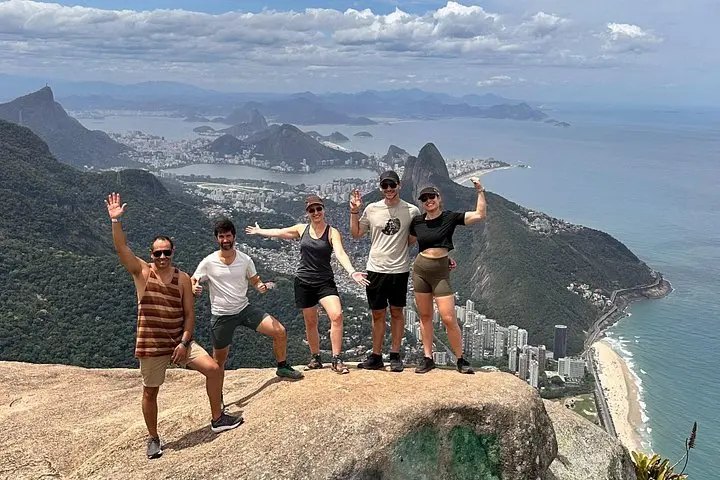
A low morning sun throws the granite face of Pedra da Gávea into sharp relief as the group slips from the shade of Tijuca’s rainforest and onto exposed rock. The trail climbs quickly, the air thick with humidity and bird calls, then narrows into steep steps and a short, secured scramble that separates most hikers from the 360° view above—city, ocean, and the sweep of Guanabara Bay laid out like a map.
A low morning sun throws the granite face of Pedra da Gávea into sharp relief as the group slips from the shade of Tijuca’s rainforest and onto exposed rock. The trail climbs quickly, the air thick with humidity and bird calls, then narrows into steep steps and a short, secured scramble that separates most hikers from the 360° view above—city, ocean, and the sweep of Guanabara Bay laid out like a map.
Geologically, Pedra da Gávea is an ancient coastal monolith of Precambrian gneiss and granite; its sheer cliffs and blocky ledges reflect a landscape carved by tectonics and relentless tropical weather. Culturally the peak has a mythic place in Rio’s outdoor life, part of Tijuca National Park—one of the largest urban forests on Earth—where Afro-Brazilian, indigenous, and colonial histories overlap in the villages and viewpoints below.
On this guided route hikers should expect mixed terrain: packed dirt, loose stone, rooty rainforest tread, and a 30–35m assisted rock scramble requiring concentration and a head for exposure. Guides provide safety gear and route-finding; travelers move as a small group for efficient rope-assisted sections and photo stops.
Practical notes: start early to avoid midday heat and crowds; carry 2–3 liters of water, a light rain jacket, and shoes with sticky rubber soles. Allow 6–7 hours round-trip for fitness stops and descent. Respect park rules, pack out trash, and listen to the guide—conditions change quickly in the mountains above the city.