THE ADVENTURE COLLECTIVE® · Independent discovery and booking for outdoor travel

A short coastal hike above Rio’s wild western beaches leads to Pedra do Telégrafo, a dramatic ledge with ocean panoramas and an iconic photo spot. Combine the trail with a post-hike stop at Grumari or Prainha for surf and sand.
A short coastal hike above Rio’s wild western beaches leads to Pedra do Telégrafo, a dramatic ledge with ocean panoramas and an iconic photo spot. Combine the trail with a post-hike stop at Grumari or Prainha for surf and sand.
You round a final bend and the Atlantic spreads away beneath you — a low, wild coastline of volcanic outcrops, surf-swept sand, and the thin dark ribbon of Restinga de Marambaia daring the sea. The trail to Pedra do Telégrafo (Telegraph Stone) rises through low Atlantic Forest, opening at rocky ledges where visitors line up for the famous optical-illusion photos and uninterrupted ocean views.
Verified experiences and guided adventures in the surrounding area.
Operated by Guia Dudu · Rio de Janeiro, Rio de Janeiro
You round a final bend and the Atlantic spreads away beneath you — a low, wild coastline of volcanic outcrops, surf-swept sand, and the thin dark ribbon of Restinga de Marambaia daring the sea. The trail to Pedra do Telégrafo (Telegraph Stone) rises through low Atlantic Forest, opening at rocky ledges where visitors line up for the famous optical-illusion photos and uninterrupted ocean views.
The ridge sits on the western flank of Rio’s coastal range, formed by ancient igneous intrusions and later sculpted by wind and waves. Local fishing communities in Barra de Guaratiba and Prainha shaped the human story here, and the nearby Restinga de Marambaia — a military-protected sand spit — preserves a rare coastal ecosystem.
On the walk you’ll pass scrubby restinga vegetation, granite slabs, and gullies that funnel seawinds; birds call from bromeliads and small monkeys sometimes flit through the canopy. After the summit, guides frequently offer time at Prainha or Grumari — beaches known for cleaner water and dramatic surf compared with central Rio.
Practical guidance: plan for roughly 2–3 hours total, bring sun protection and at least 1.5 L of water, and arrive early to avoid crowds and heat. Wear grippy shoes for short, uneven rock sections and respect rope-controlled viewpoints — the photo angle comes with real exposure. If you want staged photos, local photographers offer quick shoots; otherwise a guide can help time turns to minimize waiting. Public transport reaches the general area but tours with pick-up simplify logistics. Stay on marked paths, carry out trash, and leave cliff edges undisturbed — the views are best when the place is kept safe and intact.
The guided outing is typically 2–3 hours round-trip, including stops for photos and short viewpoint breaks.
The walk is short but includes uneven rock and brief exposed sections; people with limited mobility should take extra care, but many tours accommodate families and older hikers.
Independent visits are possible, but guided tours simplify transport and timing and help manage photo lines and local etiquette.
Yes — both beaches are popular for swimming and surfing; always heed local surf warnings and avoid swimming during strong surf or rips.
Guia Dudu operates guided outdoor trips and adventures with an emphasis on safety, stewardship, and memorable experiences.
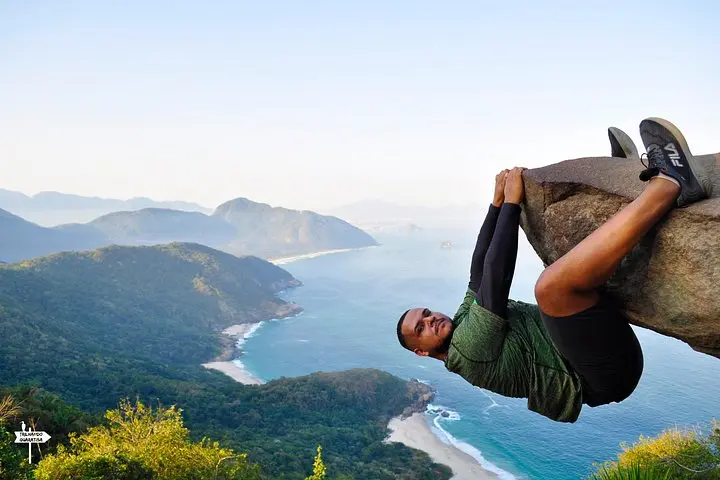
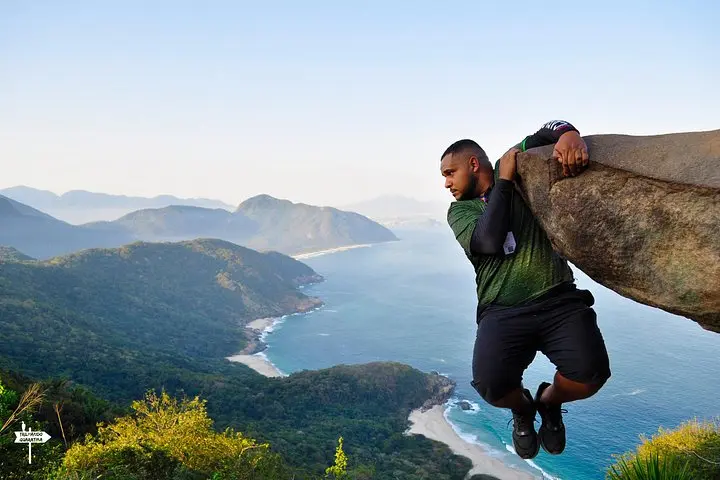
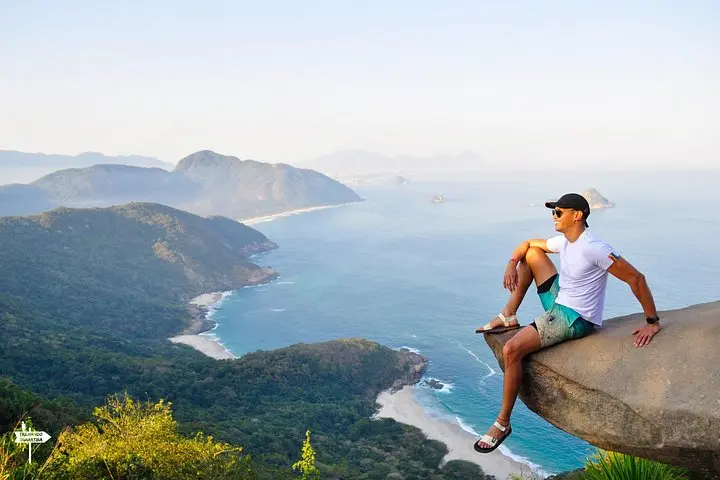
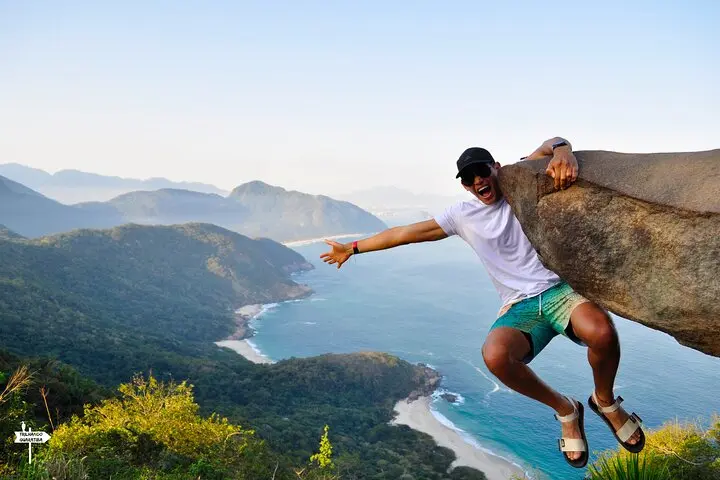
You round a final bend and the Atlantic spreads away beneath you — a low, wild coastline of volcanic outcrops, surf-swept sand, and the thin dark ribbon of Restinga de Marambaia daring the sea. The trail to Pedra do Telégrafo (Telegraph Stone) rises through low Atlantic Forest, opening at rocky ledges where visitors line up for the famous optical-illusion photos and uninterrupted ocean views.
You round a final bend and the Atlantic spreads away beneath you — a low, wild coastline of volcanic outcrops, surf-swept sand, and the thin dark ribbon of Restinga de Marambaia daring the sea. The trail to Pedra do Telégrafo (Telegraph Stone) rises through low Atlantic Forest, opening at rocky ledges where visitors line up for the famous optical-illusion photos and uninterrupted ocean views.
The ridge sits on the western flank of Rio’s coastal range, formed by ancient igneous intrusions and later sculpted by wind and waves. Local fishing communities in Barra de Guaratiba and Prainha shaped the human story here, and the nearby Restinga de Marambaia — a military-protected sand spit — preserves a rare coastal ecosystem.
On the walk you’ll pass scrubby restinga vegetation, granite slabs, and gullies that funnel seawinds; birds call from bromeliads and small monkeys sometimes flit through the canopy. After the summit, guides frequently offer time at Prainha or Grumari — beaches known for cleaner water and dramatic surf compared with central Rio.
Practical guidance: plan for roughly 2–3 hours total, bring sun protection and at least 1.5 L of water, and arrive early to avoid crowds and heat. Wear grippy shoes for short, uneven rock sections and respect rope-controlled viewpoints — the photo angle comes with real exposure. If you want staged photos, local photographers offer quick shoots; otherwise a guide can help time turns to minimize waiting. Public transport reaches the general area but tours with pick-up simplify logistics. Stay on marked paths, carry out trash, and leave cliff edges undisturbed — the views are best when the place is kept safe and intact.