THE ADVENTURE COLLECTIVE® · Independent discovery and booking for outdoor travel

Climb a short jungle trail to Pedra do Telégrafo for one of Rio’s most famous optical-illusion photos, then sweep down the coast to visit Grumari’s wild beaches. This guided trek combines a 40-minute ascent to the viewpoint with beach stops and local insights.
Climb a short jungle trail to Pedra do Telégrafo for one of Rio’s most famous optical-illusion photos, then sweep down the coast to visit Grumari’s wild beaches. This guided trek combines a 40-minute ascent to the viewpoint with beach stops and local insights.
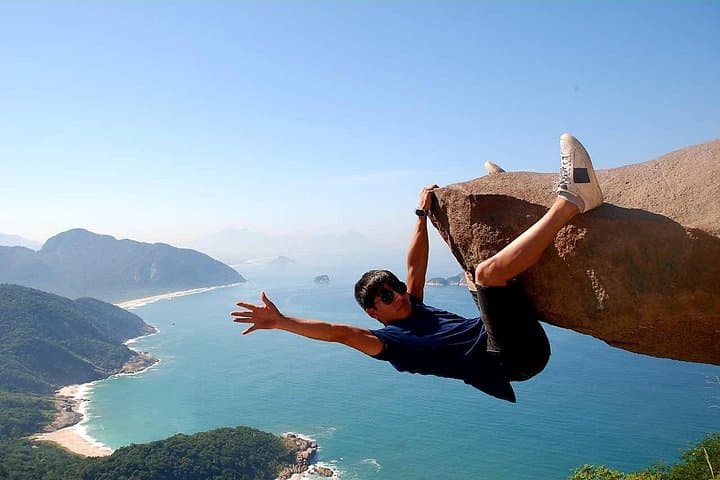
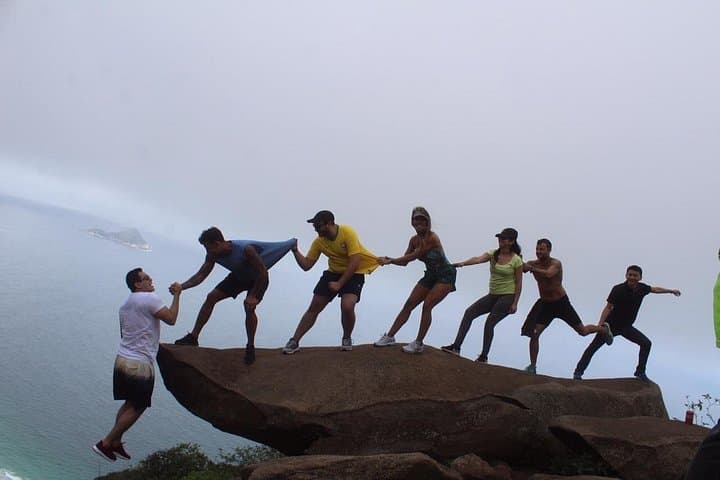
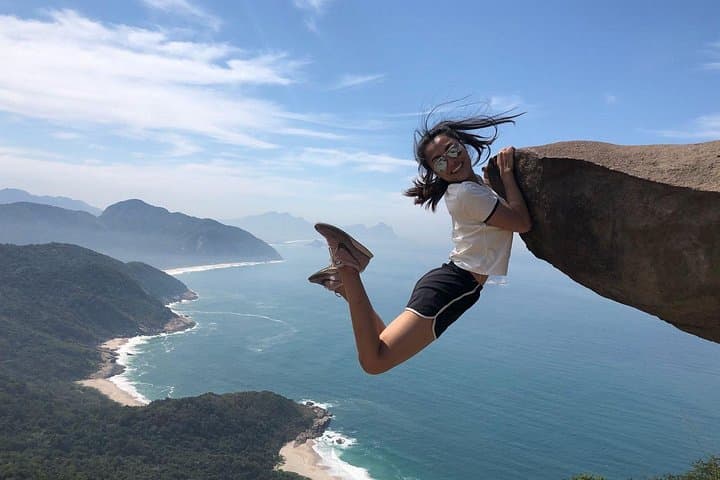
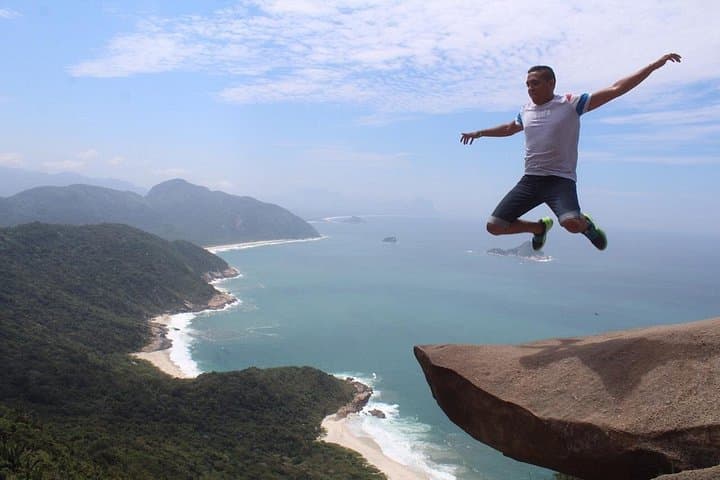
The morning air in Rio’s western flank tastes of salt and damp earth as the minivan drops you at the trailhead toward Pedra do Telégrafo. A narrow jungle track pushes you uphill; leaves whisper and sunlight skitters across roots while the rock’s silhouette slowly resolves above the canopy. At the outcrop, photographers line up to stage the classic “hanging” shot on a flat slab that overhangs a steep drop — the view out to the Atlantic and the wild beaches of Grumari gives context to the illusion.
Verified experiences and guided adventures in the surrounding area.
Operated by Rio Imperio Turismo · Rio de Janeiro, Rio de Janeiro
The morning air in Rio’s western flank tastes of salt and damp earth as the minivan drops you at the trailhead toward Pedra do Telégrafo. A narrow jungle track pushes you uphill; leaves whisper and sunlight skitters across roots while the rock’s silhouette slowly resolves above the canopy. At the outcrop, photographers line up to stage the classic “hanging” shot on a flat slab that overhangs a steep drop — the view out to the Atlantic and the wild beaches of Grumari gives context to the illusion.
Geologically the stone is a resistant coastal outcrop carved by millions of years of wind and wave action, now standing where old telegraph lines once marked navigation and communication along this rugged coast. The area sits inside Rio’s western conservation zones and reflects a coastal Atlantic Forest edge, with cultural ties to nearby fishing villages and Barra da Tijuca’s beach culture.
Expect a roughly 40-minute climb on uneven, sometimes steep trail (roughly 1–2 km round trip; ~150 m elevation gain), with roots, loose rock and short steep sections. The full tour often runs 3–5 hours including transport and quick stops at Barra and Grumari beaches when weather allows. Bring sun and rain protection, stable footwear and a camera — and plan for a moderate fitness level. Peak light for photos is early morning or late afternoon; afternoons can be humid and slippery after rain.
Practical tips: stay on marked paths to limit erosion, respect local guides and time windows for the photospot, and pack out any trash — the landscape here recovers slowly but responds to careful visitors.
The trail is moderate: expect about 40 minutes of uphill walking on uneven terrain with short steep sections; basic hiking fitness is sufficient.
The operator does not recommend it for children under 7; many consider children 10 and older as adults for this activity due to trail difficulty and safety near the viewpoint edge.
The photo is an optical illusion on a broad rock slab — follow guide instructions, stay behind safety markers when present, and avoid risky moves near the cliff edge.
Yes; itineraries often include scenic stops at Barra da Tijuca and the wild beaches of Grumari when weather and timing permit, but beach time may be brief.
Rio Imperio Turismo operates guided outdoor trips and adventures with an emphasis on safety, stewardship, and memorable experiences.
The morning air in Rio’s western flank tastes of salt and damp earth as the minivan drops you at the trailhead toward Pedra do Telégrafo. A narrow jungle track pushes you uphill; leaves whisper and sunlight skitters across roots while the rock’s silhouette slowly resolves above the canopy. At the outcrop, photographers line up to stage the classic “hanging” shot on a flat slab that overhangs a steep drop — the view out to the Atlantic and the wild beaches of Grumari gives context to the illusion.
The morning air in Rio’s western flank tastes of salt and damp earth as the minivan drops you at the trailhead toward Pedra do Telégrafo. A narrow jungle track pushes you uphill; leaves whisper and sunlight skitters across roots while the rock’s silhouette slowly resolves above the canopy. At the outcrop, photographers line up to stage the classic “hanging” shot on a flat slab that overhangs a steep drop — the view out to the Atlantic and the wild beaches of Grumari gives context to the illusion.
Geologically the stone is a resistant coastal outcrop carved by millions of years of wind and wave action, now standing where old telegraph lines once marked navigation and communication along this rugged coast. The area sits inside Rio’s western conservation zones and reflects a coastal Atlantic Forest edge, with cultural ties to nearby fishing villages and Barra da Tijuca’s beach culture.
Expect a roughly 40-minute climb on uneven, sometimes steep trail (roughly 1–2 km round trip; ~150 m elevation gain), with roots, loose rock and short steep sections. The full tour often runs 3–5 hours including transport and quick stops at Barra and Grumari beaches when weather allows. Bring sun and rain protection, stable footwear and a camera — and plan for a moderate fitness level. Peak light for photos is early morning or late afternoon; afternoons can be humid and slippery after rain.
Practical tips: stay on marked paths to limit erosion, respect local guides and time windows for the photospot, and pack out any trash — the landscape here recovers slowly but responds to careful visitors.