THE ADVENTURE COLLECTIVE® · Independent discovery and booking for outdoor travel

A short, steep hike inside Pedra Branca State Park that ends on a dramatic rock slab with sweeping coastal views. Perfect for a half-day outing from Rio with strong photo potential and easy logistics.
A short, steep hike inside Pedra Branca State Park that ends on a dramatic rock slab with sweeping coastal views. Perfect for a half-day outing from Rio with strong photo potential and easy logistics.
Standing on the rim of Pedra do Telégrafo, the ocean stretches like a bright promise and the forest seems to lean in, watching. The summit is modest—354 meters—but the angle of the rock and the offshore view of Restinga da Marambaia make the scene feel vertiginous. Photographs here play with perspective; the rock’s edge dares the camera and the camera rewards the hiker.
Verified experiences and guided adventures in the surrounding area.
Operated by Rio Eco Trip · Rio de Janeiro, Rio de Janeiro
Standing on the rim of Pedra do Telégrafo, the ocean stretches like a bright promise and the forest seems to lean in, watching. The summit is modest—354 meters—but the angle of the rock and the offshore view of Restinga da Marambaia make the scene feel vertiginous. Photographs here play with perspective; the rock’s edge dares the camera and the camera rewards the hiker.
The trail runs inside Pedra Branca State Park, an expanse set aside to protect Rio’s fragmented Atlantic Forest and the city’s water sources. Geologically the outcrop is a weathered granitic intrusion rising from coastal plain sediments; wind and rain have shaped the slab you climb. Culturally, this stretch of western Rio is quieter than the city center: fishing villages, military-controlled sandspits, and weekend surfers mark a coastal way of life that predates urban expansion.
Practical tip: the advertised loop is short—roughly 3.6 km round trip—but steep sections and roots demand steady footing. Expect mixes of packed dirt, rocky steps, and short scramble sections. Midday sun in summer makes the ascent hot; rainy months turn parts of the trail slick. Guides often include roadside stops past Grumari, Prainha and Pepino for views and photo opportunities.
Bring 1.5–2 L of water, sturdy shoes with good traction, sun protection and a light rain layer. Start early to avoid crowds and afternoon showers; keep to marked paths, respect private and restricted areas (Restinga da Marambaia is off-limits), and leave no trace. The payoff is a compact, high-drama viewpoint that feels like a bold photo op and a proper short hike rolled into one.
The advertised hike is about 3.6 km round trip and guides typically program a 4–6 hour experience including transport and roadside stops.
The photo angle is an optical illusion; while the rock is low to the drop, people should follow guide instructions and avoid stepping beyond safety zones or unstable edges.
No special permit is required for the trail, but parts of the nearby coastline like Restinga da Marambaia are restricted—respect signage and military-controlled zones.
Yes—physically fit beginners who can handle short steep sections and uneven ground can complete the hike, especially with a guide and reasonable pacing.
Rio Eco Trip operates guided outdoor trips and adventures with an emphasis on safety, stewardship, and memorable experiences.
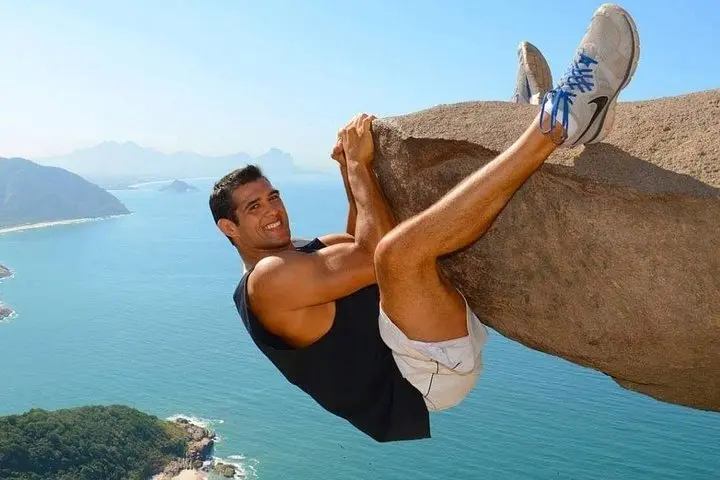
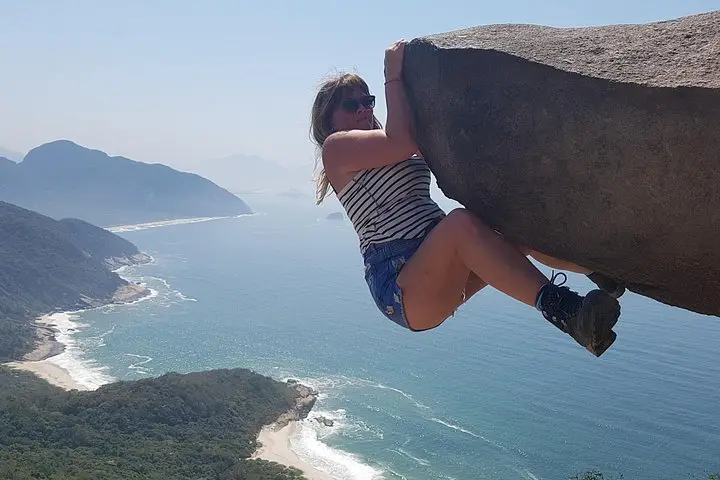
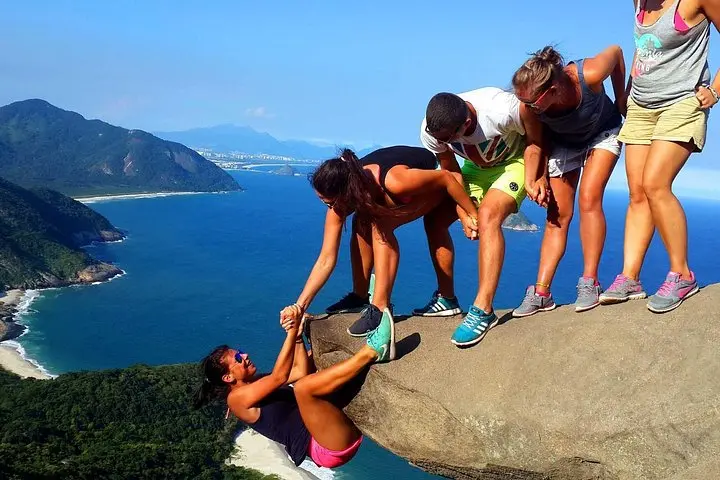
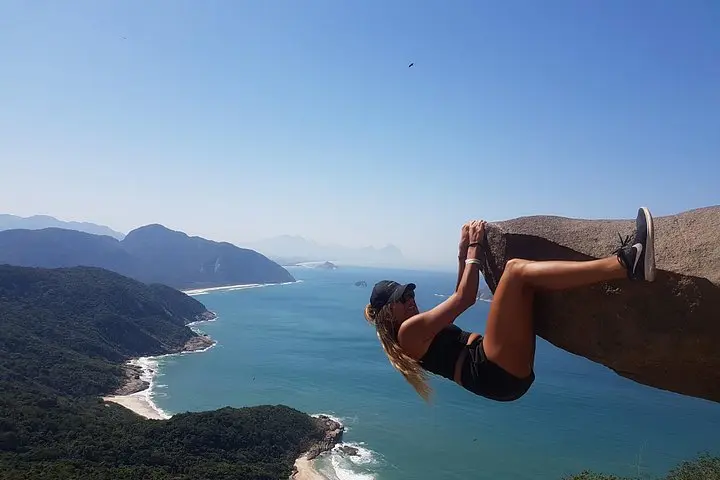
Standing on the rim of Pedra do Telégrafo, the ocean stretches like a bright promise and the forest seems to lean in, watching. The summit is modest—354 meters—but the angle of the rock and the offshore view of Restinga da Marambaia make the scene feel vertiginous. Photographs here play with perspective; the rock’s edge dares the camera and the camera rewards the hiker.
Standing on the rim of Pedra do Telégrafo, the ocean stretches like a bright promise and the forest seems to lean in, watching. The summit is modest—354 meters—but the angle of the rock and the offshore view of Restinga da Marambaia make the scene feel vertiginous. Photographs here play with perspective; the rock’s edge dares the camera and the camera rewards the hiker.
The trail runs inside Pedra Branca State Park, an expanse set aside to protect Rio’s fragmented Atlantic Forest and the city’s water sources. Geologically the outcrop is a weathered granitic intrusion rising from coastal plain sediments; wind and rain have shaped the slab you climb. Culturally, this stretch of western Rio is quieter than the city center: fishing villages, military-controlled sandspits, and weekend surfers mark a coastal way of life that predates urban expansion.
Practical tip: the advertised loop is short—roughly 3.6 km round trip—but steep sections and roots demand steady footing. Expect mixes of packed dirt, rocky steps, and short scramble sections. Midday sun in summer makes the ascent hot; rainy months turn parts of the trail slick. Guides often include roadside stops past Grumari, Prainha and Pepino for views and photo opportunities.
Bring 1.5–2 L of water, sturdy shoes with good traction, sun protection and a light rain layer. Start early to avoid crowds and afternoon showers; keep to marked paths, respect private and restricted areas (Restinga da Marambaia is off-limits), and leave no trace. The payoff is a compact, high-drama viewpoint that feels like a bold photo op and a proper short hike rolled into one.