THE ADVENTURE COLLECTIVE® · Independent discovery and booking for outdoor travel

Drive the raw edge of Namibia’s coast on a 3–4 hour 4x4 excursion to Pelican Point. See pink salt pans, flamingo-filled lagoons and a bustling Cape fur seal colony while snacks and expert narration round out the trip.
Drive the raw edge of Namibia’s coast on a 3–4 hour 4x4 excursion to Pelican Point. See pink salt pans, flamingo-filled lagoons and a bustling Cape fur seal colony while snacks and expert narration round out the trip.
A low sun cuts a flat path across the Atlantic as the 4x4 lowers its tires onto the hard-packed beach and the landscape opens — salt pans gleaming to one side, a lagoon like a sheet of hammered silver to the other. The drive to Pelican Point feels kinetic: sand, wind, and sea conspiring to move you forward as flamingos lift and settle in the shallows and the peninsula’s lighthouse stands like a lonely waypoint.
Verified experiences and guided adventures in the surrounding area.
Operated by Kelly's Wild Adventures and Tours · Walvis Bay, Erongo Region
A low sun cuts a flat path across the Atlantic as the 4x4 lowers its tires onto the hard-packed beach and the landscape opens — salt pans gleaming to one side, a lagoon like a sheet of hammered silver to the other. The drive to Pelican Point feels kinetic: sand, wind, and sea conspiring to move you forward as flamingos lift and settle in the shallows and the peninsula’s lighthouse stands like a lonely waypoint.
The Walvis Bay Lagoon is a designated Ramsar wetland with a long history as a stopover for migratory birds and a working salt industry that has shaped the coastline. Geologically, Pelican Point is a spits-and-sands formation built by coastal currents; the pink hues of nearby pans come from salt-harvest processes and halophilic algae under the summer glare.
Culture here is maritime and straightforward — fishing communities, salt miners, and bird-watchers share the same horizon. Local guides read tides and wind with the same fluency as maps.
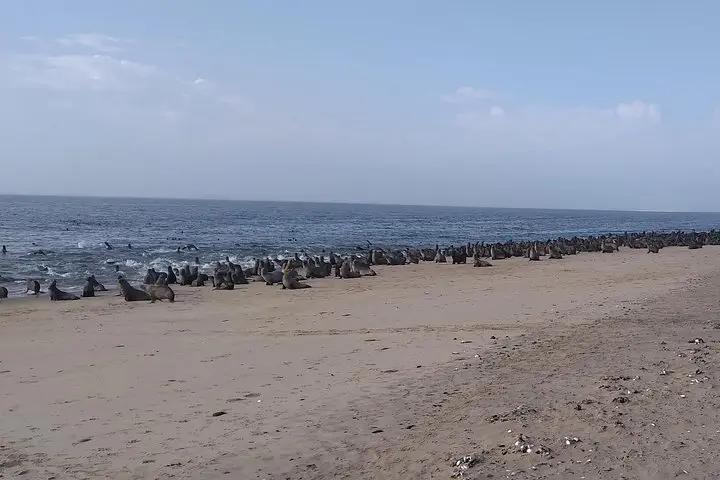
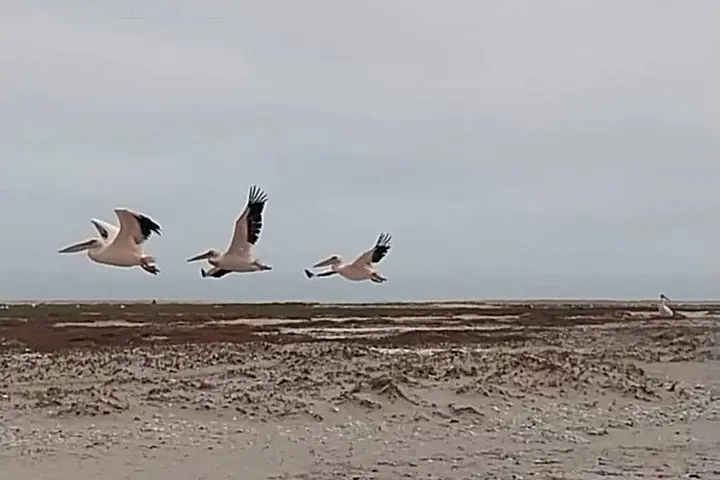
Expect 3–4 hours: a mix of slow cruising for photos and short stops for wildlife viewing. The highlights are the thousands-strong Cape fur seal colony on the outer point, close views of flamingos and pelicans in the lagoon, and a picnic on an exposed beach where the ocean breathes cool and steady.
Practical guidance: wear sun protection, bring a windproof layer, and use sturdy shoes for walking soft sand. Binoculars and a long lens reward patient viewers. Vehicles are 4x4-equipped; check wind and tide forecasts before you go and plan mid-morning or late-afternoon light for the best photographs.
The activity runs roughly 3–4 hours; the coastal drive takes about an hour with several short stops for photos and wildlife viewing and a longer pause at the seal colony and picnic beach.
Yes — the Cape fur seal colony at Pelican Point is often visible in the thousands; guides usually stop at a safe distance for viewing and photos rather than close encounters.
The tour is suitable for most fitness levels, but it’s not advised for children under 2 and soft sand can make short walks challenging for those with mobility issues; confirm accessibility needs with the operator.
Yes — strong winds, poor visibility or dangerous beach conditions can prompt cancellation; operators typically monitor tides and weather and advise rescheduling when necessary.
Kelly's Wild Adventures and Tours operates guided outdoor trips and adventures with an emphasis on safety, stewardship, and memorable experiences.
A low sun cuts a flat path across the Atlantic as the 4x4 lowers its tires onto the hard-packed beach and the landscape opens — salt pans gleaming to one side, a lagoon like a sheet of hammered silver to the other. The drive to Pelican Point feels kinetic: sand, wind, and sea conspiring to move you forward as flamingos lift and settle in the shallows and the peninsula’s lighthouse stands like a lonely waypoint.
A low sun cuts a flat path across the Atlantic as the 4x4 lowers its tires onto the hard-packed beach and the landscape opens — salt pans gleaming to one side, a lagoon like a sheet of hammered silver to the other. The drive to Pelican Point feels kinetic: sand, wind, and sea conspiring to move you forward as flamingos lift and settle in the shallows and the peninsula’s lighthouse stands like a lonely waypoint.
The Walvis Bay Lagoon is a designated Ramsar wetland with a long history as a stopover for migratory birds and a working salt industry that has shaped the coastline. Geologically, Pelican Point is a spits-and-sands formation built by coastal currents; the pink hues of nearby pans come from salt-harvest processes and halophilic algae under the summer glare.
Culture here is maritime and straightforward — fishing communities, salt miners, and bird-watchers share the same horizon. Local guides read tides and wind with the same fluency as maps.
Expect 3–4 hours: a mix of slow cruising for photos and short stops for wildlife viewing. The highlights are the thousands-strong Cape fur seal colony on the outer point, close views of flamingos and pelicans in the lagoon, and a picnic on an exposed beach where the ocean breathes cool and steady.
Practical guidance: wear sun protection, bring a windproof layer, and use sturdy shoes for walking soft sand. Binoculars and a long lens reward patient viewers. Vehicles are 4x4-equipped; check wind and tide forecasts before you go and plan mid-morning or late-afternoon light for the best photographs.