THE ADVENTURE COLLECTIVE® · Independent discovery and booking for outdoor travel

Design a personalized day in Osaka with a local, award-winning guide—choose street-food crawls, castle visits, rooftop views, and more. This private 4–8 hour tour adapts to dietary needs, mobility, and group size for a seamless city experience.
Design a personalized day in Osaka with a local, award-winning guide—choose street-food crawls, castle visits, rooftop views, and more. This private 4–8 hour tour adapts to dietary needs, mobility, and group size for a seamless city experience.
Morning light slants across a wide canal as neon reflections fade and the city inhales—this is Osaka before its appetite takes over. On a private day tour you step out of a car or onto a subway platform guided by a local who reads the city’s rhythm: castle ramparts, market stalls steaming with takoyaki, narrow alleys where lanterns sway above mossy temple statues.
Verified experiences and guided adventures in the surrounding area.
Operated by MagicalTrip Inc. · Osaka, Osaka Prefecture
Morning light slants across a wide canal as neon reflections fade and the city inhales—this is Osaka before its appetite takes over. On a private day tour you step out of a car or onto a subway platform guided by a local who reads the city’s rhythm: castle ramparts, market stalls steaming with takoyaki, narrow alleys where lanterns sway above mossy temple statues.
Osaka’s story is loud and practical. Founded as a mercantile hub on the Osaka Plain, the city rose to national prominence under Toyotomi Hideyoshi in the 16th century; Osaka Castle remains the clearest historical imprint. Geologically the region sits on alluvial plain reclaimed from the bay, which explains the flat streets and the ease of moving between neighborhoods by foot or train.
Culturally, Osaka celebrates food and conviviality — from Kuromon’s market counters to the izakaya-lined lanes of Dotonbori and the specialized shops on Doguyasuji. Expect warm, fast-paced service, pocket-sized portions for sampling, and menus that accommodate vegetarian or allergy-aware requests when arranged.
Practical guide: choose 4 or 8 hours depending on appetite; public transit keeps travel times short, private vehicle adds flexibility and accessibility. Carry local cash for market stalls, wear comfortable walking shoes, and plan to visit Osaka Castle or a sky observatory during mid-morning light for the best photos. Avoid peak meal windows if you want quieter market browsing; evenings are for neon and riverwalks. Bring a compact umbrella in rainy seasons and an IC transit card (ICOCA) to move smoothly between stops. Communicate dietary needs in advance — the operator will tailor an itinerary to match pace, mobility, and interests.
Tours are offered as 4- or 8-hour private experiences; after booking you’ll complete a questionnaire and the guide will design an itinerary based on your interests.
No — meals are paid on-site so you can sample a variety of street food and restaurants; guides can recommend price ranges and accommodate dietary restrictions.
Yes — the operator lists wheelchair and stroller accessibility and can plan routes and a vehicle option to suit mobility needs.
Tipping is not customary in Japan; a polite thank-you or a small gift is appreciated but not expected.
MagicalTrip Inc. operates guided outdoor trips and adventures with an emphasis on safety, stewardship, and memorable experiences.


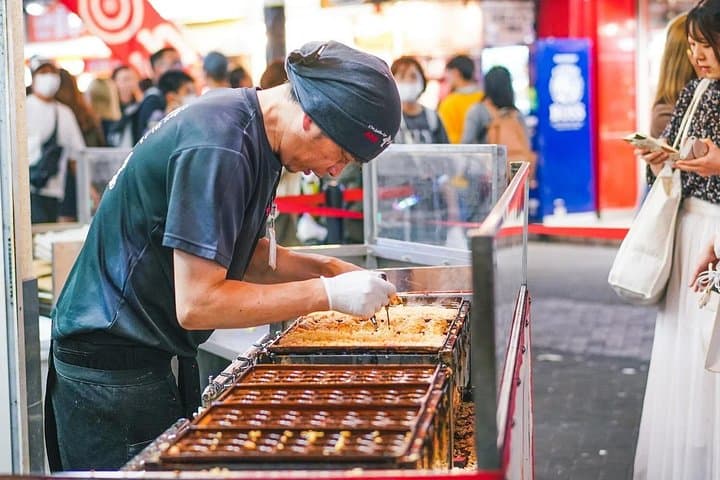
Morning light slants across a wide canal as neon reflections fade and the city inhales—this is Osaka before its appetite takes over. On a private day tour you step out of a car or onto a subway platform guided by a local who reads the city’s rhythm: castle ramparts, market stalls steaming with takoyaki, narrow alleys where lanterns sway above mossy temple statues.
Morning light slants across a wide canal as neon reflections fade and the city inhales—this is Osaka before its appetite takes over. On a private day tour you step out of a car or onto a subway platform guided by a local who reads the city’s rhythm: castle ramparts, market stalls steaming with takoyaki, narrow alleys where lanterns sway above mossy temple statues.
Osaka’s story is loud and practical. Founded as a mercantile hub on the Osaka Plain, the city rose to national prominence under Toyotomi Hideyoshi in the 16th century; Osaka Castle remains the clearest historical imprint. Geologically the region sits on alluvial plain reclaimed from the bay, which explains the flat streets and the ease of moving between neighborhoods by foot or train.
Culturally, Osaka celebrates food and conviviality — from Kuromon’s market counters to the izakaya-lined lanes of Dotonbori and the specialized shops on Doguyasuji. Expect warm, fast-paced service, pocket-sized portions for sampling, and menus that accommodate vegetarian or allergy-aware requests when arranged.
Practical guide: choose 4 or 8 hours depending on appetite; public transit keeps travel times short, private vehicle adds flexibility and accessibility. Carry local cash for market stalls, wear comfortable walking shoes, and plan to visit Osaka Castle or a sky observatory during mid-morning light for the best photos. Avoid peak meal windows if you want quieter market browsing; evenings are for neon and riverwalks. Bring a compact umbrella in rainy seasons and an IC transit card (ICOCA) to move smoothly between stops. Communicate dietary needs in advance — the operator will tailor an itinerary to match pace, mobility, and interests.