THE ADVENTURE COLLECTIVE® · Independent discovery and booking for outdoor travel

A quick, scenic two-day trek from Sembalun to Sajang that climbs Pergasingan Hill (1,700 m) and finishes at a shaded waterfall. Expect grassy ridgelines, village visits, and a moderate descent through tropical woodland.
A quick, scenic two-day trek from Sembalun to Sajang that climbs Pergasingan Hill (1,700 m) and finishes at a shaded waterfall. Expect grassy ridgelines, village visits, and a moderate descent through tropical woodland.
Morning mist clings to grasslands as hikers shoulder packs and step out from Sembalun Village toward Pergasingan Hill. The trail climbs into open ridgelines with Mount Rinjani’s crater wall as a constant companion, then drops through humid woodland toward Sajang’s waterfall on day two — a compact journey that moves from sunrise summits to shaded streams.
Verified experiences and guided adventures in the surrounding area.
Operated by Rinjani Fun Trekking · Sembalun, West Nusa Tenggara
Morning mist clings to grasslands as hikers shoulder packs and step out from Sembalun Village toward Pergasingan Hill. The trail climbs into open ridgelines with Mount Rinjani’s crater wall as a constant companion, then drops through humid woodland toward Sajang’s waterfall on day two — a compact journey that moves from sunrise summits to shaded streams.
The Sembalun plain sits on the eastern flank of Rinjani; the area has long supported Sasak farming communities who grow strawberries and weave traditional cloth. Geologically, the ridge is volcanic flanks and colluvial soil, whose steep, erodible slopes produce quick transitions between grassy hilltops and dense secondary forest. Culturally, village weaving and market gardens are as much a part of the route as the trail markers; you’ll pass gardens and small hamlets where local agriculture shapes the landscape.
Practically, expect a moderate two-day itinerary: an easy warm-up walk around Selong Hill on arrival, then an ascent to about 1,700 masl followed by a roughly 3‑hour woodland descent to Karya and Sajang. Terrain alternates packed dirt, grassy switchbacks and rooty forest singletrack; wet-season trails get slick. Guides and a local porter are usually included, as are meals and basic camping gear. Bring layered clothing, a waterproof shell, sturdy hiking shoes, headlamp and at least 2 liters of water; plan for early starts to catch the light and avoid afternoon showers. Respect village schedules, carry cash for small purchases, and follow Leave No Trace — the ridge rewards steady pacing with sweeping views and a cooling waterfall finish.
The operator markets it as an easy trek but travelers should have moderate fitness; expect several hours of walking with some steep sections and uneven ground.
Typical inclusions are private transportation, an expert trekking guide, a local porter, meals as listed, all fees and taxes, and basic camping equipment.
Yes — the itinerary includes a one‑night stay, often simple guesthouse or basic camping arrangements depending on the package.
Dry season months offer the most stable trail conditions and clearer views; avoid the peak monsoon for slippery trails and limited visibility.
Rinjani Fun Trekking operates guided outdoor trips and adventures with an emphasis on safety, stewardship, and memorable experiences.
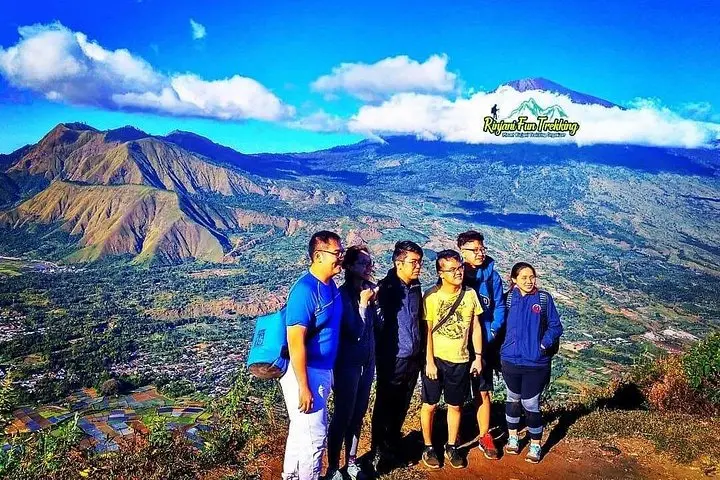
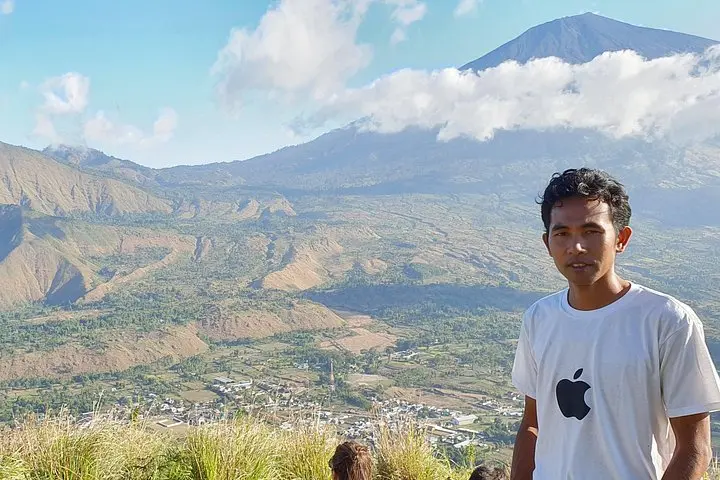
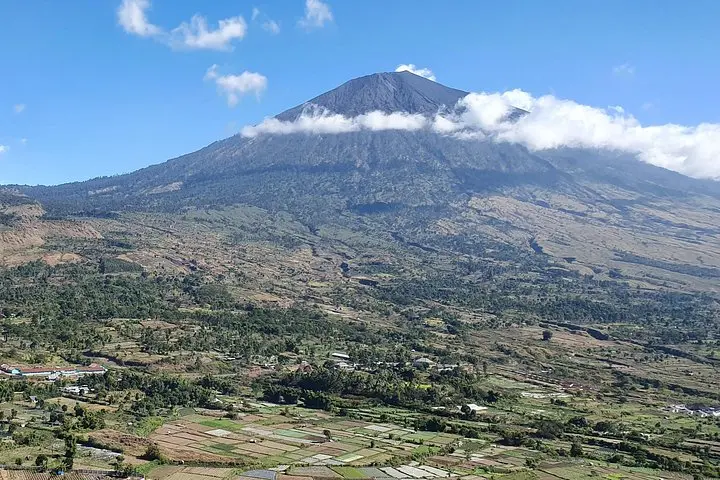
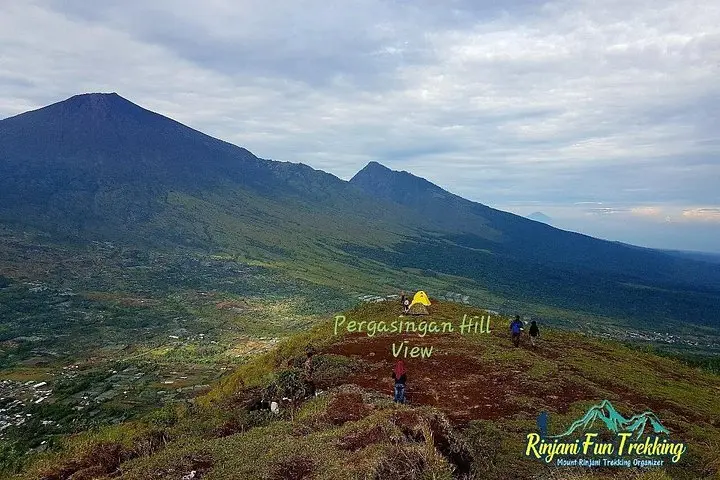
Morning mist clings to grasslands as hikers shoulder packs and step out from Sembalun Village toward Pergasingan Hill. The trail climbs into open ridgelines with Mount Rinjani’s crater wall as a constant companion, then drops through humid woodland toward Sajang’s waterfall on day two — a compact journey that moves from sunrise summits to shaded streams.
Morning mist clings to grasslands as hikers shoulder packs and step out from Sembalun Village toward Pergasingan Hill. The trail climbs into open ridgelines with Mount Rinjani’s crater wall as a constant companion, then drops through humid woodland toward Sajang’s waterfall on day two — a compact journey that moves from sunrise summits to shaded streams.
The Sembalun plain sits on the eastern flank of Rinjani; the area has long supported Sasak farming communities who grow strawberries and weave traditional cloth. Geologically, the ridge is volcanic flanks and colluvial soil, whose steep, erodible slopes produce quick transitions between grassy hilltops and dense secondary forest. Culturally, village weaving and market gardens are as much a part of the route as the trail markers; you’ll pass gardens and small hamlets where local agriculture shapes the landscape.
Practically, expect a moderate two-day itinerary: an easy warm-up walk around Selong Hill on arrival, then an ascent to about 1,700 masl followed by a roughly 3‑hour woodland descent to Karya and Sajang. Terrain alternates packed dirt, grassy switchbacks and rooty forest singletrack; wet-season trails get slick. Guides and a local porter are usually included, as are meals and basic camping gear. Bring layered clothing, a waterproof shell, sturdy hiking shoes, headlamp and at least 2 liters of water; plan for early starts to catch the light and avoid afternoon showers. Respect village schedules, carry cash for small purchases, and follow Leave No Trace — the ridge rewards steady pacing with sweeping views and a cooling waterfall finish.