THE ADVENTURE COLLECTIVE® · Independent discovery and booking for outdoor travel

Stand on timbered terraces as the Perito Moreno Glacier groans and calves its blue face into Lake Argentino. This full-day trip from El Calafate pairs easy, interpretive walks with an optional boat approach for a closer, dramatic view of the ice.
Stand on timbered terraces as the Perito Moreno Glacier groans and calves its blue face into Lake Argentino. This full-day trip from El Calafate pairs easy, interpretive walks with an optional boat approach for a closer, dramatic view of the ice.
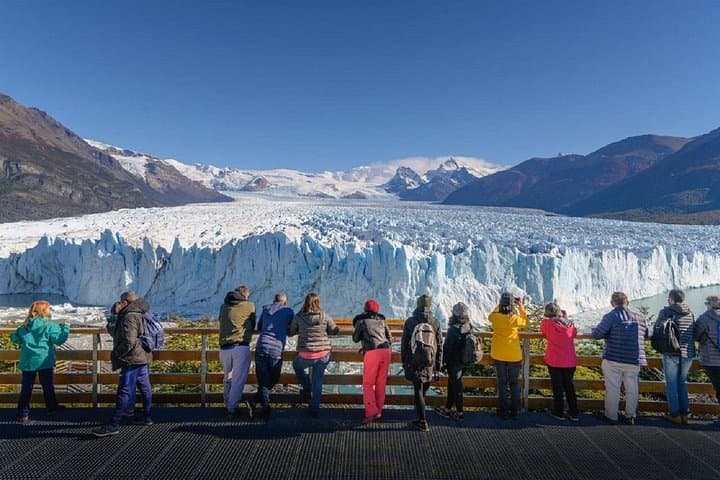
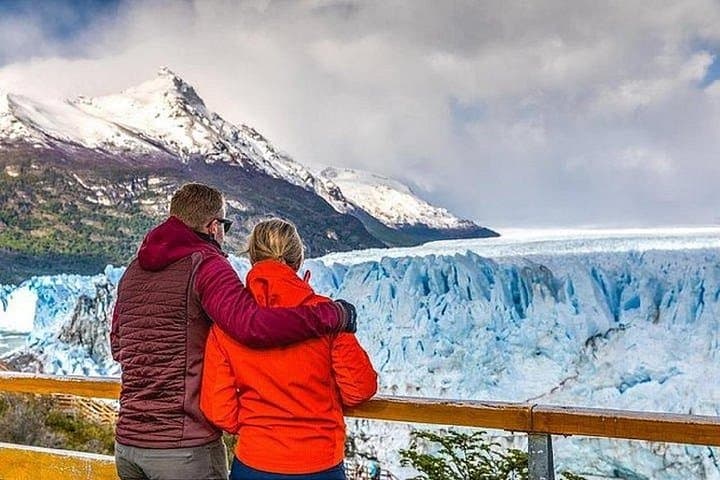
A cold wind pushes across Lake Argentino as the walkways come into view, and the Perito Moreno ice wall rises like a living cliff of blue under a broad Patagonian sky. Visitors arrive from El Calafate by road, stepping onto timbered platforms that thread through lenga forest and spill out onto terraces facing the glacier’s south face — a place where ice groans and falls with an intermittent, unmistakable authority.
Verified experiences and guided adventures in the surrounding area.
Operated by AURIC TRAVEL · El Calafate, Santa Cruz Province
A cold wind pushes across Lake Argentino as the walkways come into view, and the Perito Moreno ice wall rises like a living cliff of blue under a broad Patagonian sky. Visitors arrive from El Calafate by road, stepping onto timbered platforms that thread through lenga forest and spill out onto terraces facing the glacier’s south face — a place where ice groans and falls with an intermittent, unmistakable authority.
Los Glaciares National Park, created in 1937 and a UNESCO World Heritage Site since 1981, preserves one of the largest ice fields outside the poles. The glacier itself is part of the Southern Patagonian Ice Field, sculpted by millennia of accumulation and movement; its advancing fronts and periodic calvings are the most visible signs of that geologic life.
Local culture here is small-town Patagonian: gaucho history, sheep ranches, and a tourism economy centered on responsible access. Guides interpret ice behavior and safety while restaurants near the park serve local lamb and trout.
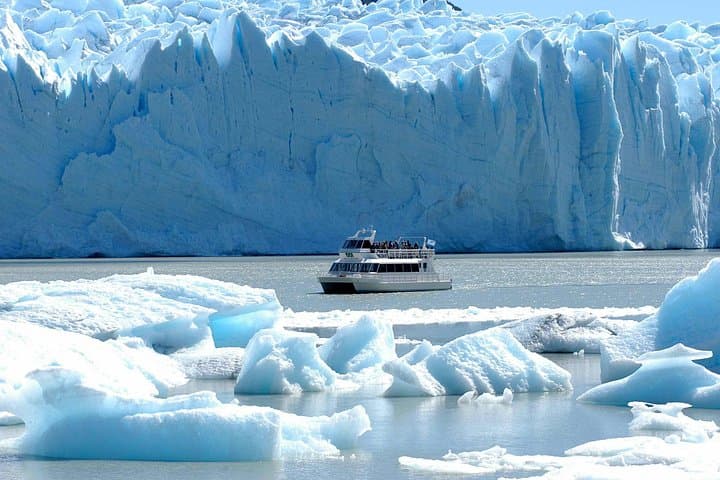
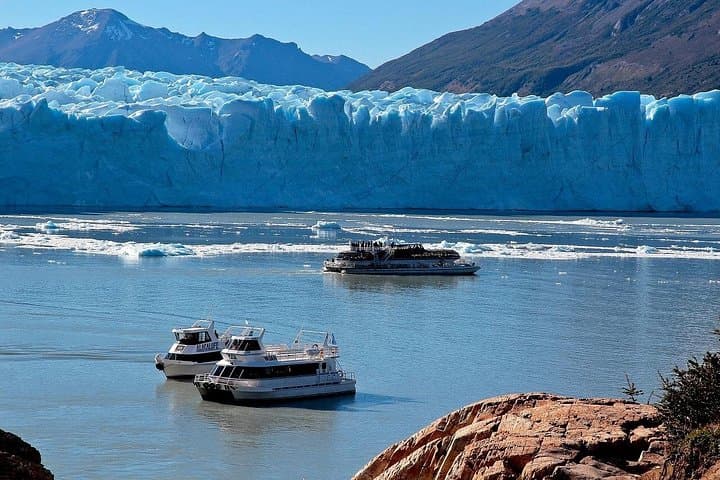
Practically, the experience is low-technical but full-day: expect roughly 3 hours on the walkways with additional time for travel and meals. Wear layered, windproof clothing and sturdy shoes; keep cameras ready for calving events and opt for the short boat ride if you want a water-level perspective of the ice wall. Bring cash or card for park services, follow signage, and stay on designated paths to protect fragile vegetation and ensure safety near the glacier’s edge.
Yes — this tour includes entrance to Los Glaciares National Park.
Expect about three hours on the boardwalk system, which connects multiple platforms overlooking the glacier’s faces.
The boat provides a closer frontal view of the ice wall from the water (does not land).
Infants are permitted but must sit on an adult’s lap; the tour is considered easy and family-friendly with supervision.
AURIC TRAVEL operates guided outdoor trips and adventures with an emphasis on safety, stewardship, and memorable experiences.
A cold wind pushes across Lake Argentino as the walkways come into view, and the Perito Moreno ice wall rises like a living cliff of blue under a broad Patagonian sky. Visitors arrive from El Calafate by road, stepping onto timbered platforms that thread through lenga forest and spill out onto terraces facing the glacier’s south face — a place where ice groans and falls with an intermittent, unmistakable authority.
A cold wind pushes across Lake Argentino as the walkways come into view, and the Perito Moreno ice wall rises like a living cliff of blue under a broad Patagonian sky. Visitors arrive from El Calafate by road, stepping onto timbered platforms that thread through lenga forest and spill out onto terraces facing the glacier’s south face — a place where ice groans and falls with an intermittent, unmistakable authority.
Los Glaciares National Park, created in 1937 and a UNESCO World Heritage Site since 1981, preserves one of the largest ice fields outside the poles. The glacier itself is part of the Southern Patagonian Ice Field, sculpted by millennia of accumulation and movement; its advancing fronts and periodic calvings are the most visible signs of that geologic life.
Local culture here is small-town Patagonian: gaucho history, sheep ranches, and a tourism economy centered on responsible access. Guides interpret ice behavior and safety while restaurants near the park serve local lamb and trout.
Practically, the experience is low-technical but full-day: expect roughly 3 hours on the walkways with additional time for travel and meals. Wear layered, windproof clothing and sturdy shoes; keep cameras ready for calving events and opt for the short boat ride if you want a water-level perspective of the ice wall. Bring cash or card for park services, follow signage, and stay on designated paths to protect fragile vegetation and ensure safety near the glacier’s edge.