THE ADVENTURE COLLECTIVE® · Independent discovery and booking for outdoor travel

Cross a border and step through the Siq to the rose-red facades of Petra on this two-day tour from Tel Aviv. Expect guided exploration, an overnight adjacent to the archaeological park, and an authentic local lunch.
Cross a border and step through the Siq to the rose-red facades of Petra on this two-day tour from Tel Aviv. Expect guided exploration, an overnight adjacent to the archaeological park, and an authentic local lunch.
A warm morning bus eases out of Tel Aviv and the Mediterranean’s blue gives way to scarred desert ridgelines. By mid-afternoon the road drops into Jordanian approaches, and then the Siq opens: a narrowing of rose and rust walls that seems to inspect every step as it guides visitors to the Treasury’s carved facade. The first view arrives like a reveal — a carved chamber cut from living rock, sun striking fluted columns while wind hums through the narrow gorge.
Verified experiences and guided adventures in the surrounding area.
Operated by Bein Harim Ltd · Wadi Musa, Ma'an Governorate
A warm morning bus eases out of Tel Aviv and the Mediterranean’s blue gives way to scarred desert ridgelines. By mid-afternoon the road drops into Jordanian approaches, and then the Siq opens: a narrowing of rose and rust walls that seems to inspect every step as it guides visitors to the Treasury’s carved facade. The first view arrives like a reveal — a carved chamber cut from living rock, sun striking fluted columns while wind hums through the narrow gorge.
Petra was the Nabataeans’ capital from about the 4th century BCE, built where trade routes met water collection points; its architecture is both civic and hydraulic, with channels and cisterns cut into bedrock. Geologically, the cliffs are sandstone layered in streaks of red and cream; erosion and mineral staining give each wall a personality. Culturally, modern Bedouin communities still operate stalls near the archaeological park and sell handcrafted goods and sweets.
Practical guidance is straightforward: a passport and visa handling are central—expect border control and a cash visa fee; carry exact USD/EUR/NIS as instructed. The Siq is roughly 1.2 km to the Treasury on uneven stone; the hike to the Monastery (Al Dayr) gains about 200–250 m and includes roughly 800 steps worth of ascent. Comfortable walking shoes, sun protection, layered clothing for cold desert nights, and a refillable water bottle make the visit manageable and enjoyable. Plan for long walking days, allow time for photography and the Bedouin market, and note Petra By Night runs on select evenings for a different, candle-lit perspective.
Many nationalities require a Jordanian visa; the tour notes specify fees paid at the border—check your specific requirements before booking and bring exact cash.
Expect at least 4–6 miles of walking across two days, including ~1.2 km through the Siq and an ascent of roughly 800 steps to the Monastery; pace yourself and use optional donkey or carriage services for short stretches.
Petra By Night is not included as standard; it's available for an additional fee on selected evenings (Mon/Wed/Thu) and requires separate booking.
Carry your passport and any visa paperwork in an easily accessible place, plus water, a light snack, and any medication; expect border control and passport checks during the crossing.
Bein Harim Ltd operates guided outdoor trips and adventures with an emphasis on safety, stewardship, and memorable experiences.
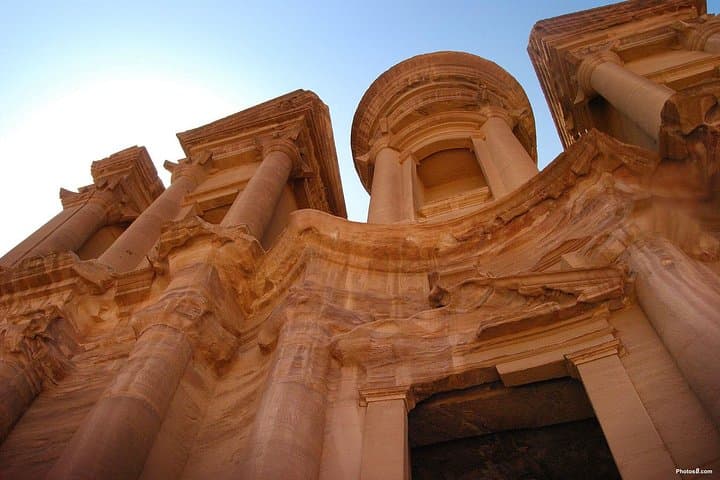
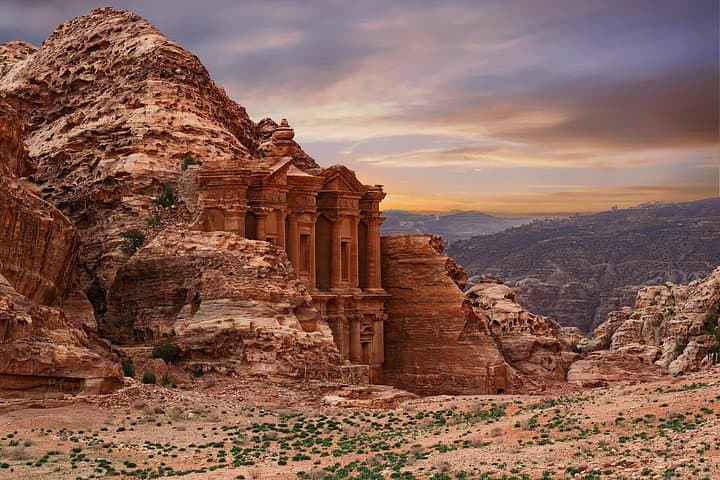

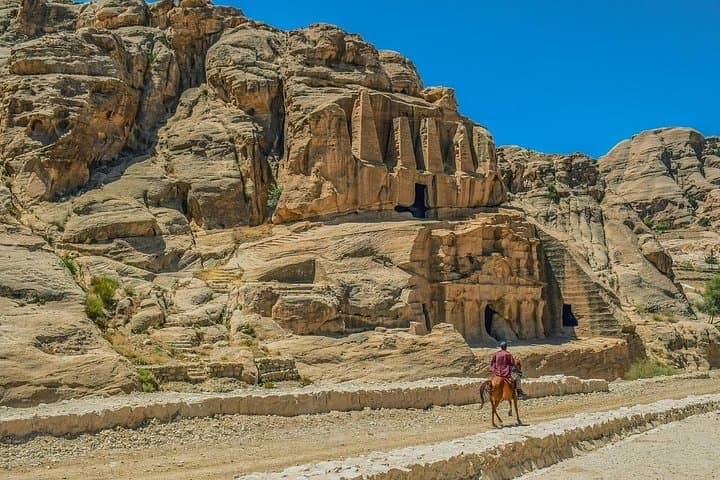
A warm morning bus eases out of Tel Aviv and the Mediterranean’s blue gives way to scarred desert ridgelines. By mid-afternoon the road drops into Jordanian approaches, and then the Siq opens: a narrowing of rose and rust walls that seems to inspect every step as it guides visitors to the Treasury’s carved facade. The first view arrives like a reveal — a carved chamber cut from living rock, sun striking fluted columns while wind hums through the narrow gorge.
A warm morning bus eases out of Tel Aviv and the Mediterranean’s blue gives way to scarred desert ridgelines. By mid-afternoon the road drops into Jordanian approaches, and then the Siq opens: a narrowing of rose and rust walls that seems to inspect every step as it guides visitors to the Treasury’s carved facade. The first view arrives like a reveal — a carved chamber cut from living rock, sun striking fluted columns while wind hums through the narrow gorge.
Petra was the Nabataeans’ capital from about the 4th century BCE, built where trade routes met water collection points; its architecture is both civic and hydraulic, with channels and cisterns cut into bedrock. Geologically, the cliffs are sandstone layered in streaks of red and cream; erosion and mineral staining give each wall a personality. Culturally, modern Bedouin communities still operate stalls near the archaeological park and sell handcrafted goods and sweets.
Practical guidance is straightforward: a passport and visa handling are central—expect border control and a cash visa fee; carry exact USD/EUR/NIS as instructed. The Siq is roughly 1.2 km to the Treasury on uneven stone; the hike to the Monastery (Al Dayr) gains about 200–250 m and includes roughly 800 steps worth of ascent. Comfortable walking shoes, sun protection, layered clothing for cold desert nights, and a refillable water bottle make the visit manageable and enjoyable. Plan for long walking days, allow time for photography and the Bedouin market, and note Petra By Night runs on select evenings for a different, candle-lit perspective.