THE ADVENTURE COLLECTIVE® · Independent discovery and booking for outdoor travel

See Jordan’s greatest hits in a long, exhilarating day: walk through Petra’s Siq to the Treasury, then cross into Wadi Rum’s wind-sculpted desert for jeep viewpoints and short hikes. Practical tips for timing, terrain, and local customs help you get the most from a packed itinerary.
See Jordan’s greatest hits in a long, exhilarating day: walk through Petra’s Siq to the Treasury, then cross into Wadi Rum’s wind-sculpted desert for jeep viewpoints and short hikes. Practical tips for timing, terrain, and local customs help you get the most from a packed itinerary.
You step from an air-conditioned van into a narrow canyon; the Siq pinches the light down to a sliver and the rock suddenly opens to the Treasury—rose-colored sandstone catching the morning sun.
Verified experiences and guided adventures in the surrounding area.
Operated by Aqaba Moments Travel · Wadi Musa, Ma'an Governorate
You step from an air-conditioned van into a narrow canyon; the Siq pinches the light down to a sliver and the rock suddenly opens to the Treasury—rose-colored sandstone catching the morning sun.
This one-day route stitches Petra’s carved façades with the open planes of Wadi Rum, where wind has cut domes and arches into sandstone and granite. Petra sits at roughly 800 m above sea level; expect paved sections, packed sand, and uneven stone stairways. The main Siq to the Treasury is about 1.2 km one-way; a typical walking circuit through Petra adds 3–6 km and, if you climb to the Monastery, includes up to ~800 stone steps.
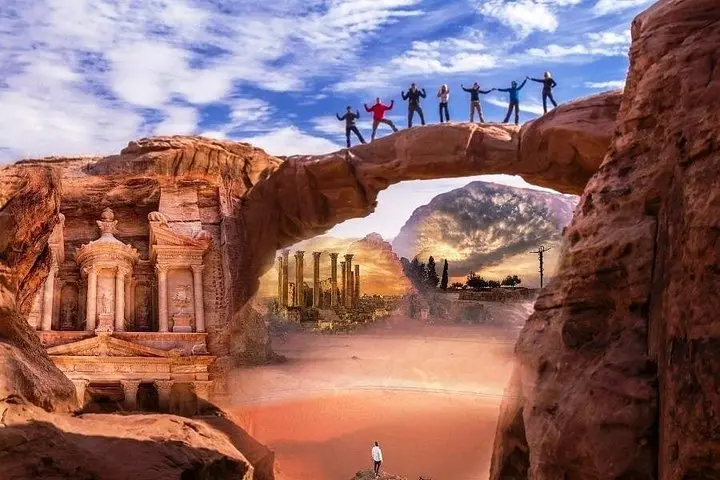
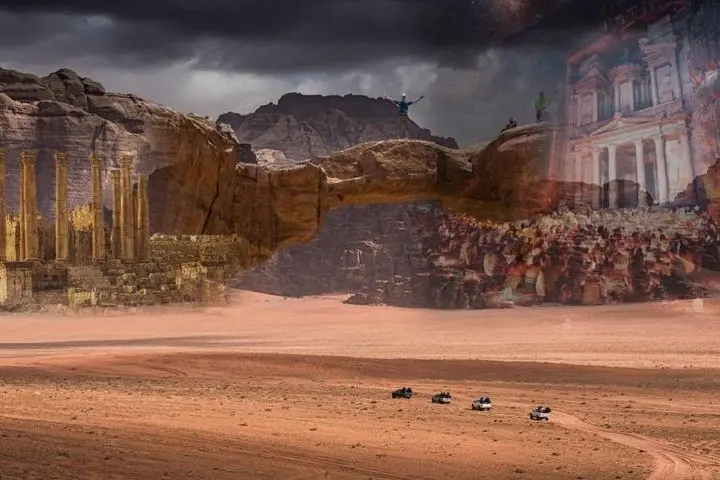
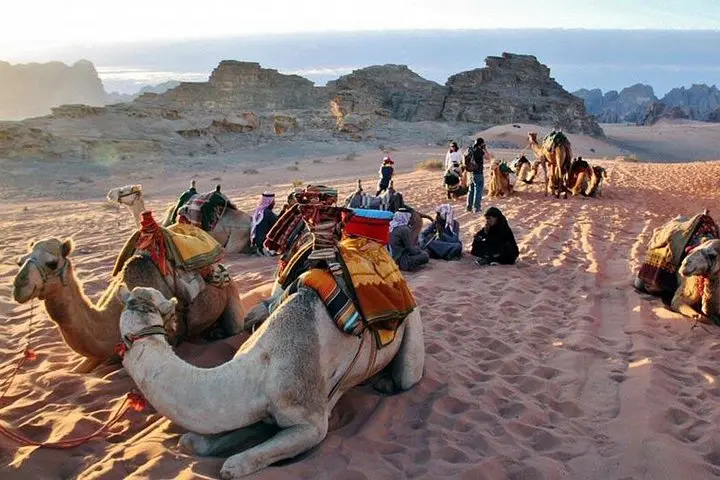
Wadi Rum’s landscape is more horizontal—dune ridges and rocky outcrops—traversed by a 4x4 for panoramic stops and short hikes (0.5–2 km) to viewpoints and arches. Geologically, Petra is Nabatean sandstone sculpted by water; Wadi Rum is a wind-sanded desert scoured into mesas and natural bridges over millions of years.
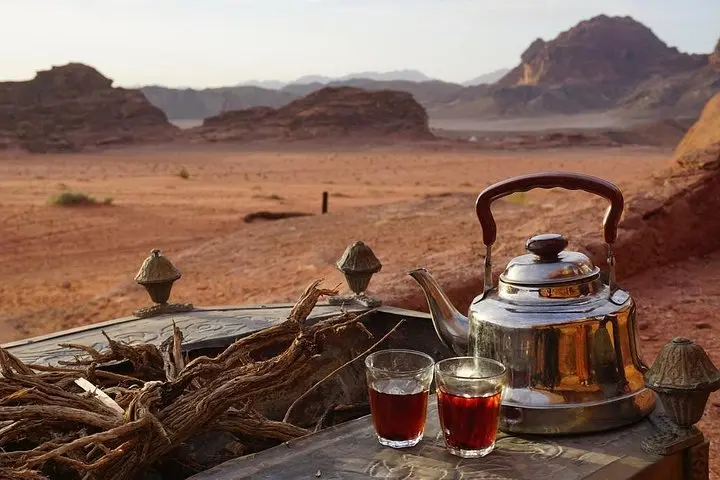
Culturally, expect Bedouin hospitality: tea, short storytelling, and locally guided drives. Practicalities: this is a long day—9–11 hours—so start early, carry ample water, wear closed-toe shoes with good traction, and bring sun protection and modest clothing out of respect. Facilities in Petra are basic along the main trail; Wadi Rum camps offer shade and refreshments but distance between services is large.
Pace yourself: the itinerary is full but manageable for most active travelers. Watch the clock for return transfers, keep valuables secure, and let a local guide set the route—knowledgeable guides make the difference between seeing and understanding these desert places.
The full excursion runs about 9–11 hours; expect 3–6 km of walking in Petra (more if you climb to the Monastery) plus short hikes in Wadi Rum.
This type of combined day tour typically includes admissions and air-conditioned transport between sites; confirm on booking for exact inclusions.
The itinerary is family-friendly and accessible in parts, but Petra has steps and uneven ground; some sections and viewpoints may be difficult for guests with limited mobility—check for wheelchair-accessible options and notify the operator in advance.
Lunch is usually provided, but bring snacks, local currency (Jordanian dinar) for tips and small purchases, and a credit card for larger purchases where accepted.
Aqaba Moments Travel operates guided outdoor trips and adventures with an emphasis on safety, stewardship, and memorable experiences.
You step from an air-conditioned van into a narrow canyon; the Siq pinches the light down to a sliver and the rock suddenly opens to the Treasury—rose-colored sandstone catching the morning sun.
You step from an air-conditioned van into a narrow canyon; the Siq pinches the light down to a sliver and the rock suddenly opens to the Treasury—rose-colored sandstone catching the morning sun.
This one-day route stitches Petra’s carved façades with the open planes of Wadi Rum, where wind has cut domes and arches into sandstone and granite. Petra sits at roughly 800 m above sea level; expect paved sections, packed sand, and uneven stone stairways. The main Siq to the Treasury is about 1.2 km one-way; a typical walking circuit through Petra adds 3–6 km and, if you climb to the Monastery, includes up to ~800 stone steps.
Wadi Rum’s landscape is more horizontal—dune ridges and rocky outcrops—traversed by a 4x4 for panoramic stops and short hikes (0.5–2 km) to viewpoints and arches. Geologically, Petra is Nabatean sandstone sculpted by water; Wadi Rum is a wind-sanded desert scoured into mesas and natural bridges over millions of years.
Culturally, expect Bedouin hospitality: tea, short storytelling, and locally guided drives. Practicalities: this is a long day—9–11 hours—so start early, carry ample water, wear closed-toe shoes with good traction, and bring sun protection and modest clothing out of respect. Facilities in Petra are basic along the main trail; Wadi Rum camps offer shade and refreshments but distance between services is large.
Pace yourself: the itinerary is full but manageable for most active travelers. Watch the clock for return transfers, keep valuables secure, and let a local guide set the route—knowledgeable guides make the difference between seeing and understanding these desert places.